Everyone’s Opinion Is Valid… Until It Conflicts With Yours
People often claim they respect every opinion, but only until it conflicts with theirs. Why does this happen?, how does listening help?, and why does respecting dissenting views matter in everyday life?.

We all like to think we’re open‑minded. We say things like “I respect everyone’s opinion.” We tell our friends, “Everyone is entitled to their view.” But let’s be honest: most of us only mean that until someone actually says something that goes against what we believe.
Think about your last conversation with someone who didn’t agree with you. Maybe it was about politics, maybe it was about religion, or maybe it was simply about how to raise kids. In the moment, you might have felt like you were open to their idea. But the second that idea went against what you already believed, something shifted, maybe you got quiet, maybe you argued back, maybe you even walked away. That’s human nature.
A big reason this happens comes from a well‑known idea in psychologycalled confirmation bias, the tendency for people to notice and remember information that supports what they already believe and to ignore or dismiss information that doesn’t. When someone confirms what we think, it feels familiar and easy. When someone challenges what we think, it feels uncomfortable and even threatening.
Confirmation bias is something all of us do, whether we realize it or not. It’s a mental shortcut our brain uses to process the huge amount of information we face every day. Instead of weighing every piece of evidence equally, we naturally give more weight to things that fit with our existing beliefs and prejudices.
Part of the reason for this isanother psychological concept called cognitive dissonance, the uncomfortable feeling we get when we hold two conflicting thoughts at once. It’s like when you believe you’re a fair person, but you catch yourself having judged someone unfairly. That clash makes your mind tense up, and to ease that tension, people tend to push away the idea that caused the discomfort.
Because of these mental habits, we often think we’re fair to every opinion until someone’s idea actually challenges ours. Then suddenly, it’s easier to dismiss that opinion than to rethink our own stance.
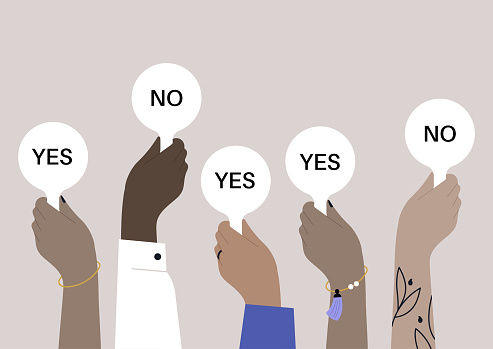
This is not just a theory you read about in textbooks. It shows up in real life all the time. In debates online or in group chats, someone voices a different point of view, and soon the conversation breaks down. People jump from saying “I hear you” to attacking, blocking, or mocking the other person. That reaction isn’t random — it’s the psychological pull to stay comfortable with what we already think and to avoid the stress of disagreement.
It’s also why many of the spaces we spend time in social media feeds, group chats, news sources, feel like walls of agreement where dissenting voices are either absent or quickly pushed out. People naturally seek out others who think like they do, reinforcing existing views rather than challenging them. That’s how echo chambers form, and how disagreements turn into arguments instead of conversations.
The Difference Between Hearing and Listening
But let’s slow down for a moment and think about what we actually mean when we say “everyone’s opinion matters.” Do we mean we’re willing to listen when someone disagrees with us? Or do we mean we’re willing to tolerate ideas that fit neatly next to our own?
There’s a big difference between agreeing with someone and listening to them.
It’s one thing to nod when someone repeats what you’re already thinking. It’s another thing entirely to hear a view that makes you uncomfortable and still stay engaged. That’s where real understanding begins.
Listening, actually listening, to someone who disagrees with you is a skill. It’s something that requires patience and humility. It means asking questions instead of preparing your rebuttal while the other person talks. It means accepting that someone else’s perspective may have value even if you don’t end up agreeing with it.
There’s research showing that being receptive to opposing views, meaning truly considering them rather than immediately rejecting them, is connected to better relationships, deeper understanding, and more effective problem solving. People who are receptive to views they disagree with tend to engage more thoughtfully and fairly with others, even when emotions run high.
Imagine what would happen if, instead of shutting down a discussion the moment someone disagreed with us, we paused and asked, “Why do you see it that way?” Imagine taking the discomfort of hearing something different and turning it into an opportunity to learn — not to be “converted,” but to understand.
Respecting Opinions Without Agreeing

That doesn’t mean you have to change your beliefs. It doesn’t mean you have to give up what you think is true. But it does mean giving someone else the dignity of being heard.
There’s no rule that says we must agree with every opinion we hear. But there is a rule, both socially and intellectually, that says we should respect the fact that someone has a right to their view. Opinions don’t lose their validity just because they don’t match ours.
Here’s the thing: respecting someone’s opinion isn’t a sign of weakness. It’s a sign of confidence. It shows that you’re secure enough in your own understanding to allow other viewpoints to exist without feeling threatened.

And that’s what real openness looks like — not quick acceptance of every idea, but the willingness to let disagreement live in the same space as your own beliefs without turning it into a fight.
So the next time someone says something that doesn’t sit right with you, don’t dismiss it immediately. Don’t block or scroll past. Ask a question. Try to understand where they’re coming from. You might learn something about them and about yourself.
Because everyone’s opinion is valid, not because every opinion is right, but because every person has a worldview shaped by their experiences, hopes, fears, and insights. When we allow opinions that conflict with our own to exist without shutting them down, we create room for genuine conversation and that’s how minds grow, not by staying comfortable, but by being challenged.
Learning to respect differing opinions without immediately dismissing them isn’t just polite, it’s practical. It strengthens relationships, improves problem-solving, and creates spaces where people feel safe to share new ideas. And in a world increasingly divided by social media and polarizing news, that skill is more valuable than ever.