Diplomatic Surge: International Allies Rally Behind Morocco's Sahara Autonomy Plan
A growing number of nations including Belgium, Paraguay, Poland, and Cambodia are backing Morocco’s Autonomy Plan for Western Sahara, signaling a decisive global shift in favor of Rabat’s sovereignty and regional stability.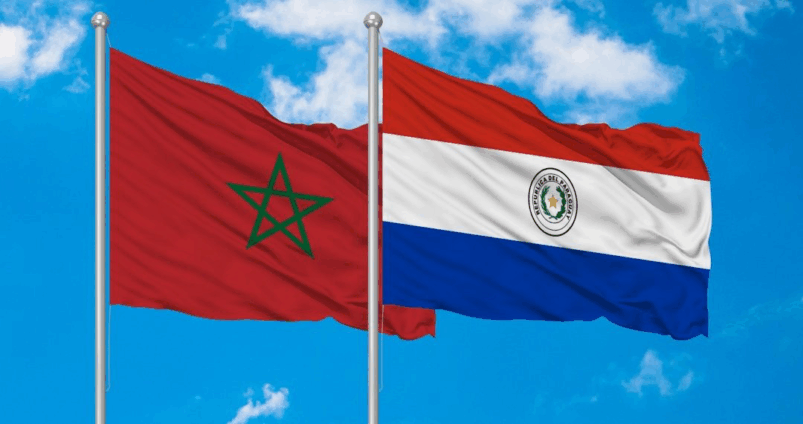
A major diplomatic tide is turning in North Africa. Across continents, from Europe to Latin America and Asia, a growing number of countries are reaffirming support for Morocco’s Autonomy Plan for Western Sahara, a move widely interpreted as international recognition of the Kingdom’s sovereignty and territorial integrity over its Southern Provinces. The mounting endorsements reflect what many analysts are calling the most significant geopolitical realignment in the Western Sahara dispute in decades.
Paraguay: Latin America’s Steadfast Ally
In a strong diplomatic statement, Paraguay reaffirmed its long-standing position in favor of Morocco’s territorial integrity. Raúl Luís Latorre, Speaker of the Paraguayan Chamber of Deputies, described Morocco’s Autonomy Initiative as “a just and credible solution” to the Sahara issue. During talks with Mohamed Ould Errachid, Speaker of Morocco’s House of Councillors, at the 151st Inter-Parliamentary Union (IPU) Assembly in Geneva, Latorre presented an official resolution recognizing Moroccan sovereignty and endorsing the Autonomy Plan as the foundation for peace.
Ould Errachid praised Paraguay’s “clear, courageous, and consistent” stance referencing the country’s 2014 withdrawal of recognition of the self-proclaimed Sahrawi Arab Democratic Republic (SADR) and its continued commitment to diplomatic and economic cooperation with Rabat. Plans are underway to open a Paraguayan consulate in Morocco’s Southern Provinces, further cementing bilateral relations and advancing South–South cooperation across MERCOSUR and the Morocco–Latin America Economic Forum.
Belgium Joins Western Bloc in Support of Rabat
Belgium has now formally endorsed Morocco’s autonomy proposal, describing it as “the most adequate, serious, credible, and realistic basis” for resolving the Sahara dispute. The endorsement was outlined in a joint declaration signed in Brussels by Nasser Bourita, Morocco’s Minister of Foreign Affairs, and Maxime Prevot, Belgium’s Deputy Prime Minister and Foreign Minister.
This development places Belgium alongside the United States, France, Spain, and the United Kingdom — key Western allies that view Morocco’s plan as consistent with United Nations Security Council resolutions. Although the European Union has not officially endorsed the autonomy framework as a bloc, it continues to advocate for a political solution “within the framework of the U.N. process.”
The Algeria-backed Polisario Front, however, continues to reject Morocco’s sovereignty claim, insisting on a referendum that includes the option of independence, a position that has seen diminishing support internationally.
Cambodia: Asia Aligns with Morocco’s Vision
Further broadening the coalition, Cambodia reaffirmed its recognition of Morocco’s sovereignty and its full support for the Autonomy Plan. In a Joint Communiqué issued after a video conference between Nasser Bourita and Prak Sokhonn, Cambodia’s Deputy Prime Minister and Foreign Minister, Phnom Penh hailed Morocco’s “serious, realistic, and credible” efforts to achieve a political solution under the leadership of King Mohammed VI.
The communiqué stressed Cambodia’s opposition to separatist movements threatening the sovereignty of U.N. member states and condemned the links between separatist and extremist groups echoing concerns that have increasingly shaped North Africa’s security agenda.
Poland and Europe’s Expanding Consensus
In Eastern Europe, Poland became the latest EU member state to endorse Morocco’s 2007 Autonomy Plan as a “serious, realistic, and pragmatic basis” for resolving the Sahara dispute. This position was confirmed in a joint statement following a phone conversation between Polish Foreign Minister Radosław Sikorski and Nasser Bourita.
Poland’s backing aligns it with 23 other EU member states and over 120 countries worldwide that now recognize Morocco’s sovereignty and the autonomy proposal as the optimal path toward lasting peace and regional stability.
A Shifting Global Landscape
This accelerating wave of diplomatic recognition marks a pivotal moment in the long-running Sahara conflict. Analysts suggest that the expanding endorsement of Morocco’s Autonomy Plan reflects a pragmatic international consensus favoring stability, economic cooperation, and counterterrorism coordination across the Sahel and Maghreb regions.
As the global map of alliances evolves, Morocco’s diplomatic strategy rooted in partnership, development, and security appears to be paying off. The Sahara question, once frozen in stalemate, is now witnessing what observers describe as “the diplomatic thaw of the decade.”