Court Overturns INEC's Crucial Election Deadlines, Granting Relief to Political Parties
A Federal High Court in Abuja has nullified several timelines imposed by the Independent National Electoral Commission (INEC) for the 2027 general elections, ruling that INEC overstepped its statutory powers. The judgment, widely praised by political parties and stakeholders, reaffirms the supremacy of the Electoral Act, 2026, over administrative guidelines. This decision is expected to significantly impact pre-election activities and provide political parties with greater autonomy in candidate nomination processes.
A Federal High Court in Abuja has nullified crucial timelines issued by the Independent National Electoral Commission (INEC) for the conduct of party primaries and the nomination of candidates for the 2027 general elections.
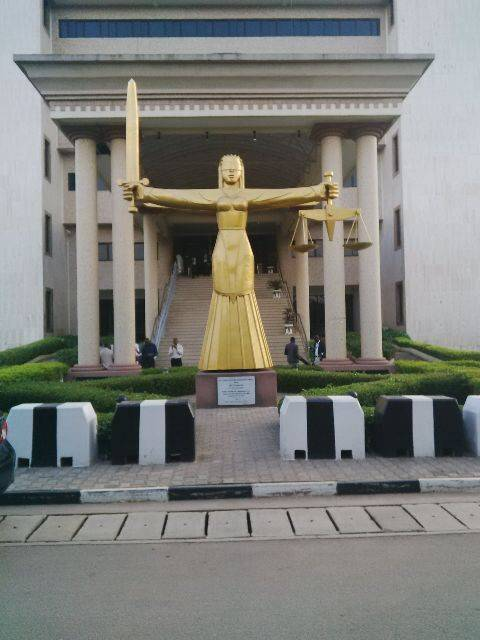
This landmark ruling has been widely hailed as a victory for the rule of law and a significant reprieve for political parties and aspirants, effectively checking what the court deemed an administrative overreach by the electoral body.
The suit, marked FHC/ABJ/CS/517/2026, was filed on March 11 by the Youth Party (YP), with INEC listed as the sole defendant.
The plaintiff, through its counsel J.O. Olotu, sought several reliefs, including a declaration that INEC's powers to receive notices of party primaries and candidates' particulars, as well as its duty to monitor these exercises underSections 29, 82, and 84(1) of the Electoral Act, 2026, do not extend to fixing or prescribing the specific timetable for political parties to conduct their primaries ahead of the 2027 general election.
Justice Mohammed Umar, the presiding judge, upheld these arguments in his judgment.
Justice Umar held that INEC lacks the statutory authority to abridge timelines explicitly provided under the Electoral Act, 2026. Specifically, the court found fault with several aspects of INEC's revised timetable.
It could not lawfully shorten the statutory 120-day period for parties to submit candidates' particulars as required by Section 29(1) of the Electoral Act.
Similarly, concerning the withdrawal and substitution of candidates, the court ruled that INEC cannot impose earlier deadlines than the 90-day period stipulated by Section 31 of the Electoral Act.
Furthermore, Justice Umar declared that INEC does not possess the statutory power to publish the final list of candidates before the 60-day minimum period prescribed by Section 32 of the Electoral Act.
The court also voided the provision in the timetable that fixed the end of campaigns two days before the election, stating it was inconsistent with Section 98 of the Electoral Act, 2026.
Additionally, the judge clarified that the timeframe prescribed for the submission of membership registers for primary elections is not applicable to primaries conducted for the purpose of replacing withdrawn candidates, as per Section 33 of the Electoral Act.
Consequently, the court set aside or nullified the timelines imposed by INEC in its Revised Timetable and Schedule of Activities for the 2027 General Election, deeming them inconsistent with the provisions of the Electoral Act, 2026.
This includes timelines for the conduct of primary elections, submission of candidates' particulars, withdrawal and replacement of candidates, publication of final candidate lists, and campaigning for the 2027 elections.
Reactions to the judgment have been predominantly positive across various stakeholders. Many politicians who had lost in recent primaries view this ruling as a renewed opportunity.
The African Democratic Congress (ADC) and Peoples Redemption Party (PRP) both welcomed the judgment, seeing it as a vindication of their earlier objections to INEC's stringent guidelines and an affirmation of freedom of association and internal party democracy.
Both parties anticipate a potential mass exodus from the ruling All Progressives Congress (APC) by aggrieved members and urged INEC not to appeal the ruling.
Former INEC Commissioner, Mike Igini, and presidential hopeful, Dr. Gbenga Olawepo-Hashim, also lauded the judgment, emphasizing that INEC must operate strictly within the confines of the law and lacks the power to abridge statutory timelines.
The Peoples Democratic Party (PDP) also welcomed the verdict as a major affirmation of the rule of law.
Civil society organizations like the Human Rights Writers Association of Nigeria (HURIWA) and the Movement for Credible Election (MCE) called for immediate compliance by INEC, highlighting the limited timeframe to the elections and the need for expanded democratic space.

The Coalition of United Political Parties (CUPP) specifically pointed to gains such as the exemption of substitution primaries from strict timelines and the restoration of party autonomy.
The ruling is expected to have significant implications for preparations towards the 2027 general elections. It reshapes electoral planning by reaffirming the supremacy of legislative provisions over administrative guidelines issued by regulatory institutions.
It also compels INEC to undertake an immediate review of its election schedule to align it with the Electoral Act, providing political parties with crucial extended breathing space to conduct their internal processes, manage alliances, and address disputes more effectively ahead of the upcoming polls.