Bulgarian Mountains Grip Nation: Mysterious Deaths of Six Spark Investigation
Bulgaria is entangled in a chilling and unprecedented criminal investigation, dubbed the 'Twin Peaks' case, following the mysterious deaths of six people in the mountains. The saga involves two separate discoveries of bodies, conflicting theories about the victims' association with a nature protection agency, and claims of either internal psychological instability or professionally committed murders linked to border crimes. The lack of official clarity has intensified public speculation and exacerbated distrust in the nation's politically unstable institutions.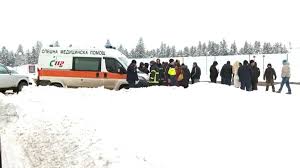
Bulgaria has been shaken by a disturbing and complex case involving the mysterious deaths of six people in the mountains, a saga officials have likened to the television series Twin Peaks.
Zahari Vaskov, director of the national police general directorate, described it as “a case without comparison in our country,” while General Prosecutor Borislav Sarafov remarked that the unfolding details were more shocking than fiction.
The tragedy first surfaced in early February when three men aged 45, 49, and 51 were found dead in the burned remains of a lodge near the Petrohan pass, a key route linking Sofia to Montana province.
Forensic findings indicated apparent self-inflicted gunshot wounds at close range, with DNA on the recovered firearms belonging only to the deceased.
The investigation intensified when authorities discovered three additional bodies inside a campervan at Okolchitsa Peak, roughly 100 kilometers north of Sofia.
The victims, two men aged 51 and 22, and a 15-year-old boy, had been under scrutiny for possible links to the Petrohan lodge deaths.
Preliminary autopsy results suggested “probably two murders committed successively and one suicide,” complicating the narrative that initially pointed toward a triple suicide.
The connection between the two scenes has deepened uncertainty surrounding the true sequence of events.
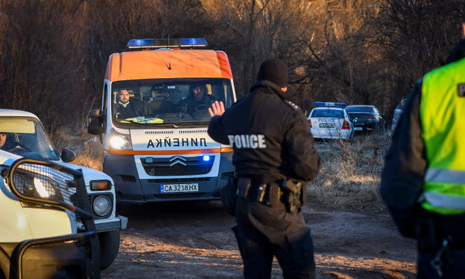
Police confirmed that five of the six deceased were members of the National Protected Areas Control Agency, a non-governmental organization dedicated to environmental protection.
The group reportedly used the Petrohan lodge as a base and organized rural youth camps, with some members described as “forest rangers” assisting border police near the Serbian frontier.
Authorities noted the group’s interest in Tibetan Buddhism, and a relative cited “exceptional psychological instability” among members.
However, relatives of the victims reject suggestions of internal conflict, speculating instead that they may have been killed after witnessing criminal activities such as people smuggling or illegal logging in the border region.
One mother, Ralitsa Asenova, insisted, “They obviously witnessed something, for me, this is a professionally committed murder.”
Limited official communication has fueled widespread speculation in a country already grappling with institutional distrust and political instability.
Bulgaria is currently without a functioning government and is heading toward its eighth parliamentary election in five years.
Former president Rumen Radev described the case as “a political shock and a sign of the country’s condition,” urging swift clarification as public anxiety grows.
The episode unfolds within a broader “post-truth” climate; a 2024 survey found that 70 percent of Bulgarians believe in conspiracy theories and 37 percent have fallen victim to misinformation, underscoring the volatile environment in which this tragic mystery continues to evolve.