Bride Price or Business Deal? The Economics of Marriage in Modern Africa
Bride price in Africa is evolvingfrom a symbol of love and honor to a costly test of wealth. Is marriage becoming business? Understand the truth.

In Africa today, love doesn’t just cost emotion, it comes with a price tag, the age-old tradition of bride price is under sharper scrutiny than ever. Once viewed purely as a cultural ritual part homage, part covenant, it’s increasingly examined through economic, gender, and human-rights lenses. As cities grow, norms shift, and costs rise, what was once about family honour and community bonds is now tangled with debt, inequality, and changing values.
From Tradition to Transaction
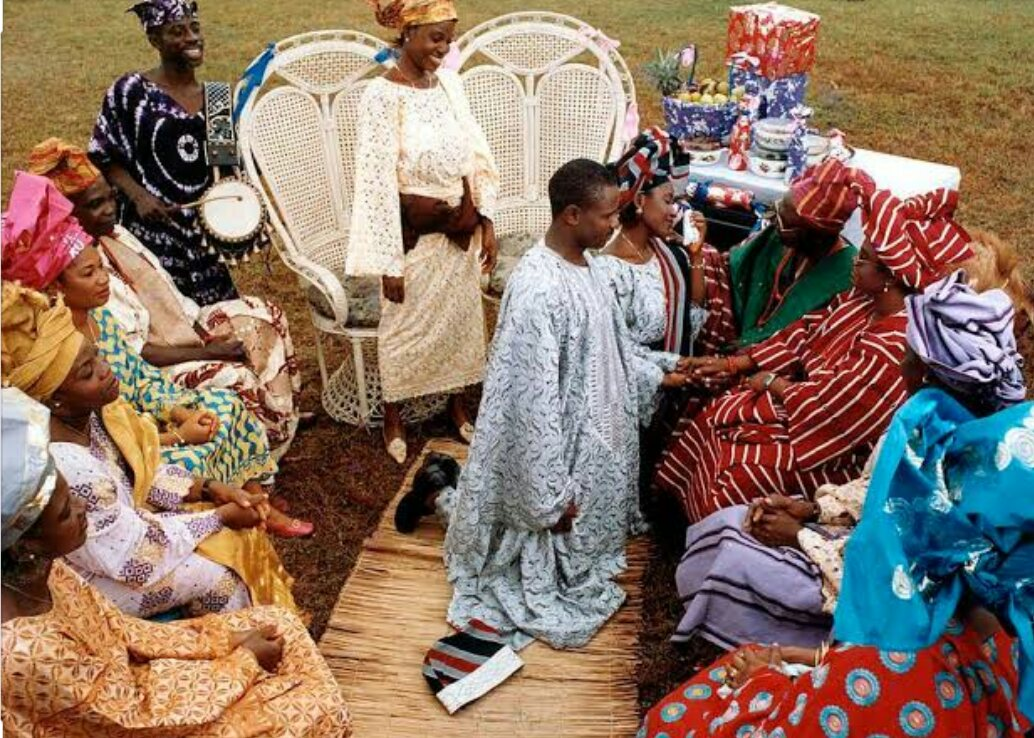
Historically, paying the bride price or bride-wealth or lobolo, depending on the region served multiple symbolic and social purposes: recognizing the raising of a daughter, cementing inter-family alliances, and validating customary marriages. Today, these same practices are becoming more transactional. Across countries, what once was paid in livestock or culturally meaningful gifts has morphed into demands for cash, electronics, or even cars.
This shift is not universal, but studies like one among the Mambwe people of Zambia reveal both positive and negative effects. While the payment can promote respect and unity, it increasingly imposes male dominance and financial strain. In short, what was once an expression of honour now risks becoming an economic test.
The Sticker Shock: Economic Pressure on Grooms
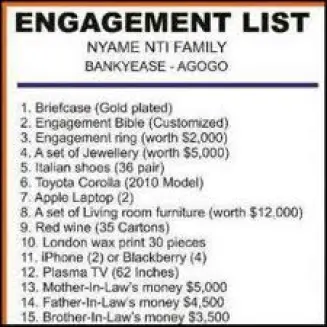
For many young men especially in Africa’s urban centres the modern bride price has become a massive burden. In Ghana and Nigeria, lists of required items now include phones, furniture, and even vehicles.
In rural Uganda, a study in Wakiso District found that grooms who couldn’t meet payment expectations often postponed marriage indefinitely or turned to borrowing from relatives. Converting livestock to cash made matters worse, the symbolic value of a cow may seem small, but its cash equivalent can wipe out a year’s savings. For young men trying to build stable futures, the pressure to “afford” love can feel crushingly unrealistic.
“Bride price is no longer about love, it’s about what you can pay. And that changes everything.”
Gender, Power, and the Question of Ownership
Bride price is rarely just about money, it carries deep expectations about power and gender. In Ghana, high payments are often perceived as proof of a woman’s worth, but also as a form of acquisition. According to a University of Ghana study, many women feel that after their families receive payment, they lose the ability to challenge their husbands or leave abusive marriages.
How bride price entrenched male authority in decision-making within families. In some cases, domestic violence was justified on the basis that “a man paid for his wife.” Such reasoning underscores how bride price, when inflated or misused, can blur the line between respect and ownership.
Psychological and Social Burdens
It’s not only brides and grooms who suffer. Families and communities experience psychological strain over escalating demands. In Ghana, parents of brides describe the tension of setting a high price to reflect their daughter’s worth, while knowing it may delay or prevent her marriage altogether. Young men, meanwhile, fear embarrassment if they can’t meet expectations.
A report titled Bride Price, Poverty and Domestic Violence in Uganda found that excessive demands fuelled cycles of debt and conflict. Men who struggled to repay loans taken for marriage were more likely to experience depression or turn to aggression at home. The social cost of maintaining a “respectable” tradition can thus lead to quiet suffering behind closed doors.
Symbolic vs. Literal: How Meaning Is Changing
Despite the tensions, the bride price tradition is far from disappearing, it’s adapting. Across Africa, younger generations are redefining it as a symbolic gesture rather than a transaction. Religious leaders, elders, and women’s groups have started advocating for modest payments that preserve meaning without promoting inequality.
In Nigeria, many Christian couples are negotiating the custom differently, often refusing ostentatious displays. A study in HTS Theological Studies shows that couples increasingly see bride price as a token of gratitude to parents rather than a purchase. The same trend is visible in Kenya and Tanzania, where elders encourage simplified lists, sometimes only a Bible and symbolic items like cloth or salt to emphasize respect over wealth.
Case Studies: Zambia, Ghana, and Uganda
Across the continent, case studies reveal diverse realities.
In Zambia, the Mambwe community of Mbala District still views bride price as a bridge between families but acknowledges that modernization has distorted its purpose. Researchers found rising instances where payments are treated as a form of “return on investment” for the bride’s education.
In Ghana, the University of Ghana’s Department of Sociology reported that 73% of women surveyed believed high bride prices devalue women rather than honour them. Some men admitted avoiding marriage altogether because the costs had become unsustainable.
Culture
Read Between the Lines of African Society
Your Gateway to Africa's Untold Cultural Narratives.
In Uganda, the advocacy group MIFUMI continues to campaign for legal reform, arguing that the practice, while culturally significant, often perpetuates economic and emotional abuse. Their efforts helped shape a landmark Constitutional Court ruling in 2015 that banned refunding bride price upon divorce; an important victory for women’s rights.
“Culture evolves, and so must our definition of love and respect.”
The Role of Media and Social Influence
Social media has amplified the debate. Viral posts showcasing lavish marriage lists from the “$20,000 bride” in Ghana to the “100-cow dowry” in Kenya, spark heated discussions about love, wealth, and worth. Meanwhile, investigative reports like The Guardian’s feature on South Sudan expose darker sides of the practice, including child marriage disguised as tradition.
Platforms such as Twitter, TikTok, and Facebook have turned cultural commentary into activism, with young Africans openly questioning what bride price means in the 21st century. Hashtags like #MyBridePriceIsRespect and #CultureNotCommerce symbolize a generational redefinition of value.
Conclusion
The tradition of bride price in Africa sits at a fascinating crossroads. It remains a cornerstone of identity and community but also a source of economic and emotional strain. The challenge is not to erase culture, but to reimagine it.

If Africans can restore the bride price to its original purpose; a symbol of gratitude, honour, and mutual respect, it can continue to unify families without trapping anyone in debt or dominance. The future of this custom will depend on whether society can distinguish between heritage and hardship, between value and valuation, and between love freely chosen and love that must be paid for.