Atheism Is for the Privileged, The Poor Cannot Afford It
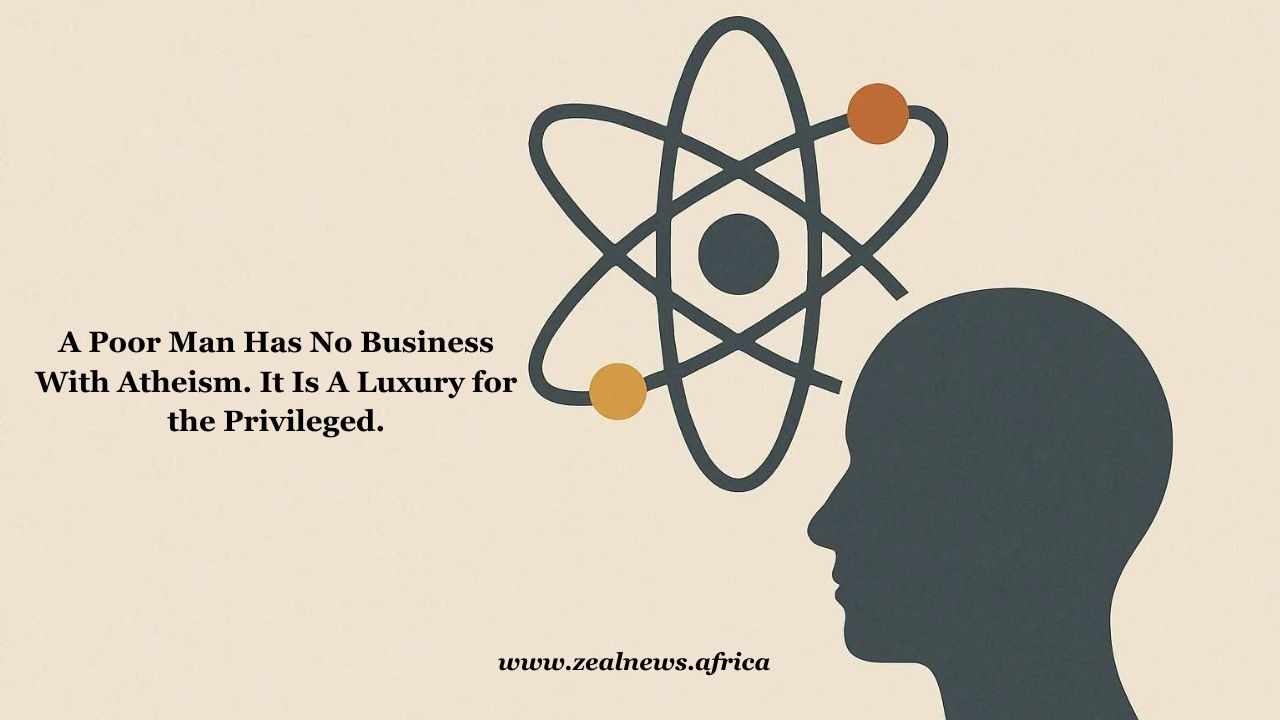
Atheism is not just a philosophical position, in Nigeria, it is an economic one. A closer look at why the poor cannot afford to stop believing, and why faith is not a weakness but the most rational response to a system that keeps failing people.
I want to picture a man who is trying his best to make ends meet. He wakes up before the city does, not because he is ambitious, but because his anxiety does not sleep. He lies there in the thin space between night and morning, running numbers in his head that never add up.
The school fees, which are always due before he notices. The landlord, who is not always patient, coupled with the fact that there is always something in the pot from yesterday, but not enough for today.
Every morning when he wakes up, he doesn't reach for his phone; he doesn't have the luxury of time for that. Without a second thought, he always closes his eyes and, almost without realising it, prays fervently.
Nobody taught him to do it at that moment, and no pastor gave him instructions for 6 a.m. distress. It came from somewhere deeper, from the part of him that has nowhere else to go.
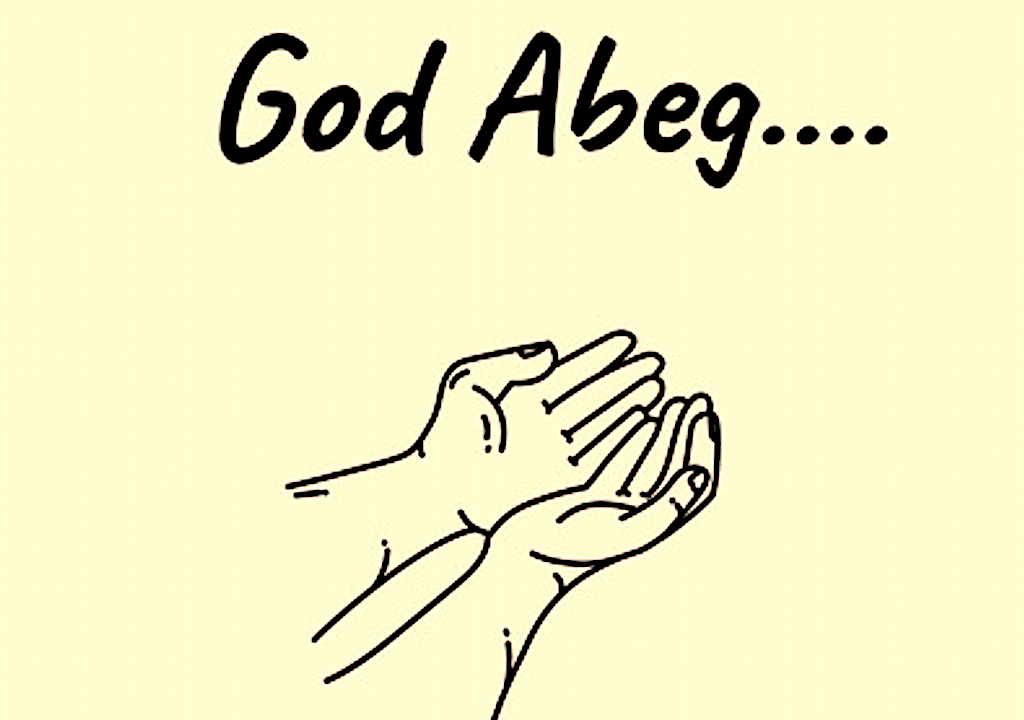
Because when the options run out, something in humans reaches for what cannot be seen. And in Nigeria, that reaching has a sound. It sounds like "God abeg." It sounds like "Omo, na God." It sounds like a slang that stopped being a slang a long time ago and became, quietly, the most honest thing people say all day.
Atheism, in this context, is not just a philosophical position. It is an economic one, and most Nigerians simply cannot afford the entry fee.
When "God Abeg" Stops Being a Slang

Language does not lie about the people who speak it. "God abeg" is not casual or a popular phrase in Nigeria. It is not a decoration on a sentence. It is a full-bodied cry compressed into two words by a people who have learned to say a lot while saying very little.
In a country where the economic floor has been falling since before an entire generation was born, these expressions have become load-bearing. They carry the weight of situations that have no rational solution, at least not one accessible to the person within them.
For the average Nigerian, faith is not separated from daily life. It is a daily function. The man who cannot pay his children's school fees does not compartmentalise his belief into Sunday mornings and Wednesday evenings. He takes it to the bus stop and even takes it to his gateman's job.
He takes it into a system that was not designed to reward his effort and has not done so consistently enough for him to trust it. Faith fills the gap where the system fails, and the system fails loudly, constantly, and without apology.
This is not delusion, it is a coping architecture. The belief that something is watching, that the suffering is not the final word, that there is a version of the future worth surviving toward, is not just a passive thought. They are active ones. They keep people functional inside circumstances that should, by any rational measure, have broken them already.
Choice Is a Privilege. Options Are a Form of Wealth.
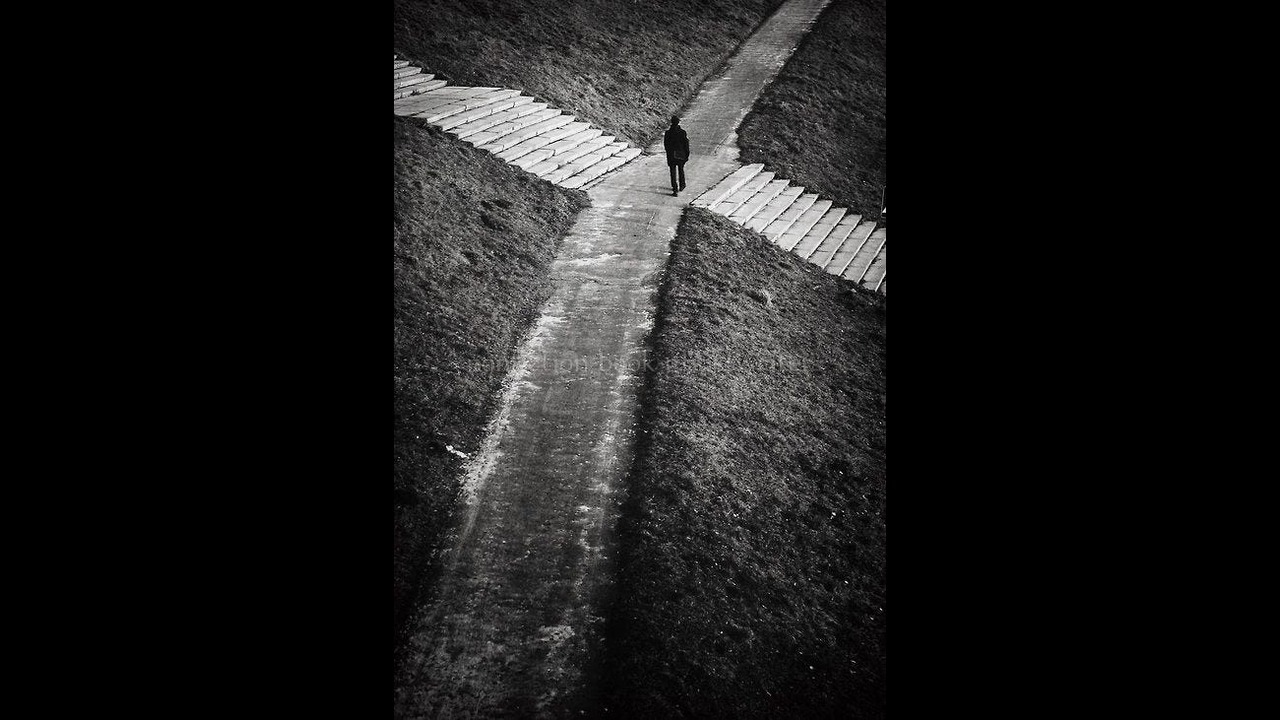
Whether we all admit it or not, there is a version of free will that only exists above a certain income level. Below it, what looks like choice is often just the management of impossibility and control damages. A man with ten viable paths in front of him gets to deliberate.
A man with one path, or none, does not have the luxury of philosophy or any form of advice. He has the luxury of movement, which is different. He moves because stopping is not an option, not because he evaluated and selected the best route.
The truth is, nobody dreams of going to the moon while they are still looking for their next meal. This is not a failure of imagination, it is the correct prioritisation of a brain under scarcity.
Social Insight
Navigate the Rhythms of African Communities
Bold Conversations. Real Impact. True Narratives.
Research in behavioural economics, particularly the work of Sendhil Mullainathan and Eldar Shafir in their study on the psychology of scarcity, confirms that poverty consumes cognitive bandwidth.

The mental load of managing not-enough, the calculations, the trade-offs, the daily triage of which need gets met and which does not, leaves very little room for abstract thought. Including theological abstract thought.
Choosing atheism requires a level of existential stability that poverty systematically denies. To look at the universe and conclude there is no higher force requires, at minimum, a life that has given you enough ground to stand on while you think about it.
That ground, stable income, basic security, and predictable futures, is exactly what poverty removes. The rich man who declares he needs no God has something to fall back on. The poor man who tries the same declaration has nothing waiting beneath him.
Why Atheism, Truly, Is for the Privileged
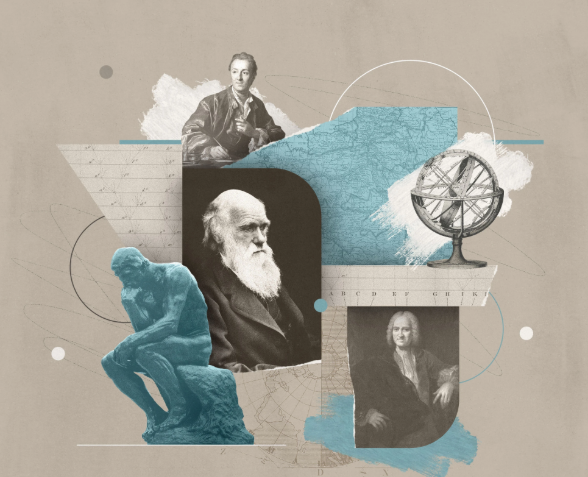
A 2015 Pew Research Centre study found a direct correlation between national wealth and rates of religious disbelief, the wealthier a country, the higher its proportion of atheists and agnostics. Sweden, Japan, the Netherlands, and the United Kingdom, the most irreligious societies in the world, are also among the most economically stable.

They have functioning welfare systems, accessible healthcare, unemployment safety nets, and public infrastructure that actually works. When the state provides what religion promises, security, community, a sense that things will be okay, faith becomes optional.
Nigeria is not one of those countries. Nigeria is a country where the government has, for decades, outsourced the social contract to the church and the mosque. Where NEPA has not reliably kept the lights on, the faith community has stepped in over the years to fill that gap.
This is a place where hospitals fail, and prayer is what a family can actually afford. In this environment, atheism is not a bold intellectual stance, it is a structural impossibility for most people. You cannot remove God from the equation of a life where God is the only constant that has not yet failed you.
The Nigerian believers holding fast to their faith are not intellectually inferior to the Western atheist quoting Nietzsche from a rent-controlled apartment with universal healthcare. They are operating with completely different variables. One group has a system that partially works. The other has belief, and it works harder than any system they have ever encountered.
The God of the Margins, A Closing Thought
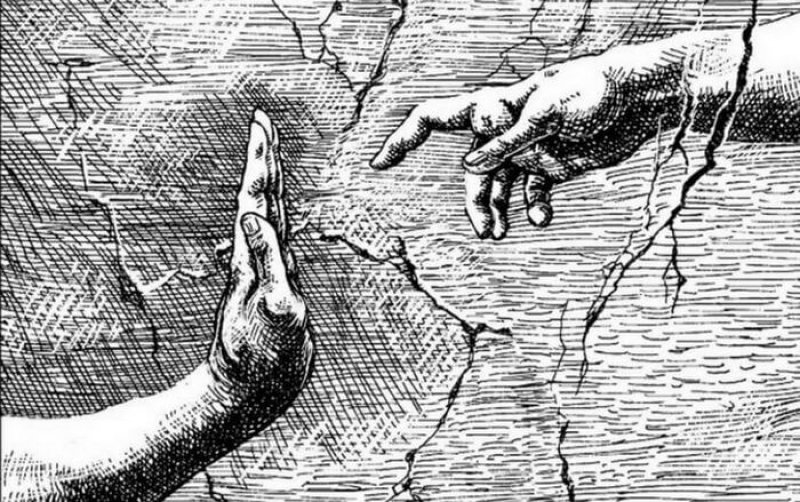
This is not an argument for or against the existence of God. That debate belongs to people with the time and comfort to have it. This is an argument about what faith actually does in a context of sustained deprivation, and what it costs to dismiss it from the outside.
The man from the opening of this piece will definitely and eventually get up. He would have to make something work that should not work, he has no choice but to push through.
He has to stretch his abilities further than they should go. He will show up somewhere, for someone, on nothing. And when someone asks how he is managing, he will say something like "God has been faithful", and he will mean it not as a platitude but as the most accurate description he has for the gap between what he has and what he needs, which keeps getting crossed somehow.
There is a specific type of condescension in telling that man his faith is an illusion. It is the condescension of someone who has never needed it, who has never sat in the dark, with real dark, and found that the only light available was the one they could not see.
The poor do not hold onto God because they have not thought hard enough about whether he exists. They hold onto God because in a world that has consistently underdelivered on every other promise, that one has not yet been proven wrong.
Atheism is a conclusion. Conclusions require the luxury of alternatives, and in Nigeria, for millions of people, no alternative shows up as reliably, as quietly, or as free of charge.
Social Insight
Navigate the Rhythms of African Communities
Bold Conversations. Real Impact. True Narratives.
The privileged get to choose what they believe. The rest of us believe what we cannot afford to let go of.