Adeleke's Sensational TV Dance Sparks Debate, Reveals Personal Struggles
Osun State Governor Ademola Adeleke, famously known as the “Dancing Governor,” recently reflected on his re-election during a Channels Television interview, attributing his victory to his administration’s performance and the public’s appreciation, despite initial underestimation due to his public image. He detailed his government’s achievements, strong labour relations, and personal connection with the people, while also addressing family influences and crucial state financial matters. Adeleke reaffirmed his support for President Tinubu and sought intervention for withheld local government funds, dismissing claims of development concentration in his hometown.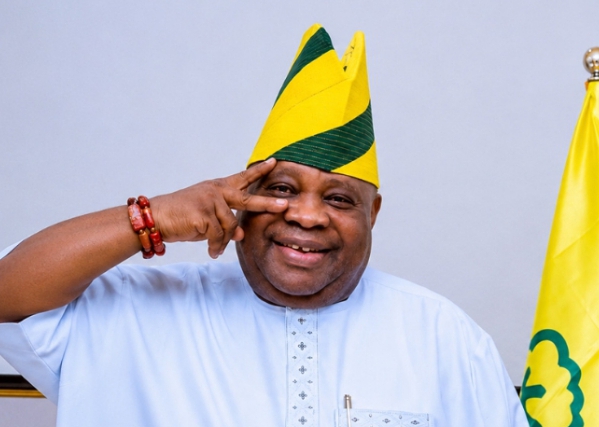
Drama unfolded on Channels Television’s Sunday Politics when the re-elected governor of Osun State, Senator Ademola Adeleke, showcased his trademark dancing skills during an interview with programme anchor Seun Okinbaloye. Popularly known as the “Dancing Governor,” Adeleke responded affirmatively when asked if he could express his feelings through music, proceeding to dance to “Feel,” a hit song by his nephew, Davido. He displayed his famous moves first while seated and then on his feet, reinforcing the public image that has become synonymous with him.
The Independent National Electoral Commission (INEC) officially declared Adeleke, the Accord Party candidate, the winner of Saturday’s governorship election. He secured 511,067 votes, defeating the All Progressives Congress (APC) candidate, Bola Oyebamiji, who polled 444,815 votes. Adeleke described his victory as a significant appreciation from the people of Osun State for his administration's diligent efforts to deliver the dividends of democracy.
Reflecting on his re-election, Governor Adeleke revealed that his opponents, particularly the APC, had initially underestimated him due to his public persona and dancing skills. “At first, a lot of people underestimated me because of my dancing skills. A lot of people believed I wasn’t a serious person; that I would just go there, dance and have fun,” he stated. However, he expressed a preference for being underestimated, noting, “When you underrate me, I hit you from the back.” He asserted that his administration’s achievements in infrastructure, healthcare, agriculture, workers’ welfare, and road development ultimately changed the perception of voters, earning him a second term. Adeleke highlighted that his government had accomplished in three and a half years what the APC could not achieve in Osun in 12 years, crediting a clear blueprint and a competent team upon taking office.
A crucial factor in his re-election was his positive relationship with organised labour, ensuring that Osun State did not experience a single strike under his leadership. He empowered labour unions to negotiate directly with the government, even on critical issues like the minimum wage, stating, “Go and negotiate. Go and do what you have to do. Bring it to me and I will sign it.” This approach fostered significant satisfaction among workers. Furthermore, Adeleke attributed his victory to his personal connection with the people, his accessibility, and a strong grassroots presence. He emphasized, “They love my personality. I give them joy. I’m very accessible. I’m grassroots, so I’m free with everybody. I love my people, and they love me back. And, of course, performance. All of these joined together to make it great.”
In a deeply emotional moment during the interview, Adeleke disclosed that he had visited the grave of his late elder brother, Senator Isiaka Adeleke, affectionately known as Serubawon, prior to the governorship election. This visit was to seek his brother’s prayers and draw psychological strength. Isiaka Adeleke, who passed away on April 23, 2017, was the first civilian governor of Osun State and later represented Osun West Senatorial District. Governor Adeleke shared that he and his late brother possessed similar traits and that he missed him profoundly, sometimes crying at his grave. He recalled visiting the grave on the eve of the election to say, “Brother, here I am again on the march. I am going for an election. I want you to pray for me.” Following Isiaka's death, Ademola Adeleke successfully contested the Osun West senatorial seat, a victory that initially brought his dancing skills into the public spotlight.
Regarding his family’s role in his political journey, Adeleke affirmed the unwavering support of his siblings and attributed his electoral success to the Osun electorate’s acceptance of the Adeleke family. He dismissed the notion of an “Adeleke dynasty,” stating that it was the people of Osun who desired their family's leadership. He also spoke of his elder brother, Adedeji Adeleke (father of the musician Davido), as a revered father figure and trusted adviser. Governor Adeleke expressed missing his late father but seeing his elder brother filled that void, acknowledging Adedeji’s profound wisdom gained from years of business experience. He recounted his initial stubbornness in disregarding his brother’s business advice but eventually learned to appreciate his acumen, subsequently treating him as an "adviser with a portfolio." He also credited his mother for teaching him the importance of sharing and mutual support.
On national political matters, Governor Adeleke reaffirmed his support for President Bola Tinubu’s re-election, describing the President as a father figure. He revealed that Tinubu called him after the election to congratulate him, noting that democracy was prevailing. Adeleke expressed his appreciation for the President’s gesture and committed to continued support, while also planning to seek Tinubu’s intervention on critical state issues. Specifically, he intended to raise the issue of funds allegedly withheld from local governments in the state for almost two years, a situation he claimed had severely constrained his administration’s ability to complete projects despite improved internally generated revenue (IGR), which was largely committed to workers’ salaries and other obligations.
Addressing allegations that his administration had concentrated development in his hometown, Ede, Governor Adeleke unequivocally dismissed these claims as mere propaganda. He cited numerous projects, including flyovers, road developments, and other infrastructure in Osogbo, Ife, and various other parts of the state as evidence of a comprehensive, statewide development agenda. He emphasized that Ede, being part of Osun State, naturally received attention, but development was distributed across all local governments. Adeleke also mentioned personally inspecting roads abandoned for decades, some for as long as 45 years, and directing his Commissioner for Works to ensure their completion. He firmly rejected accusations of hiring incompetent contractors, asserting the integrity of his administration’s project execution.