Amazon Moves Closer to Kenya Launch as It Takes on Starlink in Growing Satellite Internet Race
Amazon has applied for a key telecom licence in Kenya, bringing its Amazon Leo satellite internet service closer to launch and setting up a direct challenge to Starlink in East Africa.
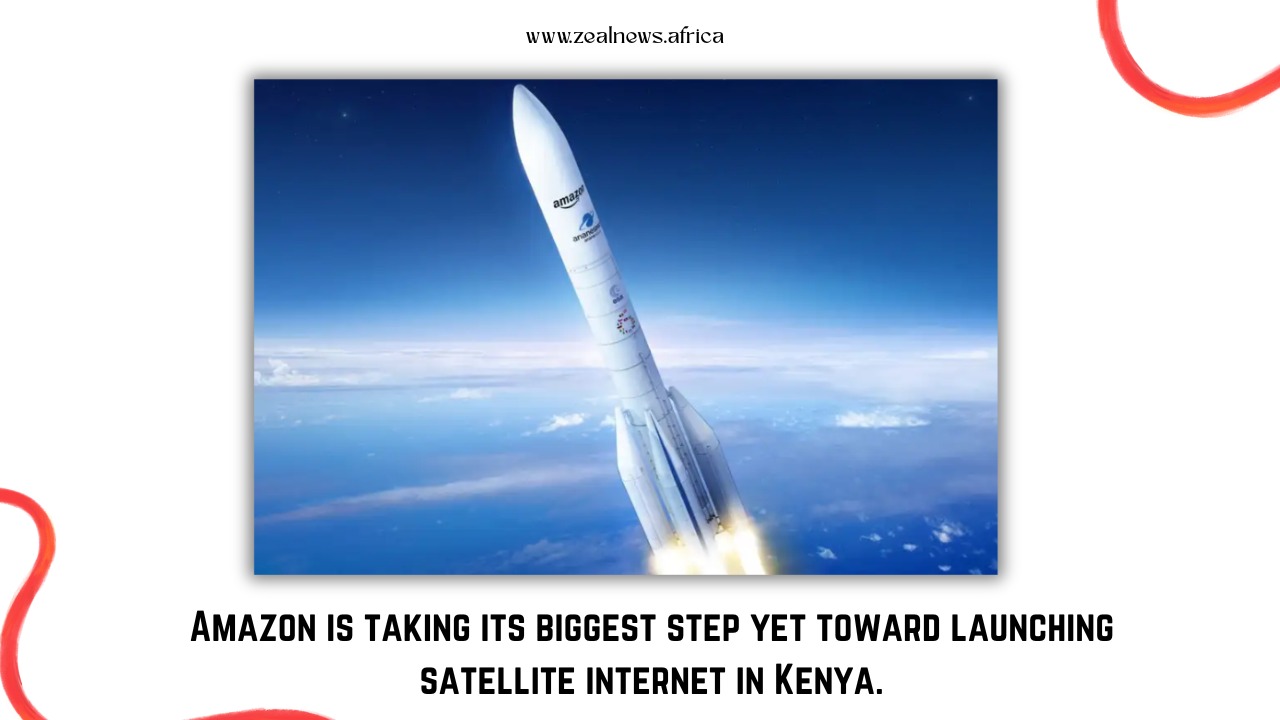
On June 5, the Communications Authority of Kenya published a routine-looking notice in the Kenya Gazette. Buried in it was the confirmation that Amazon Kuiper Kenya Limited, a newly registered local subsidiary, had applied for an international gateway operator licence under the Kenya Information and Communications Act.
The company wants a 15-year permit to build a satellite earth station and network control centre, the physical hub that would let Amazon's Project Kuiper network, now sold to consumers as Amazon Leo, send and receive internet traffic across the continent.
It's a quiet filing for what is, in effect, Amazon's opening move in Africa. Out of 54 countries, Kenya is where Jeff Bezos's satellite broadband company decided to plant its first flag. That choice wasn't random.
Kenya already proved the model works
A satellite gateway is the unglamorous piece of hardware that makes a satellite internet service usable at scale. It's where signals from low Earth orbit satellites get converted into regular internet traffic and routed onto fibre networks. Without one nearby, every byte of data has to travel further, and latency suffers.
Starlink already ran this experiment in Kenya, and the results were crazy. After SpaceX built a ground station in Nairobi in late 2024, latency on its network dropped sharply, in some measurements from around 120 milliseconds down to 26, in others from 296 down to 39.
That's the difference between a connection that feels laggy on a video call and one that feels normal.
Amazon will have watched that closely. If a gateway in Kenya turned Starlink's service from mediocre to competitive almost overnight, the same infrastructure should do the same for Amazon Leo, possibly more, since the company is already promising higher ceilings: up to 400 Mbps on standard terminals against Starlink's 150 Mbps, and up to 1,280 Mbps on commercial terminals against Starlink's 400 Mbps.

There's also the matter of cost. Building a high-capacity satellite gateway runs to roughly $15 million, and operators typically place these facilities next to existing fibre interconnection points to keep that investment efficient. Kenya already has that fibre backbone.
Over the past decade, the country has pulled in heavy investment in data centres, cloud computing, and undersea cable landings, building the kind of digital infrastructure that makes a gateway cheap to plug in rather than expensive to build from scratch.
The market is bigger than Starlink's numbers suggest
On paper, Starlink's performance in Kenya doesn't look like a market worth fighting over. After three years, it has around 22,000 subscribers, less than 1% of the country's roughly 2.46 million fixed internet connections, and ranks eighth among local providers.
Safaricom alone added more new customers in a single quarter than Starlink has signed up in total.

But subscriber counts only tell part of the story. Kenya's internet penetration sits at around 48%, compared to roughly 36% across Sub-Saharan Africa as a whole, according to International Telecommunication Union (ITU) estimates.
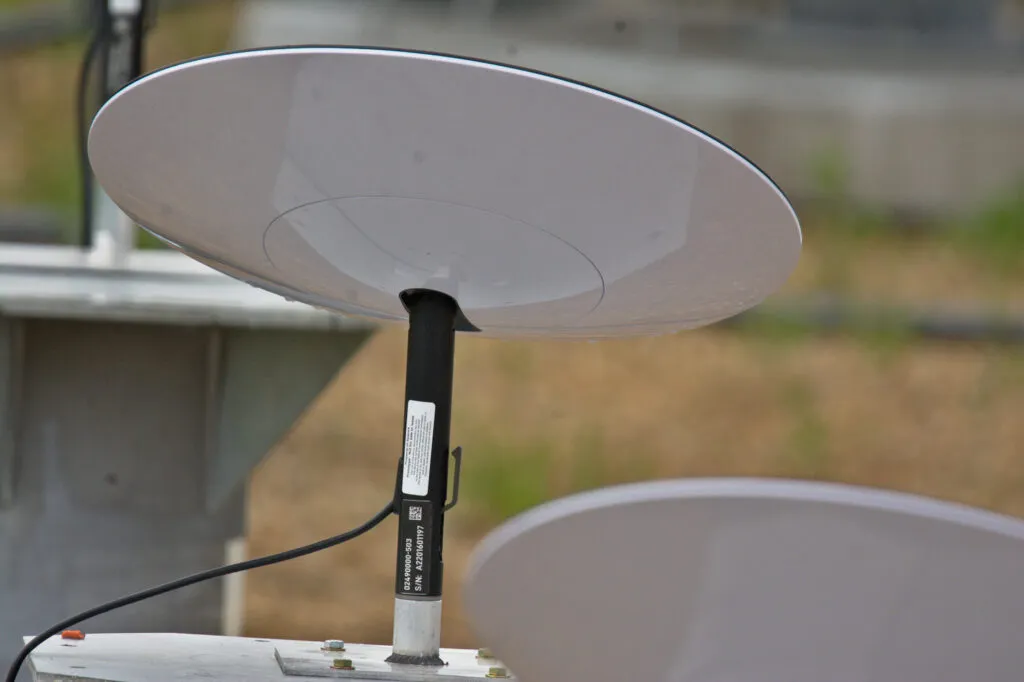
That gap, more than half the country still offline or underserved, is exactly the demand satellite providers are chasing. Starlink's slow uptake has more to do with price than appetite: $499 hardware and a $49 monthly fee are steep next to Safaricom's 5G plans, which can offer 1,000 Mbps for 60 to 70% less.
If Amazon enters with sharper pricing and the higher speeds it's promising, it isn't trying to win over the same urban professionals who already have fibre.
It's targeting the other half of the country, in places like Turkana or West Pokot, where laying fibre cable has never made commercial sense and mobile towers are sparse.
That's also where Amazon's reported partnership with Vodafone comes in, with trials reportedly planned to connect satellite capacity directly to 4G and 5G towers serving remote areas, turning Amazon's satellites into backhaul for mobile networks rather than just home internet.
What Kenya gets, and what it's giving up
For Kenya, hosting Amazon's first African gateway is a reputational win as much as an infrastructure one. It cements the country's standing as East Africa's technology hub, a label Nairobi has been chasing for years through initiatives like Konza Technopolis and its growing data centre sector.
A second major satellite operator setting up shop here, after Starlink, sends a signal to other infrastructure investors that Kenya's regulatory environment is workable.

But it isn't without friction. The Communications Authority has already proposed raising satellite licensing fees tenfold, from roughly $12,300 to over $115,000, plus an annual levy on gross turnover, partly in response to pressure from local ISPs who see Starlink and now Amazon as direct threats to their market share.
Kenyan authorities have also pushed Starlink to hand over subscriber identification details, citing cybercrime concerns, a requirement that will likely extend to Amazon if its service launches.
The bigger question is one of control. Two American companies, both reporting to billionaires based thousands of kilometres away, would be running the gateways through which a growing share of Kenya's international internet traffic flows.
That raises questions about data sovereignty that Kenyan regulators haven't fully answered yet, and probably won't need to until Amazon's licence is approved and its satellites start beaming traffic through Nairobi instead of around it.
For now, the filing is just paperwork. But paperwork is how infrastructure starts, and if Amazon's gateway gets built, Kenya won't just be an early market for Amazon Leo. It'll be the template Amazon uses to decide where in Africa it goes next.