Afro Trailblazers Series(Part 4): Virgil Abloh, The Afro-Diasporan Who Shaped Luxury Street Fashion
From Off-White to Louis Vuitton. Meet Virgil Abloh, The Afro-Diaspora Designer Who Shaped Luxury Street Fashion across the world.
.jpg)
When Virgil Abloh was born on September 30, 1980, in Rockford, Illinois, few could have imagined the trajectory he would carve—much less that he would reshape the very blueprint of global fashion. The son of Ghanaian immigrants—his mother a seamstress, his father a paint company manager—Abloh grew up in the quiet Midwest, absorbing influences that would later collide into a career defined by interdisciplinary genius, cultural defiance, and creative activism.
By the time he passed away at age 41, Abloh had become a cultural force—a $100 million legacy built not only on clothes and sneakers, but on ideas, access, and the belief that anyone can design.
From Engineering to Energy
Abloh’s formal education reads like an engineer’s resume: a B.Sc. in Civil Engineering from the University of Wisconsin–Madison (2002), followed by a Master’s in Architecture from the Illinois Institute of Technology (2006). But he was never confined by silos. Even in college, he was designing T-shirts, blogging about fashion, and dabbling in the tension between structure and expression.
His early creative journey began in earnest in 2007, when he joined Kanye West’s creative team, eventually becoming creative director of Donda. The duo also interned at Fendi in 2009, in an unorthodox attempt to infiltrate luxury fashion from the outside in.
Pyrex, Been Trill, and the Cult of Commentary
In 2012, Abloh launched Pyrex Vision, a one-man streetwear experiment that repurposed deadstock Ralph Lauren flannel shirts, emblazoned with bold graphics and sold for premium prices. The point wasn’t profit—it was provocation, a commentary on Black youth, branding, and economic access. Pyrex shuttered in 2013, but it laid the foundation for something far bigger.
He joined forces with Heron Preston and Matthew Williams to form the Been Trill collective—a short-lived but influential experiment in post-internet street culture. But Abloh’s solo vision was just coming into focus.
The Off-White Phenomenon
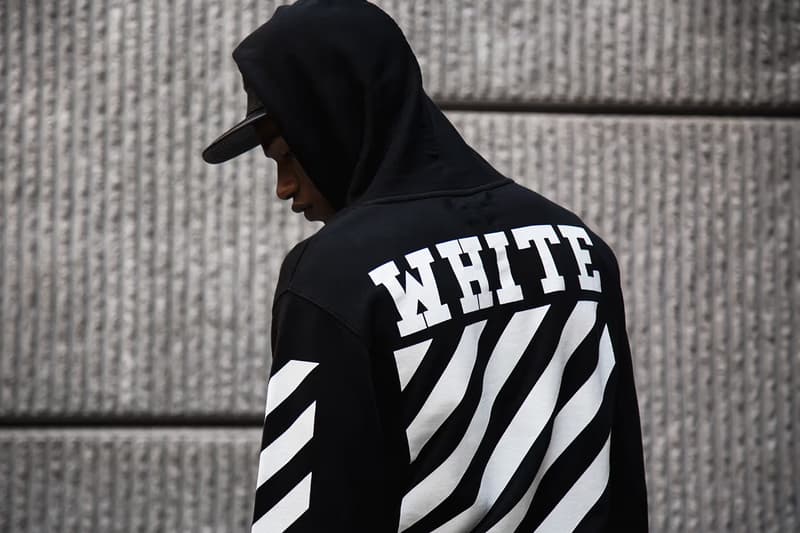
In 2013, Abloh launched Off-White, a Milan-based luxury streetwear brand defined by quotation marks, zip ties, and industrial belts. He called it “the gray area between black and white.” It became a global sensation.
Off-White operated flagship stores in fashion capitals like Paris, Hong Kong, and New York.
His Nike collaboration, “The Ten,” became one of the most sought-after sneaker collections in history.
Off-White partnered with IKEA, Levi’s, Timberland, RIMOWA, and more.
It reached stratospheric pop culture relevance, worn by Beyoncé, Rihanna, A$AP Rocky, and practically every other style icon of the moment.
Diaspora Connect
Stay Connected to Home
From Lagos to London, Accra to Atlanta - We Cover It All.
By 2021, LVMH acquired a majority stake in Off-White, cementing it as a powerhouse within the traditionally insular luxury fashion hierarchy.
Breaking Every Barrier at Louis Vuitton
In 2018, Abloh was named Artistic Director of Menswear at Louis Vuitton, becoming the first Black person to hold the role in the brand’s 168-year history. His debut show in Paris wasn’t just a runway—it was a cultural shift, with a diverse cast, a rainbow runway, and a declaration that fashion would no longer ignore the streets that birthed it.
He reimagined luxury through a postmodern, Afro-diasporic lens, remixing codes, silhouettes, and expectations. Critics hailed him as “the Karl Lagerfeld of his generation.”

A Mind Without Borders
Virgil Abloh was never just a designer. He opened RSVP Gallery in Chicago in 2009. He directed album covers for Kanye West and Jay-Z, earning a Grammy nomination. He curated exhibitions like “Figures of Speech” at the Museum of Contemporary Art Chicago. He launched furniture collections, disrupted product design, and gave lectures at Harvard and Columbia.
Creative Access and Cultural Uplift
Abloh’s mission was always bigger than aesthetics. He viewed fashion as a tool for social change, creating “cheat codes” for aspiring designers, offering free templates, and launching the Postmodern Scholarship Fund to support Black students in fashion.
He democratized creativity. He broke down silos. He gave others the blueprint and dared them to remix it.
Quiet Struggle, Loud Legacy
Unbeknownst to the public, Abloh had been battling cardiac angiosarcoma, a rare cancer, for over two years. He kept working—across brands, continents, and industries—while enduring the unimaginable.
He died on November 28, 2021. But his vision—of inclusion, innovation, and impact—lives on in every sneaker he redefined, every museum that now welcomes streetwear, and every young Black creative who believes they too belong at the table.
Final Words
Virgil Abloh didn’t just blur the lines between streetwear and luxury—he erased them, and then built something new in their place. A designer. An architect. A cultural engineer. A beacon.
Diaspora Connect
Stay Connected to Home
From Lagos to London, Accra to Atlanta - We Cover It All.
His life was short, but his influence is permanent. In his own words:
“Everything I do is for the 17-year-old version of myself.”
And for millions of others, it still is.