Africa's Future at Risk: NYA CEO Warns of Unemployability Crisis for Continent's Youth
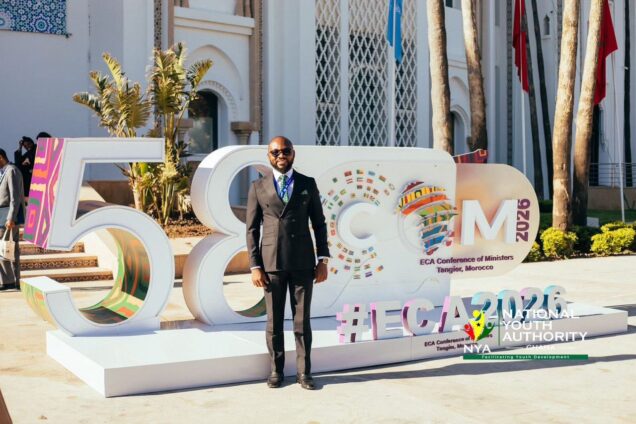
Africa's rapidly growing youth population presents both a historic opportunity and a serious risk, depending on how it is managed. This critical juncture was a central theme for Osman Ayariga, Chief Executive Officer of the National Youth Authority (NYA), as he delivered insights at the Continental Youth Symposium in Tangier, Morocco. He stressed that the continent's demographic advantage, with nearly 60 percent of its population under the age of 25, must be matched with deliberate policy action, warning that "youthfulness alone will not deliver transformation."
Mr. Ayariga highlighted that the core challenge facing young people across Africa is not merely unemployment, but unemployability. Many young Africans, despite possessing formal qualifications, often lack the relevant job-market skills and competencies required by employers and evolving markets. He identified a "three-part problem" contributing to this crisis: a skills gap, where training does not align with market needs; a capacity gap, characterized by insufficient human and adaptive skills to navigate change; and a leadership gap, marked by limited youth participation in policy and programme design. He emphasized that tackling these issues in isolation would be ineffective, calling for integrated policy responses across education, labour, and governance systems.
To address this persistent skills mismatch, Mr. Ayariga underscored the critical importance of closer collaboration between government and industry. He advocated for treating industry not just as a stakeholder to be consulted, but as a "co-owner of the training process." This approach ensures that the private sector is involved from programme design through to implementation, thereby guaranteeing that training directly aligns with real market demand and industry standards.
Ghana’s National Youth Authority exemplifies this collaborative model. Mr. Ayariga revealed that the NYA works closely with key organizations such as the Ghana Employers’ Association and the Association of Ghana Industries, along with various trade groups, to shape its training programmes. These industry actors are not simply consulted; they actively serve on technical committees and governance structures, providing crucial input. Such partnerships enable the identification of priority sectors for skills development, including emerging fields like fintech, agtech, garment manufacturing, IT, and automobile services, ensuring that competency-based curricula reflect current industry needs.
Further enhancing employability, the NYA CEO also highlighted the significance of work-based learning initiatives. He cited programmes like the National Apprenticeship Programme, where trainees are attached to companies and innovation hubs to gain invaluable hands-on experience. These structured partnerships are vital for creating direct employment pathways, ultimately reducing the mismatch between available skills and job market requirements, and significantly improving overall employability outcomes for young Africans.
Crucially, Mr. Ayariga reiterated that youth leadership must be foundational, not optional, in decision-making processes. When young people are engaged as co-creators in policy and programme design, the resulting interventions become more relevant, impactful, and sustainable. He warned that if Africa fails to align leadership, skills, and innovation systems decisively, it risks deepening inequality and exclusion, rather than unlocking its demographic dividend for prosperity.
You may also like...
When Cities Consume Their Foundations: How Lagos’ Lagoon Is Being Dug Away

Lagos and other parts of Africa are being built on sand extracted from their own lagoon, and the ecological cost is moun...
It's Easier to Fly to Europe Than to Another African Country, And That's Not by Accident

Intra-African travel remains harder than trips to Europe due to colonial-era borders, weak passports, and policy choices...
What If Your Body Could Heal Arthritis Instead of Just Managing It?

Duke University’s breakthrough in regenerative arthritis therapy could shift treatment from pain management to joint rep...
Countries A Nigerian Passport Holder Can Enter Without a Visa in 2026

A Nigerian passport holder can access 44 destinations visa-free or with simplified entry in 2026. Here is the full list ...
10 Countries That Grant Easy Citizenship by Birth

These are 10 countries that offer easy citizenship by birth, providing children with access to education, healthcare, an...
WGA Deal: Senatorial Pressure Mounts Amidst $321M Health Fund Details

The Writers Guild of America has struck a four-year deal with major studios, significantly overhauling its health care p...
Halle Bailey & Regé-Jean Page's 'You, Me & Tuscany' Sparks Divided Reviews

Halle Bailey and Regé-Jean Page star in "You, Me & Tuscany," a new romantic comedy set in Italy about an impulsive journ...
Historic Musical Fusion: Andrea Bocelli to Share Stage with Cumbia Stars Los Ángeles Azules and Ximena Sariñana in Mexico

Andrea Bocelli is set to perform a free concert at Mexico City's Zócalo on April 18, joined by Los Ángeles Azules and Xi...