Africa on the Brink: End of AGOA Ignites Calls for Radical Trade Overhaul
The Africa Growth Opportunity Act (AGOA) has concluded after 25 years, ending duty-free access for African products to the US market and creating significant uncertainty for trade and jobs across the continent. Kenya faces severe implications, including tripling tariffs and potential job losses in its vital textile sector. This marks a pivotal moment for Africa to reconsider its reliance on external partners and strengthen intra-continental trade initiatives.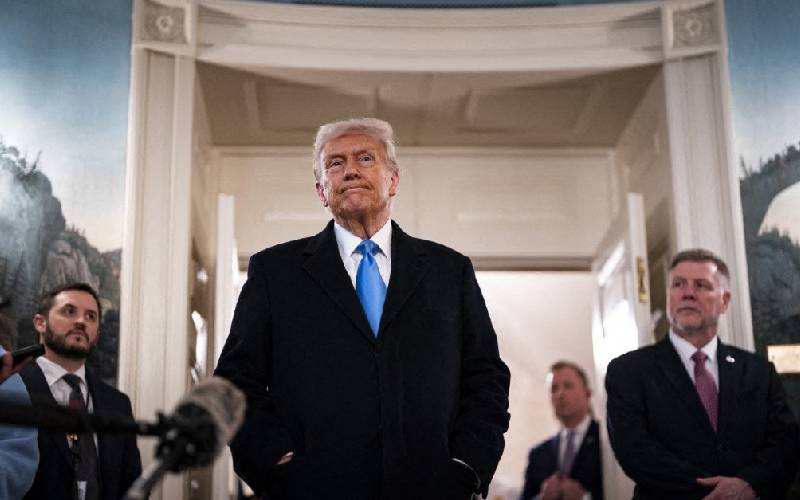
The Africa Growth Opportunity Act (AGOA), a cornerstone of US-Africa trade relations for a quarter-century, officially concluded this week. This landmark legislation, initiated by President Bill Clinton in 2000, had provided duty-free access for a wide array of African products into the United States, fostering economic reform through trade rather than aid.
Over its 25-year tenure, AGOA facilitated the export of billions of dollars worth of products from Africa to America, encompassing everything from primary goods to manufactured items, with apparel being a significant category. While its impact varied across eligible countries, it proved to be a transformative force for those that strategically leveraged the program. In 2023 alone, AGOA exports from Africa reached an impressive $10 billion, a figure that, while a small fraction of overall US merchandise imports, constituted a substantial share of exports for key participating nations, including Kenya. The zero-tariff environment and the encouragement of specialization under AGOA significantly boosted the competitiveness of African exporters in the global market.
The expiration of AGOA, despite persistent lobbying efforts by African governments over the past two years, has ushered in a period of profound uncertainty for African trade and employment. The immediate consequence is the loss of preferential duty-free access to the US market, which will now be replaced by country-specific and sectoral tariffs. This abrupt increase in tariffs is anticipated to disrupt well-established trade relations and severely disadvantage African businesses, particularly those in highly protected sectors like textiles and apparel, where AGOA had previously offered crucial market entry.
Kenya, for instance, faces particularly steep challenges, with its trade-weighted average US tariff projected to nearly triple, soaring from 10% to 28%. This shift carries immense implications for the East African nation. According to the Kenya National Bureau of Statistics, 66,804 Kenyans are directly employed in the apparel and textile sector, a major beneficiary of AGOA. Many factory owners have already signaled their intent to either close operations or substantially reduce their workforce in response to the new trade landscape. Economically, Kenya exported 60.5 billion Kenya shillings worth of apparel and textiles under AGOA in 2024, a vital source of foreign exchange. The anticipated job losses will exacerbate an already critical unemployment crisis in the country, disproportionately affecting young women who form the majority of the workforce in AGOA-producing factories.
These trade disruptions arrive at a challenging juncture for Kenya, as its economy has been shrinking, and its global trade competitiveness has been eroded by an influx of cheaper products, particularly from Asia, making diversification into other international markets increasingly difficult.
The non-extension of AGOA has also brought political dimensions to the forefront. For those in Africa who initially welcomed the Trump Presidency, the administration's actions, including the earlier termination of USAID programs leading to job losses and restricted access to life-sustaining drugs for HIV patients, have been a bitter experience. While a formal extension of AGOA requires Congressional approval, a temporary extension could have been issued by the American President. The prevailing sentiment suggests that President Trump's focus is currently elsewhere, rather than on a continent he has previously addressed with derogatory terms. Critics argue that the failure to even temporarily extend AGOA contradicts the stated commitment of a "transactional" rather than philanthropic approach to Africa.
For Kenya and Africa at large, the conclusion of AGOA serves as a critical impetus for a fundamental re-evaluation of dependency on distant nations like America for both aid and trade. It underscores the urgent need to invest robustly in the much-advocated Africa Free Trade Area (AfCFTA) agenda, promoting increased intra-continental trade as a more reliable path to sustainable growth and self-reliance. While the short-term impacts of the end of AGOA and similar initiatives, including the cessation of USAID, may be arduous, they could ultimately spur the continent towards more enduring, indigenous solutions. For example, Kenya's primary trading partners are increasingly its East African neighbors; Tanzania alone imported over 60 billion shillings worth of Kenyan products last year, a volume comparable to its AGOA exports. This highlights the imperative for African nations to cultivate strong regional relationships that foster continuous and enhanced trade, recognizing that Western nations are primarily focused on their own survival with limited attention for Africa's unique challenges.