A Thread Between Continents: Austrian Lace in Nigerian Life
This is the story of how European lace became a cultural symbol in Nigeria.
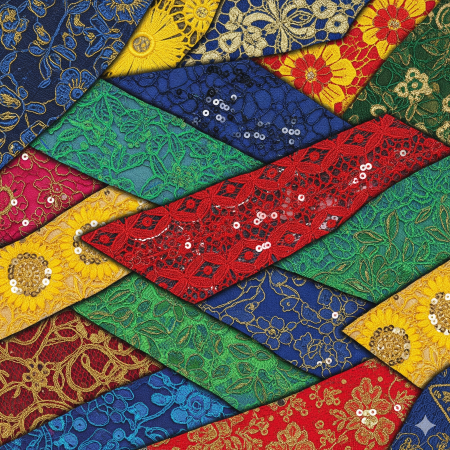
In the rich tapestry of Nigerian fashion, few materials evoke as much prestige, nostalgia, and quiet reverence as Austrian lace—also often referred to colloquially as "Swiss lace" or "African lace." Stitch by stitch, over decades, this vibrant, embroidered textile wove itself into the fabric of Nigeria’s cultural identity.
From its serendipitous beginnings in 1960s Lagos to its contemporary reinvention on fashion runways and museum walls, the history of Austrian lace in Nigeria is a story of commerce, aesthetics, ambition, and adaptation.
1. A Chance Encounter Echoes Across Borders

Image Credit: This Day Style
The tale begins in the early 1960s, when a businessman hailing from Lustenau in Austria’s Vorarlberg region—a hub of textile and embroidery production, made a chance stop in Lagos. There, he noticed Nigerian women draped in vivid, embroidered garments, radiating confidence and occasion.
But these weren’t Austrian-made pieces; they were locally tailored garments using fabrics imported primarily from Switzerland and France—especially Swiss voile, organza, and French lace, which had already made inroads into West African fashion via colonial trade routes and elite merchants in Lagos and Cotonou.
Nigerian tailors and textile traders—many of them Yoruba women operating from bustling markets like Balogun and Gbagi—had, for decades, commissioned these high-end European textiles and transformed them into ceremonial attire for weddings, church services, and naming ceremonies.
It was this existing appetite for fine embroidery and ornate dress that caught the Austrian’s eye. Intrigued, he returned home with Nigerian-inspired swatches, and thus began a cross‑continental creative spark.
From then on, Austrian manufacturers, recognizing an untapped market, began direct exports to Nigeria. The fabrics—meticulous, floral, sometimes luxuriant with crystals or velvet, were eagerly embraced. For many Nigerians, the term "lace" became shorthand for opulence, tradition, and communal celebration.
2. Factory Roots in Nigeria: The Boom Decade

Image Credit: Open Edition Journals
By the 1970s, buoyed by the oil boom, several embroidery factories had taken root on Nigerian soil. Large-scale ventures like Austro-Nigerian Embroidery Factories Ltd in Aiyepe, founded in 1972 through a partnership between Franz Mäser of Austria and Prince Shafi Mobolaji Shittu, embodied the era’s optimism. Their "Aiyepe lace" graced socialites for decades.
At their peak, about 20 embroidery factories thrived across Lagos and Ijebu. Brands such as Shokas Industries and Novelty Embroideries supplied wholesale markets, anchoring a trade network that blended imported aesthetics with local enterprise.
3. The Zenith, the Decline, and Enduring Prestige

Image Credit: Observatory of Economic Complexity (OEC)
Meanwhile, in Austria’s Vorarlberg, embroidery retained its economic significance. In 1966, a Lustenau businessman first discovered Nigeria’s burgeoning market; by 2002, embroidery exports to Nigeria soared to €44.8 million, though by 2010 they had declined to around €20 million, squeezed by Asian competition—but still notable.
Today, Austrian lace remains associated with fine craftsmanship. As designer Folake Folarin‑Coker notes, wearing Austrian lace in Nigeria is a signal—a marker of elegance, tradition, and “being at the top of the ladder.”
Yet, by the late 1990s and early 2000s, many factories in Nigeria faltered. High costs, rising imports, infrastructural challenges, especially power supply, and regulatory constraints forced closures.
4. Reimagining Lace: From Tradition to Trend

In the 21st century, Austrian lace experienced a creative revival in Nigeria, recast not just as heritage, but as runway spectacle. In 2011, the Austrian Lace Nigerian Fashion Event at Eko Hotel, Lagos, celebrated 50 years of lace trade. Co-hosted by the Austrian Embroidery Association and the Austrian Embassy, it showcased collaborations with Nigerian designers; Folake Folarin‑Coker (Tiffany Amber), Ituen Basi, Frank Osodi (House of Bunor), and Godwin Mekwuye (Vivid Imagination), who transformed traditional lace into contemporary couture: tiered skirts, peplum blazers, blouses with Victorian echoes, and flowing tea‑length dresses.
A documentary, Beyond Trade, chronicled this trajectory from early trade to modern artistry, and spotlighted the entrepreneurial women who cultivated this legacy.
5. Museums, Memories, and Market

Image Credit: Adire African Textiles
Around 2010, the Vienna Ethnology Museum curated an exhibition titled "African Lace", spotlighting the lace's cultural imprint in Nigeria. Accompanied by exhibitions in Lagos and Ibadan, the show affirmed that the lace had transcended its commercial origins to become a cultural artifact.
The exhibition featured pieces from the Vienna Museum in collaboration with Nigeria’s National Commission for Museums and Monuments, bridging continents through cloth and memory.
6. Continued Recognition: 2025 and Beyond

Image Credit: The Sun
In February 2025, the Austrian Embassy in Lagos hosted an Austrian Lace Appreciation Event, honoring Nigeria’s leading lace merchants. The gala, with its mini fashion show and awards ceremony, reaffirmed lace merchants as industry pillars. Distinguished attendees included the Austrian Ambassador and Lagos State’s First Lady.
This underscores lace's enduring role—not just as textile, but as commerce, diplomacy, and cultural heritage.
Reflections: Lace as Legacy
The journey of Austrian lace in Nigeria is emblematic of how global exchange evolves through textures, aesthetics, and shared aspirations.
The rise and fall of local production speak to the fragility of infrastructure-dependent trade, yet also to the resilience of cultural desire.
At its heart lies the Yoruba cultural adoption, where lace is not merely fabric but a marker of belonging (weddings, naming ceremonies, aso‑ebi circles).
The 2011 fashion revival and museum exhibitions turned lace into multimedia narratives, materials transformed by runway poise.
Its rise in the use of comedy skits by the likes of Layi Wasabi and Nasboi, brought it back to public consciousness.
The 2025 awards event signals that even amid globalized markets, the lace legacy continues to be woven into Nigeria’s social and aesthetic consciousness.
Staring at the coast of the Atlantic ocean, one can't help but imagine a floral pattern embroidered in Austrian mills, crossing the sea to Nigeria, then morphing into agbadas, bubas, and bridal regalia. These are chapters in a story of travel, creativity, and shared vision.