70 Years Ago, Four Scientists Gave Artificial Intelligence Its Name
Seventy years ago, four scientists gave artificial intelligence its name. Today, we're living with the consequences of the idea they helped set in motion.
Today, you can ask an AI to write an email, generate an image, translate a sentence or help you with code. You can have a conversation with it, ask it to explain something you don't understand, and get an answer almost instantly.
Go back 70 years and that would have sounded like science fiction.
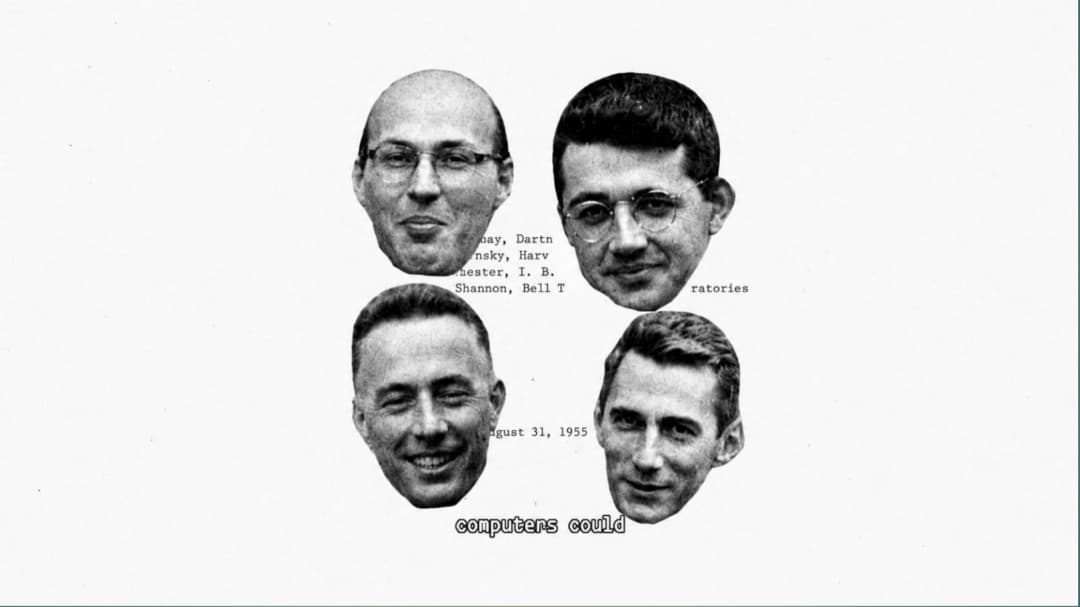
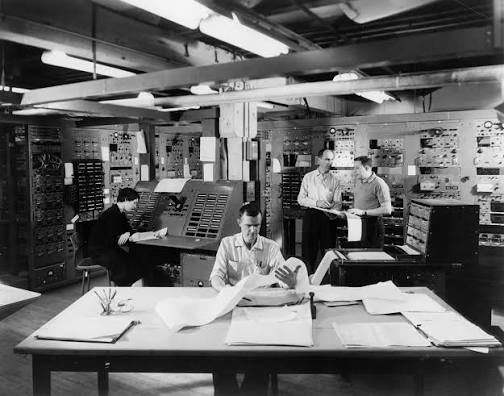
In August 1955, computers were mostly machines for calculation. Then four researchers wrote a proposal for something far more ambitious: a summer of research into whether a machine could use language, form concepts, solve problems humans had always handled themselves, and even get better at what it was doing over time.
They called the field they wanted to explore "artificial intelligence." The workshop itself opened at Dartmouth College the following summer, bringing researchers together around an idea that was still largely theoretical.
The proposal that started it
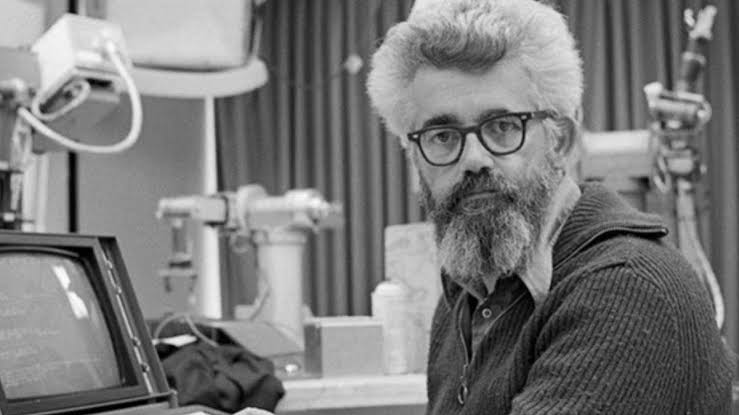
The four researchers were John McCarthy, Marvin Minsky, Nathaniel Rochester and Claude Shannon. McCarthy, a young Dartmouth mathematician, was the one who pushed hardest to get everyone in one place instead of working in isolation.
Minsky was already deep into questions about how the brain itself might work computationally. Rochester came from IBM, where he'd been building some of the earliest large-scale computers. Shannon, at Bell Labs, had already reshaped how the world thought about information itself.
Together, they wrote the proposal for what became the Dartmouth Summer Research Project on Artificial Intelligence.
The proposal was striking because there was no intelligent machine sitting in a laboratory waiting to be tested. The researchers were asking if human intelligence could be broken down into processes a machine could reproduce. That was the bet, and nobody could yet say if it would pay off.
The proposal didn't describe ChatGPT or anything resembling the AI tools we use now. But it did lay out ambitions that feel familiar today.
Machines could use language, they could work with concepts, solve problems and perhaps improve their performance.
The summer that established a new field
The research project ran at Dartmouth College in New Hampshire from June 18 to August 17, 1956. Researchers gathered around the same question: could intelligence be studied as something a machine might do, not just something a human brain happened to do?
Nobody walked out of Dartmouth that August with a working intelligent machine. And the ideas behind machine intelligence hadn't started there either. The phrase itself had already appeared in the 1955 proposal, a year before the researchers gathered in Hanover.
Dartmouth gave those ideas a common direction and a field that others could continue building.
They kept building it for decades.
There were breakthroughs, long stretches of disappointment, and plenty of predictions that turned out to be badly wrong. Progress eventually picked up again as computers became more powerful, more data became available, and machine-learning techniques matured.
The ideas that survived 70 years
Look at what the researchers wanted to investigate in 1955, and some of it feels oddly familiar now.
Getting a computer to use language was once a genuinely hard research problem.

Today, it's something people take for granted, asking AI to draft a message, translate a sentence or explain a concept without thinking twice about the technology behind it.
Problem-solving has shifted too. Machines can now help people work through tasks that once required considerable time and effort, from handling vast amounts of information to supporting technical and scientific work.
The proposal also raised the possibility of machines improving their own performance. That's not the same as a machine independently making itself smarter, but the basic idea of systems getting better at tasks through learning is now central to machine learning.
The researchers weren't right about everything. They were looking at a technology that barely existed and trying to imagine where it might go.
What they got right was simpler than any specific prediction: machine intelligence was worth studying seriously in the first place.
Seventy years later
The AI we use today is the result of decades of work that came after Dartmouth, much of which the four researchers could never have predicted.

In 1955, artificial intelligence was an idea about what machines might one day do. Today, machines use language, solve problems and learn from data in ways that would have seemed extraordinary to those researchers.
We're now dealing with questions that didn't exist for them. How far should these systems go? Who should control them? What happens as they take on more of the work people once did themselves?
The four researchers were simply trying to find out if machines could do something that, until then, seemed uniquely human.
Seventy years later, we're still living with the consequences of that idea.