50 Million Registered, Millions Still Shut Out: Ethiopia's 2026 Election and the Democracy Problem Africa Still Struggles With
Ethiopia's 2026 election registered 50.5 million voters but with Tigray excluded, opposition suppressed and millions displaced, the numbers mask a democracy in name only.
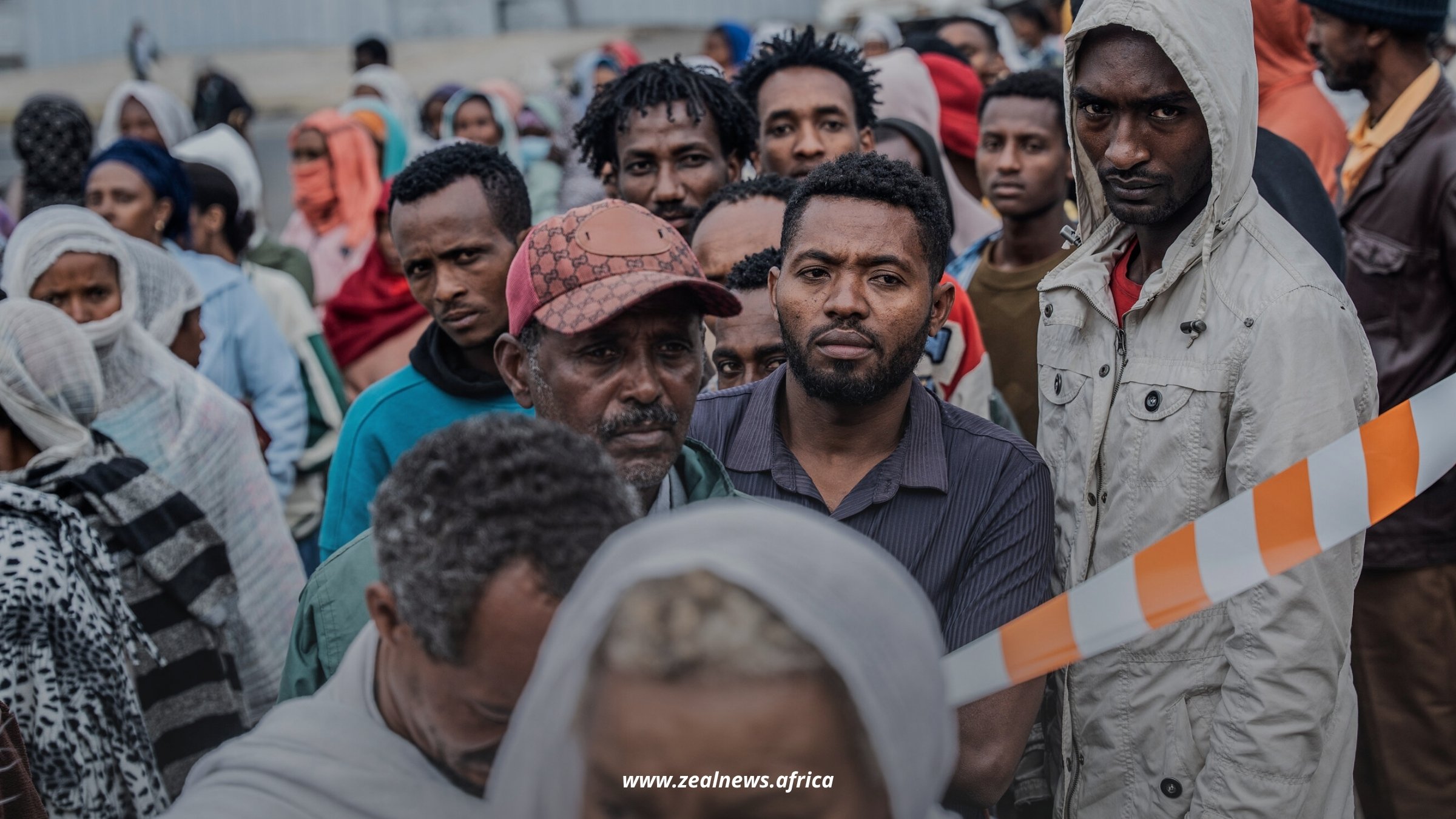
Over 50.5 million citizens registered for Ethiopia's seventh general election which was scheduled for June 1, 2026. This is a figure that the National Election Board of Ethiopia (NEBE) announced with evident pride which, in all honesty, should be so. Except the figures are only impressive on paper.
About five million registered online, while the remaining did so in person across 614 electoral districts. For a country of roughly 128 million people, this is a historically significant registration drive.
There is, however, a difference between the registration numbers and how many were realistically able to vote — and whether a vote counts in the conditions under which this election was held.
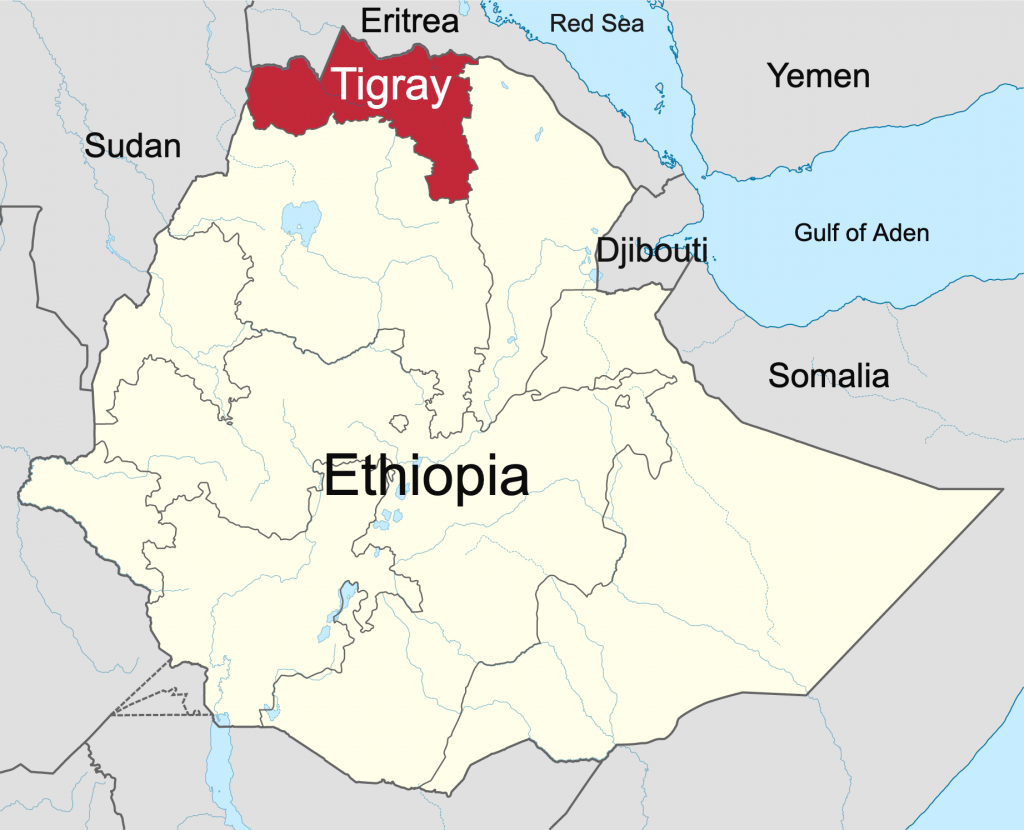
Ethiopia's 2026 Election Issues: Tigray Excluded, Amhara Contested
In the Amhara region, at least eight electoral districts out of 138 were excluded from the voting process due to security conditions, while the electoral council announced the complete cancellation of elections in Tigray for the second time in recent years, meaning the region's continued absence from representation in the federal parliament.
In Oromia, hostilities between federal forces and the Oromo Liberation Army continued unabated, with significant civilian displacement and movement restrictions.
The Amhara Diaspora Global Forum argued, in a statement released ahead of polling day, that conducting elections under these conditions disenfranchises more than two-thirds of Ethiopia's population.
As of December 2025, UNHCR recorded approximately 1.9 million internally displaced persons in Ethiopia, with ongoing conflict continuing to drive new displacement into 2026.
For these citizens, many of them inhabiting the country's most politically contested regions, voter registration is not just difficult, showing up at a polling station was impossible — the polling stations were even non-existent.
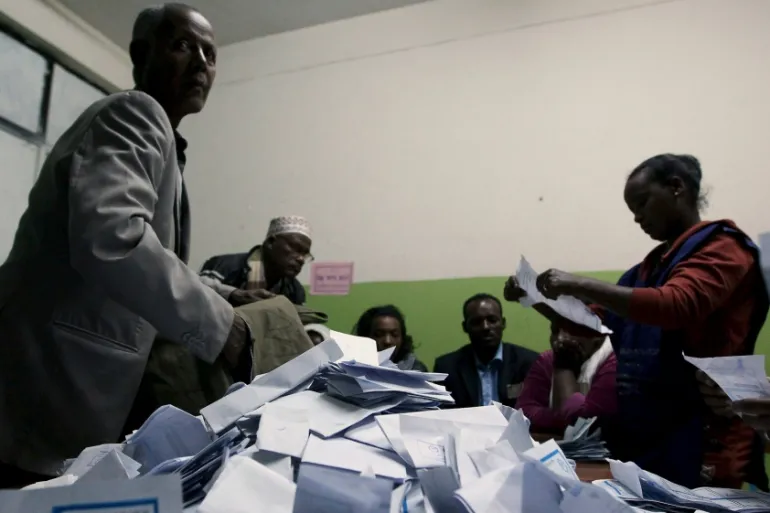
How the 2015 and 2021 Ethiopian Elections Compared
The 2026 election story does not exist by itself. It is the third in a sequence that tells a consistent story about the relationship between electoral process and political reality in Ethiopia.
In 2015, Ethiopia's ruling Ethiopian People's Revolutionary Democratic Front won 100 percent of parliamentary seats. This result drew near-universal condemnation from opposition groups, who argued their supporters had been systematically harassed.
There were no international observers to monitor the elections and the result was more of a mathematical statement about who controlled the infrastructure of political participation than a democratic mandate.
Only 5.1% of valid votes went to opposition parties in 2015. The EPRDF did not win because Ethiopians loved it unconditionally. It won because the entire electoral system — the candidate registration process, the treatment of opposition campaigners, the absence of international scrutiny — was designed to produce that outcome.
The 2021 election arrived under the reformist glow of Abiy Ahmed's Nobel Peace Prize and carried enormous symbolic weight. It was supposed to be different, but there were no votes cast in Tigray, where a war was raging after seven months, and voting was postponed in two other regions.
In Ethiopia's largest region, Oromia, the leading opposition parties boycotted the vote. Officials announced that Abiy Ahmed had won 410 out of 436 seats. International observers and political opposition groups claimed the elections were undemocratic and unfair.
Many observers argued that the contest, which excluded parts of the country stemming from the arrest of key opposition figures, was boycotted by major opposition groups and this only legitimised a system that was fundamentally not built for competition.
In 2026, the structural problems have just multiplied. The imposition of the National ID as a mandatory prerequisite for candidate registration posed challenges beyond the capacity of opposition parties.
The Coalition for Ethiopian Unity alleged that between 255 and 300 candidates who met the criteria were left unregistered due to digital registration barriers. Opposition parties reported political repression and administrative obstruction.
The leader of EZEMA, Ethiopia's largest national opposition party, acknowledged the arrest and intimidation of party members, noting that these actions reflected the persistence of undemocratic practices, particularly in areas where opposition parties were perceived to have stronger support.
Opposition Participation, Legitimacy and the Ethiopian Electoral Autocracy Problem
In 2026, more parties are formally participating but there are the conditions for meaningful participation; it has arguably worsened.

The OFC is running only ten candidates outside Addis Ababa which is a sharp decline from roughly four hundred OFC candidates in 2005. Some opposition parties have been candid that they are participating solely to preserve their licences, which they fear could be revoked if they boycott.
Participation as self-preservation is just managed dissent clothed as availability of choice.
The Varieties of Democracy Electoral Democracy Index rates Ethiopia at 0.263, classifying it as an electoral autocracy. This is the context in which 50.5 million registration figures should be read.
Registration numbers measure administrative reach; they do not measure democratic health.
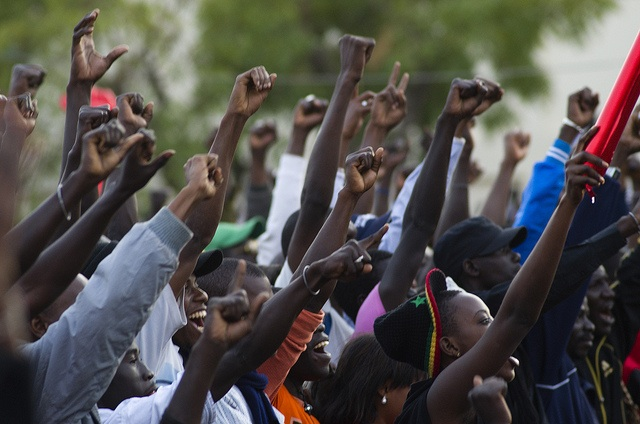
African Democracy in 2026: Three Diverging Paths
Ethiopia's election is not an anomaly on the continent; it is, in fact, a data point in a pattern.
Democratic trajectories across Africa are loosely following three different pathways: historically democratic states becoming politically volatile as popular discontent erodes longstanding incumbency advantages; deeply entrenched autocracies removing electoral competition; and a handful of states where citizens are increasingly open to military rule as a perceived alternative to civilian failure.
Freedom House found that global freedom declined for an eighteenth consecutive year in 2023, with political rights and civil liberties deteriorating in 52 countries. Elections in Madagascar, Nigeria and Zimbabwe were marked by political violence, administrative irregularities and distrust, while military juntas ousted civilian governments in Niger and Gabon.
Yet the picture is not uniformly bleak. Botswana's 2024 election saw the opposition displace a ruling party that had governed since independence. South Africa's ANC lost its parliamentary majority for the first time since the end of apartheid.
These cases matter because they demonstrate that elections can function and that the form can align with the substance, given independent institutions and genuine political competition.
Ethiopia, by contrast, demonstrates the opposite; it shows, painfully, that elections can be impeccably administered and structurally hollow at the same time.
Fifty million registered voters is a technical achievement. In Tigray, in significant parts of Amhara and Oromia, it amounts to a statistic that excludes the people it claims to count.
The deepest problem with Ethiopia's election cycle is not fraud in the traditional sense. It is the architecture.
It is the way that conflict, displacement, registration barriers and the criminalisation of opposition have been allowed to shrink the universe of the politically enfranchised before a single ballot is cast.
When the registered voter count rises and the meaningful electorate contracts, what is being measured is not democracy. It is its simulation.