Osun Election Heats Up: Top Contenders Scramble for Critical 2.3 Million Votes
Osun State is gearing up for its governorship election on August 15, 2026, with Governor Ademola Adeleke facing 13 challengers for over 2.3 million votes. Key contenders include the APC's Bola Oyebamiji, amidst heightened voter registration, security concerns, and calls for a peaceful and credible poll.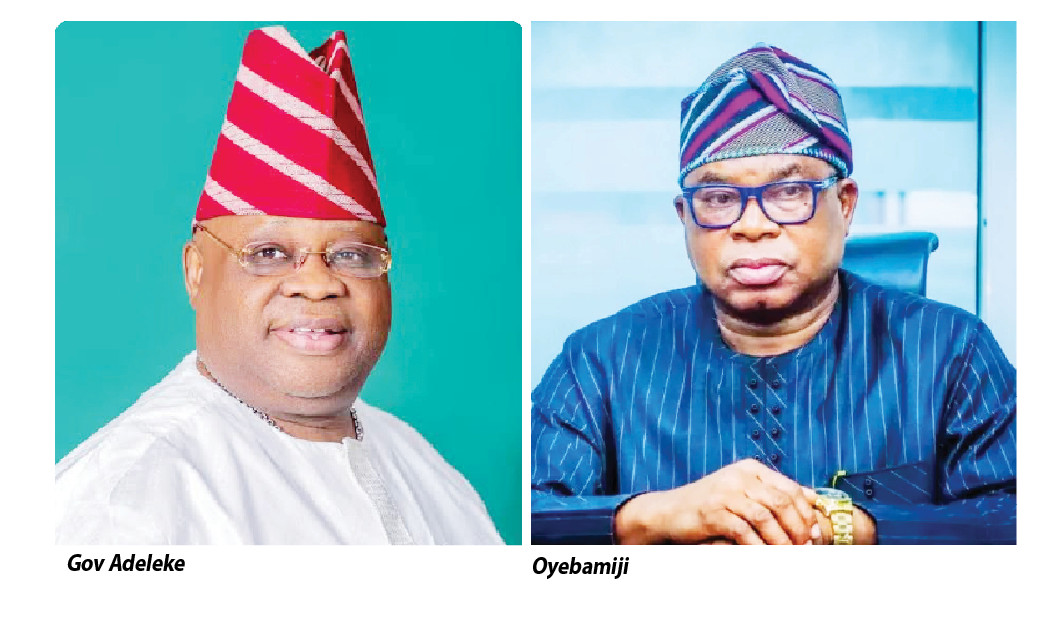
The political landscape of Osun State is heating up as Governor Ademola Adeleke prepares to defend his seat in the upcoming governorship election on August 15, 2026. He faces a formidable challenge from 13 other contenders, with the All Progressives Congress (APC) candidate, Bola Oyebamiji, leading the opposition. This election is set to engage 2,339,233 eligible voters, who will decide the occupant of Bola Ige House for another four years. Political parties are actively engaged in extensive grassroots campaigns, reaching out door-to-door, ward-to-ward, and across constituencies to canvass for votes.
The Independent National Electoral Commission (INEC) has released the list of 14 political parties and their candidates. Alongside Governor Ademola Adeleke of the Accord Party, the contenders include Farinloye Olarenwaju (Action Alliance), Esan Olajide (African Action Congress), Najeem Salam (African Democratic Congress), Adeagbo Opawoye (African Democratic Party), Bola Oyebamiji (All Progressives Congress), Adesina Adeyemi-Doro (All Progressives Grand Alliance), Adewale Adebayo (Allied People Movement), Clement Adesuyi (Action Peoples Party), Masilo Adeleke (Boot Party), Taofeek Adeleke (New Nigeria Peoples Party), Saliu Oyelami (Peoples Redemption Party), Ogunsakin Olalekan (Young Progressives Party), and Adefemi Adesuyi (Zenith Labour Party).
Political observers generally believe that the primary contest will be among the Accord Party's incumbent, Senator Ademola Adeleke; the All Progressives Congress's Asiwaju Bola Oyebamiji; and the African Democratic Congress's Dr Najeem Salam. These three candidates are perceived to have stronger roots across the state and the backing of significant political chieftains. However, other parties, like the Boot Party, insist on their viability, with candidate Chief Masilo Adeleke expressing confidence in winning. The Zenith Labour Party candidate, Adefemi Adesuyi, has also voiced the electorate's alleged disillusionment with the 'so-called major parties,' promising to leverage Osun's economic and human resources for improved welfare and infrastructure.
The total number of eligible voters for the 2026 election, 2,339,233, signifies a notable increase from the 1,954,800 recorded during the 2023 general election. This surge is attributed to sustained voter mobilization efforts and the successful conclusion of the 2025/2026 Continuous Voter Registration (CVR) exercise. During the CVR period, 395,995 people registered, with 365,356 validated after an audit. Additionally, 26,202 voters transferred into Osun from other states, while 7,125 transferred out. The new registrations are distributed across all 30 local government areas, 332 registration areas, and 3,763 polling units, with Osogbo LGA leading in new valid registrations, followed by Irewole and Ede North. Osun West recorded the highest number of new voters regionally.
Demographically, the 2026 election will be significantly shaped by a young, economically active population, as nearly 70 percent of eligible voters are under the age of 50. Voters aged 18 to 34 constitute the largest bloc, totaling 857,056 (36.64 percent), closely followed by those aged 35 to 49, numbering 772,854 (33 percent). In terms of occupation, students form the largest voter group with 752,800, followed by traders (483,970) and artisans (320,416), highlighting key demographics that will influence campaign strategies.
Amidst the preparations, concerns about electoral integrity and security remain paramount. The state Commissioner of Police, Ibrahim Gotan, convened a stakeholders' meeting to address political violence, urging actors to discourage thuggery and the sponsorship of political thugs. He emphasized that violence has no place in a democratic society and advised political leaders to caution supporters against disrupting public peace. Furthermore, parties were instructed to notify security agencies of rallies and to cease the destruction of opponents' campaign materials. Both the Accord Party and the APC have engaged in accusations of planned rigging and political violence, signaling heightened tensions.
INEC, through the State Resident Electoral Commissioner Mrs. Oluwatoyin Babalola, has consistently pledged to conduct free, fair, and credible elections, assuring the people of Osun of the commission’s readiness to uphold the highest standards of transparency and integrity. However, political analysts like Dr. Kola Adebisi have expressed apprehension about vote buying, drawing parallels with recent elections and stressing the need to combat this practice for true democracy to prevail. Local and international election observers, along with civil society organizations such as Kimpact Development Initiative (KDI), are actively emphasizing the importance of an impartial electoral umpire and security agencies to ensure votes count. KDI's Executive Director, Bukola Idowu, has tasked all stakeholders, including political parties, candidates, security agencies, and citizens, to commit to peaceful elections before, during, and after the polls. Osun residents eagerly anticipate a free, fair, credible, and, most importantly, peaceful election that will further strengthen democracy in the state.