32 Years After Apartheid, South Africans Are Still Deciding Who Deserves Freedom
South Africa marks 32 years of democracy on April 27, but Freedom Day 2026 arrives in the middle of a xenophobic crisis that contradicts everything the day is supposed to represent. A look at history, hypocrisy, and what freedom actually demands.
South Africa Has a Freedom Day. Its African Foreign Nationals Are Still Waiting for Theirs.
April 27 is one of the most significant dates in South Africa history. And this year, it lands in the middle of one of South Africa's most uncomfortable conversations.
Today, South Africa marks 32 years since its first democratic elections, the day in 1994 when nearly 20 million people of every race stood in queues, some stretching for hours, to vote for the first time as equal citizens.
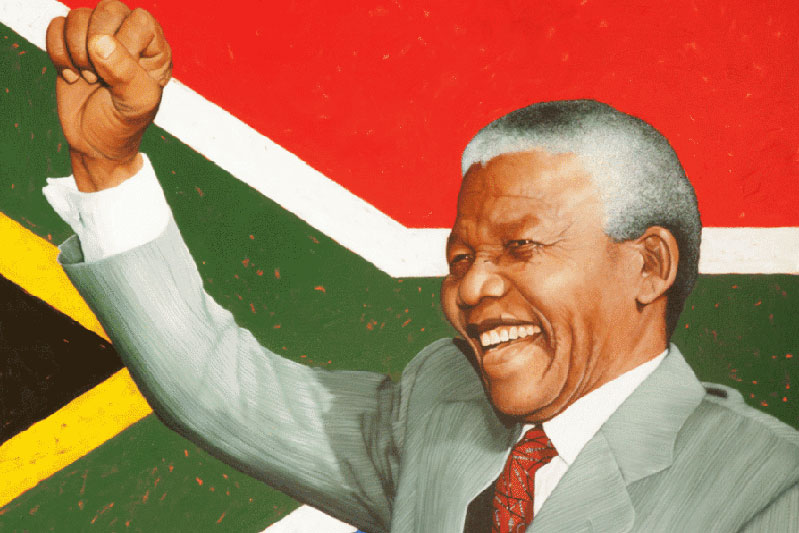
It is a day the world watched and wept at. A day Nelson Mandela called the culmination of a people's determination to reclaim their dignity. A day that, by every right, deserves to be celebrated.
But what does Freedom Day mean when freedom, in 2026, has a nationality requirement? What does it mean to commemorate liberation in a country where, in the few weeks leading up to this anniversary.
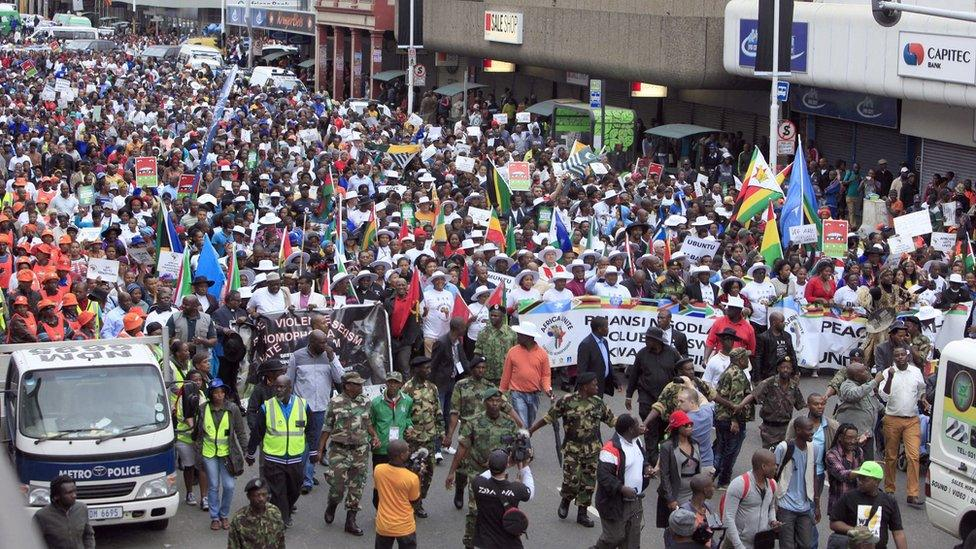
Nigerian nationals were reportedly lynched, a Ghanaian man was surrounded and harassed on camera, and mobs moved through streets demanding that Africans, the same people whose countries funded and sheltered the very movement that built this democracy, should leave.
That is not a rhetorical question. It is the question Freedom Day 2026 is asking South Africa, whether the country is ready to answer it or not.
What April 27 Actually Represents
The first democratic elections of April 26 to 29, 1994, were not just a South African event. They were the culmination of a continental effort. The African National Congress (ANC) had been banned since 1960.
It operated from exile, with headquarters in Morogoro, Tanzania, and then Lusaka, Zambia. The camps of Umkhonto we Sizwe, the ANC's military wing, were based in Zambia. The Pan-Africanist Congress (PAC) ran its headquarters from Dar-es-Salaam for over three decades.
Zimbabwe, Mozambique, Botswana, Angola, Malawi, Namibia, Lesotho, and Swaziland, the Frontline States, absorbed economic punishment for standing against the apartheid regime, losing an estimated $30 billion in development by 1988.
Nigeria, despite sharing no border with South Africa, invested an estimated $61 billion in financial aid, oil revenue, and diplomatic pressure between 1960 and 1995, issued over 300 passports to ANC activists, and boycotted international events, including the 1976 Olympics in solidarity.
This is the foundation Freedom Day was built on, not just South African sacrifice, but African sacrifice.
RECOMMENDED READ: Xenophobia in South Africa: The Act Of Biting the Hands That "Freed" You
A Pattern That Has Never Actually Stopped
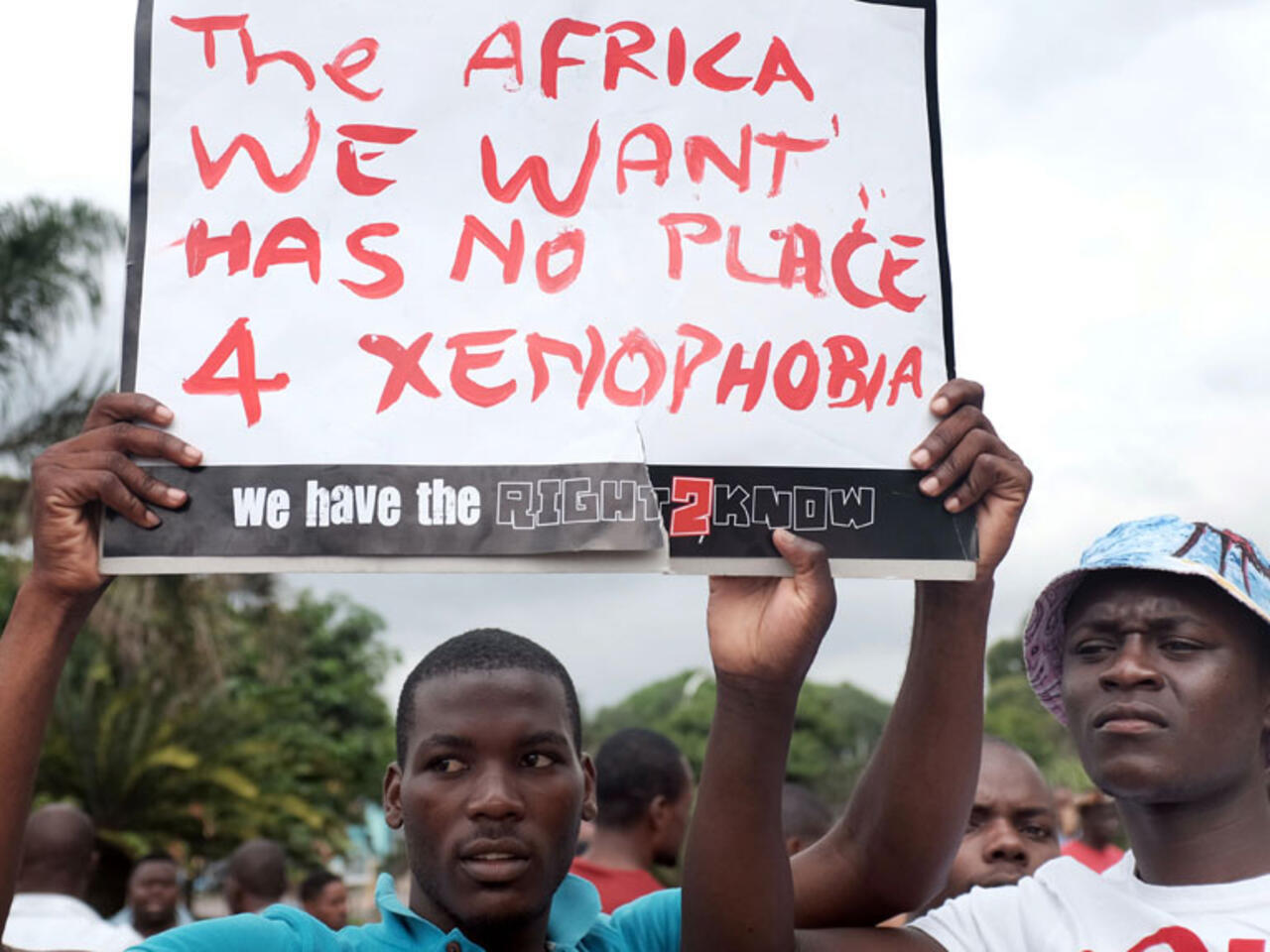
The recent xenophobic flare-up is not an anomaly. Xenophobic violence in South Africa has a documented, recurring history that successive governments have consistently failed to break.
The worst recorded outbreak was in 2008, when over 60 people were killed in attacks targeting foreign nationals across the country. It happened again in 2015 and again in 2019.
Xenowatch recorded 170 incidents in 2022 and 2023 alone. Nobody was meaningfully prosecuted. The National Action Plan to combat xenophobia, launched in 2019, exists on paper. The attacks continued in practice.
Operation Dudula, the vigilante movement at the centre of much of the current anti-immigrant activity, was launched in Soweto. The same Soweto that gave the world the 1976 student uprising.
This is the same Soweto where children were shot in the streets for demanding to be educated in their own language. A xenophobic movement born in the cradle of South African resistance. The symbolism is not subtle.
South Africa's unemployment rate sits above 30%. The Born Free generation, those born after 1994, now roughly 40% of the population, inherits legal freedom alongside staggering economic precarity. Infrastructure is under pressure. Service delivery protests happen weekly.

None of that is the fault of the Zimbabwean selling goods in Alexandra, or the Ghanaian running a business in Johannesburg. But it is far easier to confront someone with less power than to hold accountable the people with more.
When the Freed Become the Oppressor
There is a psychological reality that liberation movements rarely talk about openly. Trauma, when it is never properly processed, does not disappear.
It looks for somewhere to go, and in societies where the wounds of oppression run decades deep but the structures of healing were never seriously built, that trauma has a habit of flowing downward, landing on whoever is closest, whoever is most visible, whoever has slightly less power than the person carrying the pain.
This is not an excuse or a backlash of any sort. It is a diagnosis.
True freedom, not freedom as a calendar date, not freedom as a government theme, but freedom as a lived principle, has always carried an obligation beyond the self. The great liberatory thinkers understood this.
Fanon argued in The Wretched of the Earth that the colonised, without genuine decolonisation of the mind, risks becoming the very thing they fought against.
Paulo Freire wrote that the oppressed, if they do not reflect critically on their condition, carry within them the image of the oppressor and make it their own.
Nelson Mandela himself built an entire political identity around the idea that freedom is indivisible, that a man in chains cannot be considered truly free even by those walking beside him unchained.
South Africa did not just win freedom for South Africans in 1994. It won a symbol. The whole continent exhaled.
Every African who had watched the apartheid regime brutalise Black life with the backing of Western governments and multinational corporations felt something shift when Mandela walked out of Victor Verster Prison. That moment belonged to Africa. The freedom was shared before it was even official.
Which is why what is happening now carries a particular kind of weight. When people who know what it means to be told they do not belong, who know what it means to have their humanity denied, who know what it means to be removed from spaces claimed by others.
When those same people turn around and do precisely that to someone else, they are not just being unjust. They are betraying the very logic that made their own liberation morally defensible.
A freed person who cannot see the freedom of others as worth protecting has not finished the work of liberation. They have only changed position in the same broken structure. And that, more than any economic statistic or political failure, is the unfinished business of April 27.
The Question Freedom Day Cannot Avoid in 2026
According to different dataon the internet, just over 900,000 South Africans were living abroad in 2020. About 245,000 in the United Kingdom. Approximately 213,000 in Australia. Around 161,000 in the United States.
South Africans have lived in Zimbabwe, Zambia, Botswana, and Mozambique for generations, built businesses there, and raised families there. Not one of those countries organised mobs to push them out. Not one community surrounded South African shop owners and demanded documentation.
The people now being told they don't belong in South Africa come from the exact countries that opened their doors to South Africans without question and that sheltered, trained, and funded the movement that made April 27, 1994, possible.
Freedom Day is described by the South African governmentas a reminder of the immeasurable sacrifices made by individuals and nations to break the chains of unjust segregation. Nations, not just South Africans, but all nations.
Thirty-two years on, South Africa is still becoming the country April 27 promised it would be. That is not a condemnation; it is the honest condition and questioning of every democracy.
This is because a country cannot celebrate liberation in the morning and organise against the liberated in the afternoon. Freedom, as the Institute for Justice and Reconciliation put it this year, is not a date in the history books. It is a continuous process. And right now, that process has a lot of unfinished business.
Nelson Mandela built a democracy on the principle that never again would this land experience the oppression of one by another. South Africa owes it to that legacy, and to the continent that paid for it, to mean that.