Zelensky Ignites New Firestorm: Ukraine Resumes Devastating Strikes on Russian Oil Refineries
Ukraine has resumed strikes on Russian oil refineries, highlighted by an attack on the Ryazan facility, after President Zelenskyy declared an end to restrictions. This defiance follows a failed US-proposed energy ceasefire and intense tensions with Washington over perceived withdrawals of intelligence and Starlink support. Kyiv now demands more Patriot missiles to halt its vital strikes against Russia's war machine.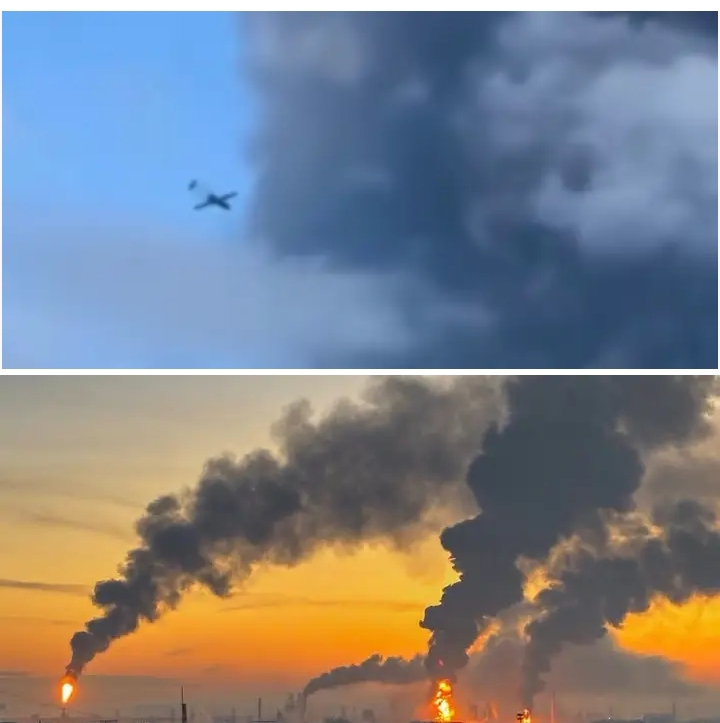
The ongoing conflict between Ukraine and Russia has seen a significant escalation in energy infrastructure attacks, with Ukraine resuming strikes on Russian oil refineries. Russia's Defence Ministry reported that drone debris fell onto the Ryazan oil refinery, one of the country's largest and accounting for nearly 5 percent of its total refining capacity, triggering a fire. A Ukrainian official separately confirmed that Ukrainian forces had struck the facility, aligning with President Volodymyr Zelenskyy's declaration that Kyiv would resume such operations, stating that previous restrictions on these strikes were over.
This renewed offensive followed a proposed "energy ceasefire" announced by US President Donald Trump over the weekend, which aimed to halt mutual attacks on energy sites. In compliance with Washington's behest, President Zelenskyy had restricted Ukrainian attacks for three days. However, Russia reportedly ignored the proposed deal within hours of its announcement, continuing its relentless attacks on Ukrainian energy infrastructure, which left hundreds of thousands of Ukrainians without power. The Kremlin, notably, never officially agreed to the proposed ceasefire.
The dispute over these strikes has significantly intensified tensions between Kyiv and Washington. Zelenskyy openly criticized US pressure to halt Ukrainian strikes, especially given Russia's continued aggression. He accused the US of withdrawing vital intelligence-sharing on Russian strikes and deliberately slowing down Starlink satellite services, which are crucial for Ukraine's military. These measures, according to Zelenskyy, were aimed at pressuring Kyiv to cease attacks entirely, particularly after Ukraine struck a deal to import Russian diesel.
Speaking to the Financial Times, Zelenskyy emphatically declared, "We're done," regarding the restrictions. He recounted that US counterparts had explicitly told Ukrainian officials that "if you will not stop [the strikes], we will block intelligence." Ukraine's military relies heavily on US early-warning alerts of incoming Russian aerial attacks to mount air defenses, limiting successful strikes, while Starlink internet uplinks are used throughout its war effort. Zelenskyy also confirmed to Piers Morgan on Wednesday night that he felt betrayed by the US, citing Washington's apparent withdrawal of key support elements. While there were suggestions that the Starlink slowdown was a technical fault, owner Elon Musk reportedly denied this, with Zelenskyy asserting to the FT, "It was not a technical problem, it was the will."
Adopting a more defiant stance than recently, the Ukrainian president asserted that he would now only halt strikes on Russian oil infrastructure – which Kyiv considers vital for cutting off revenue streams to Moscow's war machine – if the US supplied more Patriot air defense missiles. He also told the newspaper that his American counterpart had an affinity for autocratic leaders like Russia’s Vladimir Putin. Zelenskyy concluded by stating it was not his responsibility to mend US-Ukrainian relations given the events of the past week, affirming, "We didn’t destroy any relationship." These latest developments raise further doubts over prospects for any future mutual halt to attacks on energy infrastructure as the war continues.