Maduro Indictment Shakes Global Stage: Ex-Venezuelan Leader Pleads Not Guilty to Torture Charges
Former Venezuelan President Nicolás Maduro and his wife, Cilia Flores, have pleaded not guilty to charges of torture and narcotrafficking in a Manhattan federal court. Prosecutors detail a brutal campaign against political dissidents and drug rivals, involving severe torture methods and alleged corruption of state institutions. Legal battles continue, with Maduro's defense challenging his capture and claiming sovereign immunity.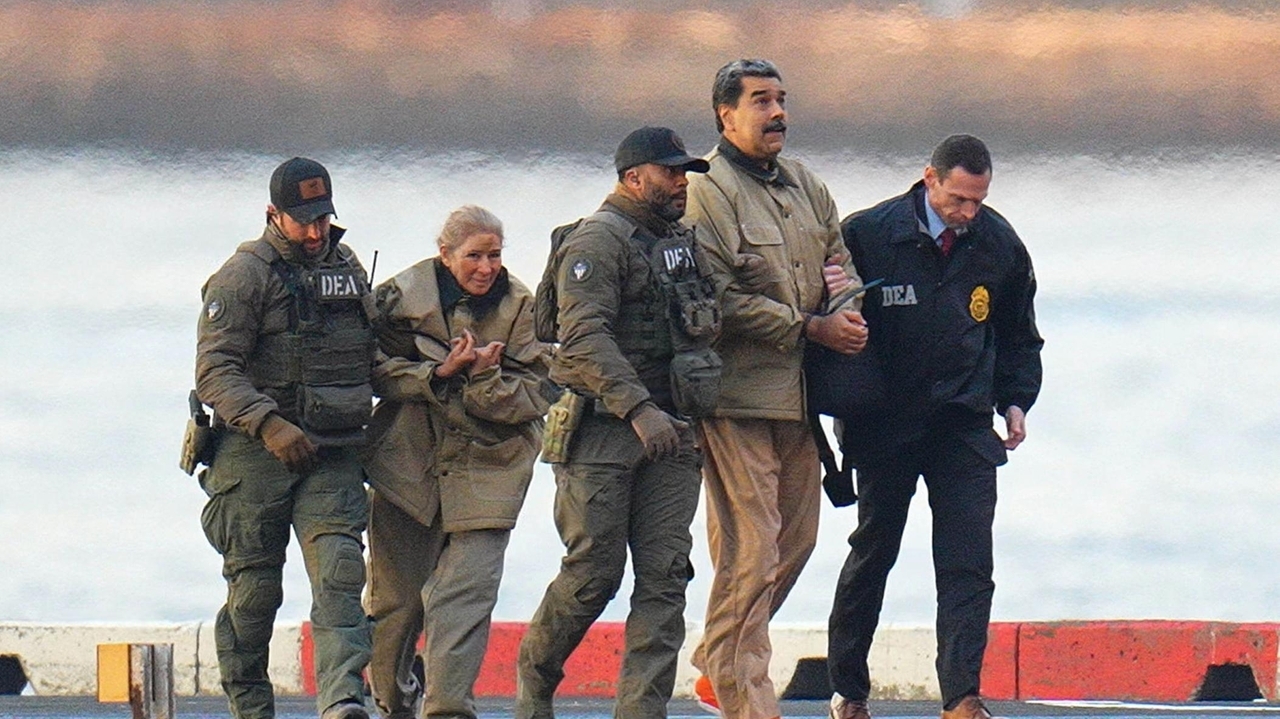
Former Venezuelan President Nicolás Maduro and his wife, Cilia Flores, on Thursday pleaded not guilty in a Manhattan federal court to new charges of conspiring to commit torture. Prosecutors allege that the couple engaged in a brutal campaign to suppress political dissent and intimidate narcotrafficking rivals, utilizing severe methods against both Americans and Venezuelan citizens. The charges stem from allegations that Maduro, whom U.S. Special Forces reportedly captured in an early-morning raid on January 3 at the country’s presidential palace, directed and oversaw extensive human rights abuses.
During the court appearance, a visibly thinner and graying Maduro, clad in tan prison scrubs and shackles, attempted to deliver a speech after being asked about his plea. He stated through an interpreter, "I’ve seen that it is the sum of concepts that have already been presented previously, of false allegation and false testimony against me. I object to this document entirely of false allegations and false testimony." U.S. District Judge Alvin Hellerstein promptly cut him off and ordered a not guilty plea to be entered into the record. Cilia Flores, who claimed to have lost 25 pounds and two teeth during her time in custody, also pleaded not guilty to the recently unsealed charges, asserting, "I am completely innocent. I am not guilty."
Federal prosecutors detailed a range of horrific torture techniques allegedly employed by Maduro's regime, including "electric shock, asphyxiation, rape, forced nudity, prolonged isolation, starvation, punishment cells, and psychological torture." The indictment states that Maduro orchestrated the torture of at least three U.S. citizens, who were imprisoned in Boleíta Norte, a notorious Caracas prison, or in building basements. These individuals were reportedly stripped naked, beaten, forced to drink noxious liquids, subjected to forced injections, and had electrodes attached to their genitals.
Maduro's alleged involvement was direct and strategic. According to court papers, if an arrestee refused to talk, Maduro would ask questions like "what can we do to make them talk," and encouraged applying "additional pressure." He reportedly made specific suggestions for torture techniques, such as "do not let them sleep" or "pour water on them," at times even laughing after hearing about the abuse of prisoners. Drug rivals and political dissidents faced equally brutal treatment, with soldiers from the Bolivarian National Guard, agents from the Venezuelan Directorate of Military Intelligence, and a network of political cronies known as the Cartel of Suns implicated in overseeing the transportation of thousands of kilograms of cocaine to the U.S.
The prosecutors cited specific instances of brutality, including Maduro ordering the kidnapping, beating, and murder of a Venezuelan drug dealer who owed money. An official suspected of disloyalty within the regime was reportedly attacked by soldiers, beaten with a shovel and rifle butts, kicked in the groin, shot in the leg, and raped with a broomstick. The couple and their network also allegedly coordinated with known terrorist organizations, such as the FARC. In one instance from 2013, when Maduro suspected a military officer of meeting with a political rival, he had the officer kidnapped by the FARC, then beaten and electrocuted during an interrogation regarding a suspected coup attempt, ultimately forcing a confession.
The current legal proceedings stem from a 2020 indictment in which federal authorities originally charged Maduro with controlling a powerful narcotrafficking operation that leveraged the resources of the Venezuelan government and military to move cocaine through Central America and the Caribbean into the United States. Maduro, who rose to power under the late dictator Hugo Chávez and was reelected in a highly disputed 2018 election, and Flores, held a series of high government posts. Prosecutors contend they corrupted the Venezuelan government, including the military, judiciary, and law enforcement, through bribery and coercion to further their drug enterprise, with the country’s state-owned oil company notably riddled with corruption and graft.
In light of the added human rights charges, Judge Hellerstein agreed to a joint request from prosecutors and the defense team to push the trial date back two weeks to June 14. Maduro's defense, however, is also challenging the legality of his capture, arguing that the U.S. illegally captured him, violating Venezuelan sovereignty. His lawyers have filed a motion to dismiss the case, asserting that as a head of state, Maduro is protected by sovereign immunity and cannot be prosecuted. A hearing to hear arguments on that motion has been scheduled for November 17.