Zambia's September Spending Spree: K14.6 Billion Unleashed for Public Services & Debt Relief
Zambia's government has announced K14.6 billion in financial releases, highlighting its commitment to fiscal discipline and macroeconomic stability. These funds are strategically allocated across public service wages, debt management, social welfare, government operations, and infrastructure development, aiming to foster sustained growth and improve citizens' lives. Future fiscal strategy includes restoring fuel excise duty and adhering to principles of integrity and sustainable debt management for the 2027 budget.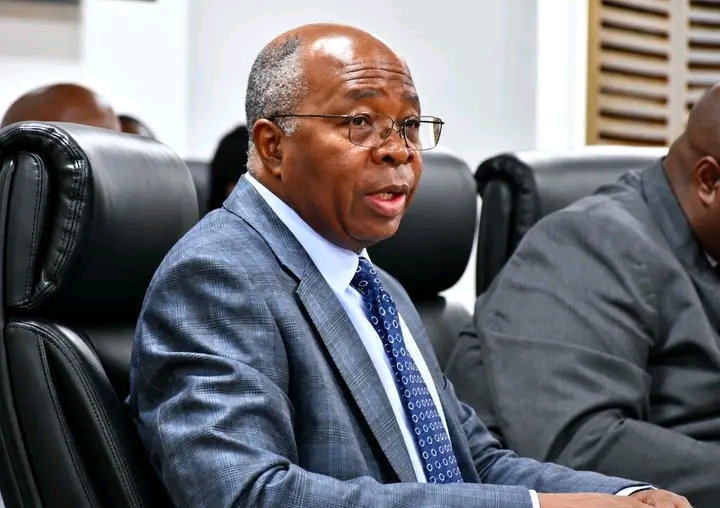
Zambia's government has demonstrated its unwavering commitment to fiscal discipline, responsible debt management, and the protection of essential public expenditure, as it actively works towards consolidating macroeconomic stability and fostering higher production, investment, employment, and inclusive economic growth. This commitment is underscored by recent financial releases totaling K14.6 billion, strategically allocated across critical sectors.
A significant portion of the released funds, K5.4 billion, was dedicated to financing the Public Service Wage Bill and related obligations. This allocation is crucial for sustaining the continued functioning of public institutions and ensuring the uninterrupted delivery of essential government services, including covering personal emoluments and overseas allowances for public servants.
Another K5.4 billion was directed towards addressing domestic and external debt service, alongside the clearance of long-standing domestic arrears. Specifically, K4.1 billion was allocated for domestic debt service, K625.1 million for external debt service, and K674.2 million for clearing domestic arrears, some of which date back over five years. Meeting these obligations is paramount for sustaining fiscal credibility, strengthening confidence in public financial management, and reducing outstanding liabilities. This initiative has also significantly eased financial pressures on affected suppliers and contractors.
Transfers, subsidies, and social benefits received K1.8 billion, playing a vital role in maintaining financial support for vulnerable households, public institutions, and local authorities. Notable releases within this category included K857 million for grant-aided institutions like hospitals and universities, ensuring their operational continuity and service delivery. The Social Cash Transfer Programme received K435.8 million, providing direct financial assistance to vulnerable households, while the Food Security Pack Programme was allocated K200 million to support critical food security interventions. Additionally, K120.8 million was channeled to the Local Authorities Equalization Fund, bolstering councils' capacity to deliver essential services to their communities. These allocations collectively ensure that fiscal management continues to address household vulnerabilities while sustaining access to public services.
To maintain government operations and advance various development programs, the Treasury released K1.5 billion across Ministries, Provinces, and Agencies. Key disbursements included K441.2 million for general operations, K101.1 million for expenditures related to the forthcoming 2026 General Elections, and K64.4 million for the ongoing Geological Mapping Exercise. The geological mapping initiative is designed to generate vital information on Zambia’s mineral resources, providing a foundational basis for informed investment decisions, facilitating mineral exploration, and supporting the country’s broader mining-sector expansion ambitions.
Capital expenditure received K526.9 million, with K459.9 million specifically directed towards enhancing road infrastructure. The remaining K67 million was allocated to various infrastructure projects across different ministries. These strategic investments are poised to significantly improve connectivity, facilitate trade, alleviate transportation constraints, and strengthen access to markets and services, particularly in communities where infrastructure gaps have historically limited economic opportunities.
Looking ahead, the government emphasizes that sustaining budget credibility necessitates reliable revenue inflows. To ease fiscal pressures, partly stemming from global events such as the war in the Middle East, the excise duty on fuel has been restored. As articulated in the Presidential Address to Parliament, this measure will help ensure sustained funding for critical developmental programs, including free education, school feeding initiatives, and the Social Cash Transfer program. Spending commitments will continue to be anchored in principles of fiscal integrity, disciplined expenditure, sustainable debt management, and stronger domestic revenue mobilization, as Zambia transitions from economic stabilization to sustained growth. These guiding principles are further reinforced by the Presidential Address to Parliament and the IMF-GRZ staff-level agreement.
The government's commitment to these principles was evident during the recently concluded 2027 National Budget hearings for Ministries, Provinces, and Agencies on October 8, 2026, and the closure of public submissions on the 2027-2029 Medium Term Budget Plan and 2027 National Budget on October 9, 2026. The government will now meticulously analyze these submissions to strengthen expenditure prioritization, accountability, and value for money in 2027. Dr. MUSOKOTWANE stated that the 2026 Budget remains under implementation, and detailed revenue and expenditure measures for 2027 will be announced upon the presentation of the 2027 National Budget to Parliament. Ultimately, the government anticipates that stronger fiscal discipline will translate into tangible improvements in citizens’ lives through enhanced schools and hospitals, reliable public services, improved infrastructure, stronger social protection, greater employment opportunities, and rising household incomes across Zambia.