World on Brink: Iran War Threatens Global Stability, Sparks Oil Price Jitters & Diplomatic Firestorm!
The escalating conflict between the United States and Iran has pushed Brent crude above $100 a barrel and significantly impacted global energy markets. Amidst a series of tit-for-tat military actions and conflicting claims around the strategic Strait of Hormuz, the international community watches closely as diplomatic efforts and warnings of wider confrontation unfold.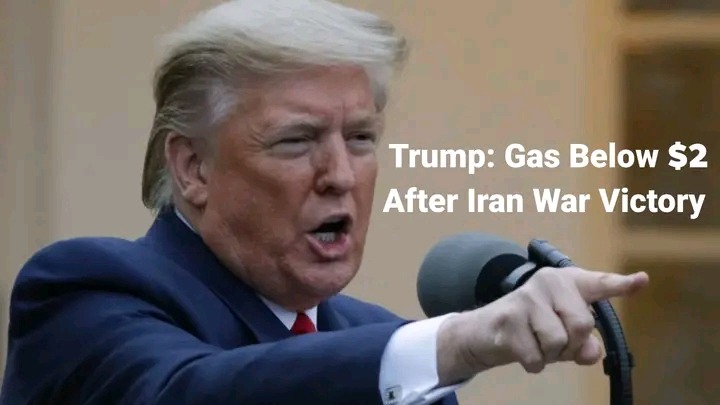
The conflict between the United States and Iran has intensified, characterized by direct military confrontations, significant disruptions to global oil supplies, and a surge in energy prices. The strategic Strait of Hormuz, a critical choke point for around a fifth of the world's oil and liquefied natural gas, has become the primary theater of this escalating conflict.
Iran's Revolutionary Guards claimed responsibility for attacking more than a dozen vessels attempting to traverse the Strait of Hormuz, including two US vessels, eight oil tankers, and ten "non-compliant vessels." Tehran further escalated its actions by adding parts of the Gulf of Oman and the Arabian Sea to a newly declared "prohibited zone" for shipping, warning of sanctions on vessels entering without permission. In response to US forces destroying five Iranian oil tankers a day earlier, Iran's Guards also reported striking a US military base in Jordan. The Iranian Foreign Ministry condemned the US attacks on its oil tankers as "an overt threat to regional and international peace and security" and a serious violation of international law, asserting its strikes on US military facilities were acts of "self-defense." Iran warned of further strikes targeting tankers off the coast of Kuwait and Bahrain and has asserted control over the Strait of Hormuz, requiring transit fees and permission since the war began in February.
Conversely, the US military, specifically CENTCOM, reported that its forces had destroyed five Iranian-linked oil tankers in the Gulf of Oman and near Kharg Island after Iranian missile attacks against US naval vessels. US Secretary of State Marco Rubio explicitly stated that for every attempt Iran makes to hit US naval ships, they would "lose tankers." However, CENTCOM directly contradicted Iranian claims that its forces had targeted two US destroyers with ballistic missiles and inflicted significant damage, stating that no US Navy warship was struck or damaged, as Iranian missile attacks were successfully evaded or defeated. The conflicting claims underscore the difficulty of independently verifying battlefield damage in the rapidly escalating conflict.
This heightened confrontation has had an immediate and severe impact on energy markets. Brent crude, the international oil benchmark, has climbed above $100 per barrel, driven by fears of disruptions to global oil supplies, particularly concerning attacks and blockades around the Strait of Hormuz. US gasoline prices have also risen sharply, with the national average reported between $4.15 and $4.22 per gallon. In this volatile environment, former President Trump posted on Truth Social, predicting that oil prices would "drop precipitously" once the United States "wins the war with Iran." He projected gasoline prices could first fall to around $3 per gallon and ultimately drop below $2, framing a US victory as a turning point for both regional security and energy prices. Trump also reiterated that Iran would never be allowed to obtain a nuclear weapon. Such a pledge is politically significant, especially as the United States approaches the 2026 midterm elections, where high energy prices and inflation are major issues for voters. The realization of Trump’s prediction, however, remains contingent on the duration of the conflict, the reopening of the Strait of Hormuz, global oil supply and demand dynamics, and the broader stability of energy markets.
Diplomatically, Iran has formally escalated its response, submitting objections to the United Nations and calling for international action against Washington. Tehran has urged the UN Security Council and the UN secretary-general to condemn what it describes as unlawful US military action against its commercial shipping, arguing that deliberately targeting commercial vessels constitutes a potential war crime. Simultaneously, the Iranian military command issued a stark warning: if the US sinks even one more Iranian vessel, Iranian forces would launch missile attacks against US military bases and American assets across the Middle East without prior warning. This threat raises the possibility of the confrontation spreading beyond the maritime battlefield, placing US facilities across the Gulf and wider Middle East at greater risk.
The crisis is also viewed through a broader regional lens. Israeli Prime Minister Netanyahu, speaking from Mount Hermon, emphasized that the "main task is to defeat the regime in Iran," stating Israel was "very close" to achieving this objective and that Iran's regional allies would eventually fall. He reiterated that Iran remains central to Israel’s long-term security strategy. Furthermore, an unverified online report claimed North Korean leader Kim Jong Un warned that if South Korea became directly involved in the war, Pyongyang could potentially side with Iran, raising concerns that the conflict could widen significantly beyond the Middle East to include the Korean Peninsula. The situation remains highly fluid, with the potential for further military and diplomatic escalation across multiple fronts.