Spotlight on Africa: 7 Powerful East African Kingdoms and Empires History Remembers - Part Two
Six powerful East African kingdoms and empires, including Aksum, Adal, Buganda, and the Swahili city-states, and their influence through trade, warfare, politics, and culture across Africa and beyond.
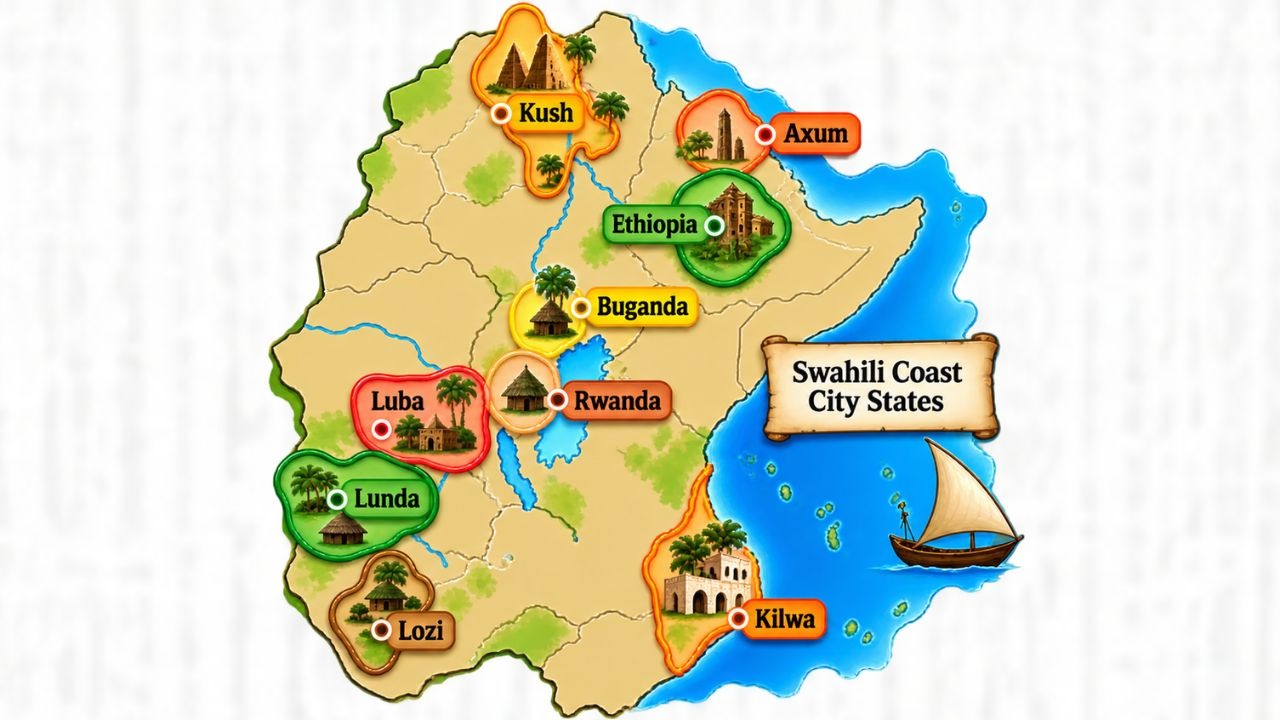
When we talk about powerful African kingdoms and empires, some parts of Africa often get most of the attention. But across the Horn of Africa, the Great Lakes region, and the Indian Ocean coast, powerful states and trading societies built economies, armies, political systems, and cultural networks that connected Africa to the wider world.
Their power did not always look the same. Some controlled important trade routes, others built formidable military forces, while some developed political institutions that survived for centuries.
Here are six East African kingdoms and empires whose influence left a lasting mark on history.
1. The Aksumite Empire
Centred in parts of present-day Ethiopia and Eritrea, the Aksumite Empire became one of the major trading powers of the ancient world. Its location allowed it to connect the Red Sea with markets across Africa, Arabia and beyond, while its rulers minted their own coins and controlled important commercial routes.
Aksum was also among the earliest states in the world to officially adopt Christianity, doing so in the fourth century under King Ezana. Its influence was significant enough that a third-century Persian writer, Mani, reportedly included Aksum among the great civilisations of his time alongside Rome, Persia and China.
2. The Ethiopian Empire
The Ethiopian Empire developed through successive dynasties, most famously the Solomonic Dynasty, which claimed descent from the biblical King Solomon and the Queen of Sheba.
Beyond its long political history, Ethiopia became particularly notable for its military resistance to European imperialism. At the Battle of Adwa in 1896, Ethiopian forces decisively defeated Italy, preserving the country's independence and making the victory one of the most significant African military successes against European colonial expansion.
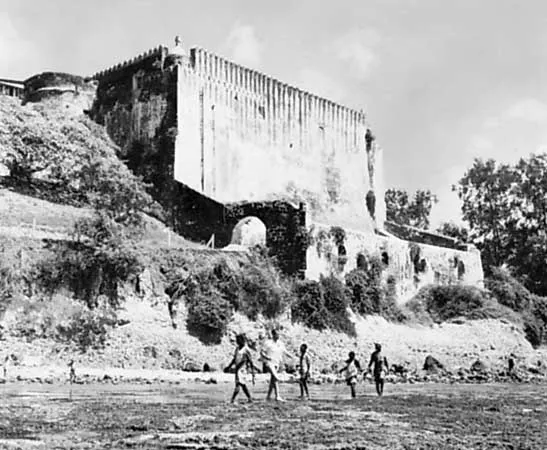
3. The Sultanate of Adal
In the Horn of Africa, the Sultanate of Adal emerged as a powerful Muslim state with strong connections to the Red Sea and Indian Ocean world.
Its most famous ruler, Ahmad ibn Ibrahim al-Ghazi, led military campaigns into Ethiopia during the 16th century. His forces captured large parts of the Ethiopian Empire before the conflict eventually shifted in Ethiopia's favour, making Adal one of the region's most formidable military powers of its era.
4. The Swahili City-States
Along the East African coast, cities such as Kilwa, Mombasa, Zanzibar and Lamu became wealthy centres of Indian Ocean commerce.
Their merchants traded goods including gold, ivory and other commodities with Arabia, Persia, India and China. Kilwa became particularly prosperous, and the famous Moroccan traveller Ibn Battuta described it favourably during his 14th-century travels.
5. The Buganda Kingdom
In present-day Uganda, the Buganda Kingdom developed into a highly organised and centralised political state.
Its administration, hierarchy and agricultural base helped it become one of the most influential kingdoms in the Great Lakes region. Unlike many precolonial African states that disappeared as political institutions, Buganda survived the colonial period and continues to exist today as a traditional kingdom within Uganda.
6. The Zanzibar Sultanate

The Zanzibar Sultanate became a major commercial power along the East African coast, particularly after Omani influence expanded into the region.
Zanzibar became an important centre for the trade in cloves, ivory and enslaved people, linking the East African interior with markets across the Indian Ocean. Its history therefore reflects both the commercial sophistication of the region and the darker realities of the 19th-century slave trade.
7. The Ajuran Sultanate
The Ajuran Sultanate, which flourished from around the 13th to the 17th century, was a powerful Somali state that controlled large parts of the Horn of Africa and played a significant role in Indian Ocean commerce.
Its strength was not only military and political; the sultanate was also known for sophisticated hydraulic engineering, including systems used to manage water and support agriculture in a challenging environment.
Its fortified settlements and architectural remains further reflected the state's ability to organise resources, defend its territory, and sustain influence across the region.
Power Took Many Forms

The history of East Africa shows that power was never simply about possessing the biggest army or the largest territory. Trade networks, agricultural production, political organisation, military capability and control of strategic routes could all make a kingdom or empire influential.
Long before modern borders divided the region into separate countries, these states were already participating in political, economic and cultural networks that stretched across Africa and beyond.
Their histories are a reminder that East Africa was not simply a passive participant in world history. It was one of the places where that history was being made.