Why Do Some Countries Drive on the Left and Others on the Right? The History Behind Driving
Why do some countries drive on the left while others drive on the right? A look at the history, traffic systems and global influences behind the two road conventions.
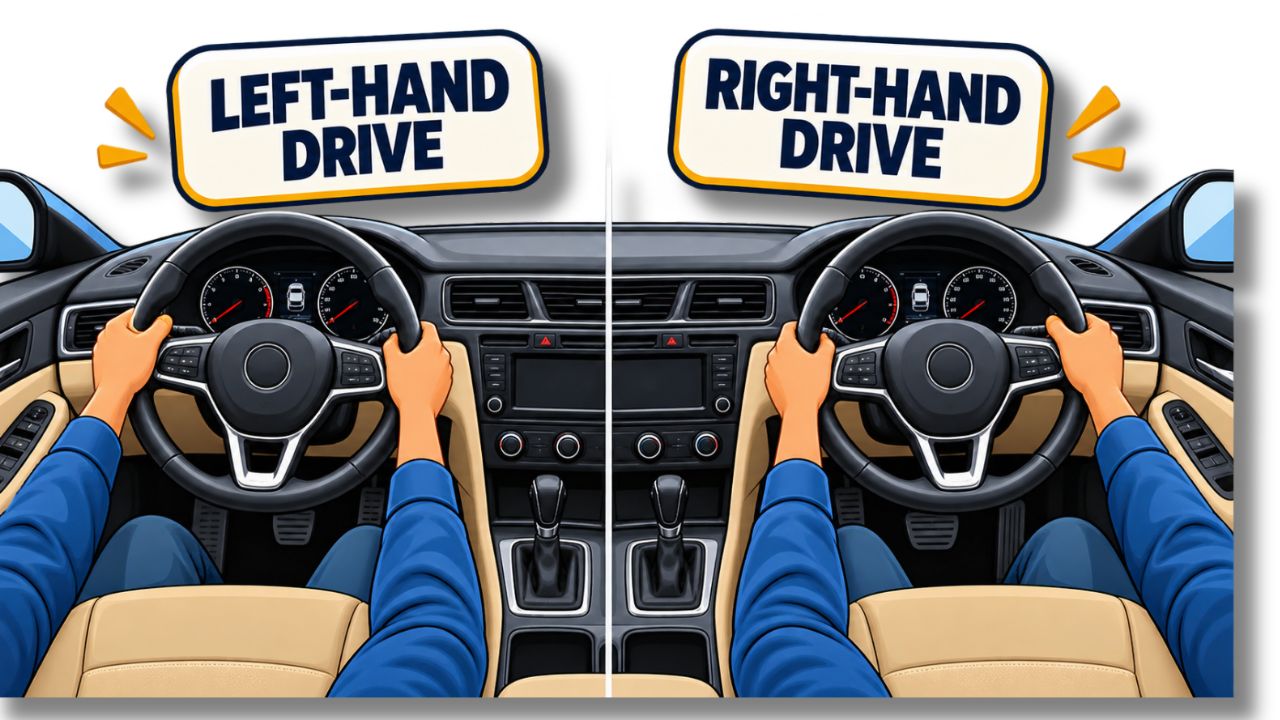
Think about the next time you cross a road or sit inside a car. You probably might not have stopped to wonder why traffic is moving on that particular side; you just simply know where your vehicle belongs.
In Nigeria, for example, drivers keep to the right-hand side of the road, while countries such as the United Kingdom, India and Australia keep to the left-hand side of the road, and both systems feel completely normal to the people who use them.
But there is nothing inherently more “correct or wrong” about either side. Right-hand traffic and left-hand traffic are systems that developed through history, local customs, political influence, and the changing ways people moved from one place to another.
What looks like a simple traffic rule today is really the surviving result of decisions made long before most of the cars we recognise existed.
Before Cars, There Were Horses and Wagons
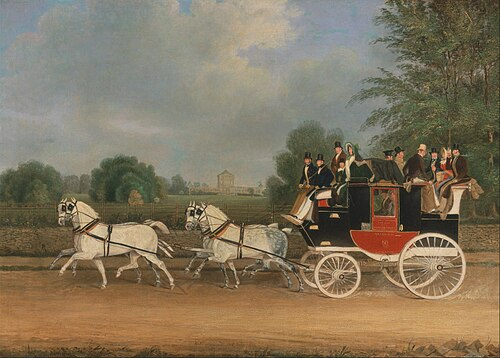
The story begins before traffic lights, driving schools and motorways. There is evidence suggesting that ancient Romans may have travelled on the left, although historians cannot say with certainty that this was a universal Roman traffic rule.
One explanation for the practice connects it to the fact that most people are right-handed: keeping to the left could leave the dominant right hand free when encountering someone approaching from the opposite direction. It is an interesting theory, but the precise origins of left-side travel remain uncertain.
For centuries, however, there was no global traffic manual telling everyone where to position themselves. Road use depended heavily on local customs and the type of transport available. As horse-drawn vehicles became more common, the practical question of where a driver or rider should sit began influencing how traffic moved.
Britain eventually formalised left-hand traffic through measures in the eighteenth and nineteenth centuries. France, meanwhile, developed a strong tradition of keeping to the right. These choices became more important as roads became busier and governments began regulating movement more systematically.
Then history gave both systems a much larger audience. British colonial expansion carried left-hand traffic to many territories, which helps explain why countries including Ghana, Kenya, South Africa, India, Australia and New Zealand drive on the left today.
French influence, along with other continental European traditions, helped spread right-hand traffic across much of Europe and elsewhere. The roads people use today therefore carry traces of political history that have little to do with the cars currently driving on them.
Left-Hand Traffic Does Not Mean Left-Hand Drive
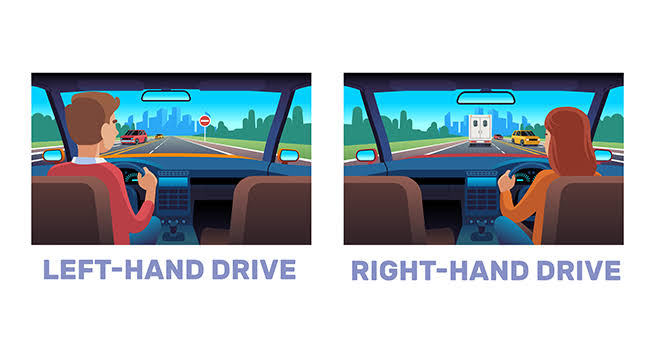
This is where the terminology can become confusing. Left-hand traffic (LHT) means vehicles travel on the left side of the road. Right-hand traffic (RHT) means vehicles travel on the right side.
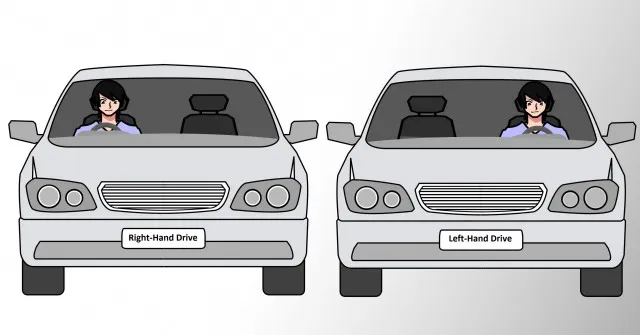
The position of the steering wheel is a related but separate matter. In a right-hand traffic country, cars are commonly built with the steering wheel on the left side, known as left-hand drive. In a left-hand traffic country, cars are commonly right-hand drive, with the steering wheel on the right.
The arrangement makes practical sense: placing the driver closer to the centre of the road gives them a better position for judging oncoming traffic and the vehicle's position relative to the road.
This is why someone travelling from Nigeria to the United Kingdom is not simply learning that the steering wheel has moved. They are entering a different traffic system altogether. The side on which vehicles travel changes, which also changes how drivers approach junctions, overtake, position themselves and interpret road markings.
Japan offers an interesting example outside the former British colonial world. It drives on the left despite not being a former British colony, showing that the global map of traffic systems cannot be explained by colonial history alone. Historical development and domestic choices also played roles.
Why Didn't the World Just Pick One Side?
At this point, it is tempting to ask the obvious question: why not simply choose one system and make everyone use it?
Because by the time modern governments could realistically standardise road traffic, countries already had established systems, vehicles, roads and neighbours built around particular conventions.
Changing sides is not as simple as repainting a road. Sweden famously changed from left-hand to right-hand traffic in 1967 after an extensive national preparation programme. Canada also moved toward right-hand traffic during the twentieth century, partly because of its close road connections with the United States.
The reason becomes clearer when you imagine the scale of such a change. Road signs have to be altered, intersections redesigned, public transport adjusted, vehicles and driving habits reconsidered, and millions of people taught to perform familiar actions differently.

This is also why neighbouring countries sometimes choose the same system. Consistency makes cross-border movement easier.
Today, roughly a third of the world's countries use left-hand traffic, while the majority use right-hand traffic. The two systems are not competing theories about the safest way to drive; they are different historical solutions that became deeply embedded in national infrastructure.
And that may be the most interesting part of the story. Something as ordinary as which side of the road you drive on can survive for centuries because people inherit it without questioning it. A child learns that vehicles belong on one side, grows up, gets behind a steering wheel, and repeats what everyone before them did.
The road therefore becomes more than a place for transportation. It becomes a small reminder of how history works: old decisions can remain hidden inside ordinary routines long after the people who made them are gone.
So the next time you see a car approaching from the opposite direction, remember that the side it occupies is not simply a matter of modern traffic regulation. It is the latest chapter in a story that began with people, horses, wagons, roads and customs — and somehow survived long enough to become part of the modern automobile.