Nigeria Turns to France for Support Amid Rising Violence
Nigeria has asked France for support amid rising violence in the north. This piece talks about what France’s involvement could look like and what it means for security and citizens’ trust.
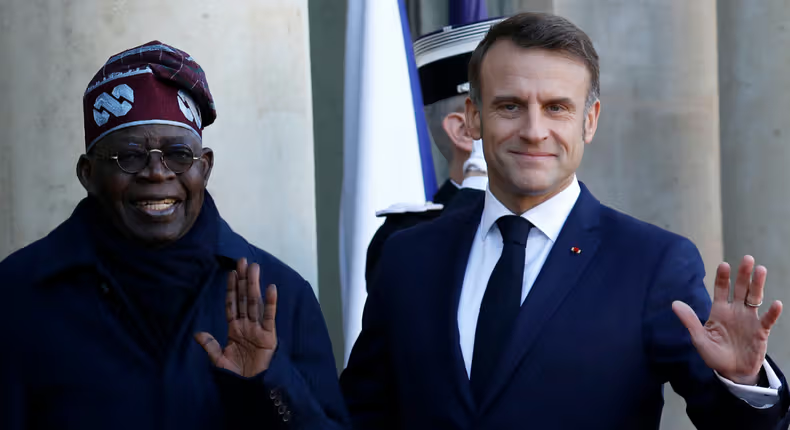
On the 7th of December 2025, Nigeria’s President, Bola Tinubu, reached out to French President Emmanuel Macron for support in confronting a wave of violent attacks sweeping parts of the country, especially in the North and Central regions. The plea came amid a sharp rise in kidnappings, insurgent raids, and communal violence. In response,Macron publicly declared that France would “strengthen our partnership with the authorities and our support for the affected populations.”
For many Nigerians, that call for help reflects a grim but honest admission: the domestic security apparatus is under severe strain.Recent data point to an alarming toll. According to a security‑monitoring group, in August 2025 alone there were 545 recorded violent incidents across the country, resulting in 732 deaths and 435 abductions. Over the longer span from 2020 to 2024, researchers estimate that more than 20,000 people lost their lives to violent attacks.
These statistics barely capture the human cost: families torn apart, communities displaced, livelihoods lost, and a pervasive climate of fear. It is against this backdrop that the government’s appeal for international help must be understood, not as a sign of weakness, but as a desperate attempt to restore stability.
A New Kind of Cooperation — Not Foreign Occupation
The promise from France, according to Macron, does not involve a return to large-scale troop deployments on Nigerian soil. Instead, the proposed support aims to be more strategic and limited in scope: training for security forces, intelligence sharing, and assistance to communities affected by violence.
This approach marks a shift, a move away from heavy-handed foreign intervention toward partnership models that respect sovereignty while acknowledging the transnational nature of threats. In recent years, foreign powers, including France, have largely withdrawn their combat troops from West and Central Africa, citing the need for new frameworks of engagement.
For Nigeria, this kind of cooperation could bring an important infusion of expertise and resources. Training could improve the capacity of security forces to respond more effectively to insurgencies, bandit raids, and kidnapping gangs threats that often cross state and even national borders. Enhanced intelligence sharing might help dismantle criminal networks before they strike. Targeted support to traumatised communities could help heal wounds and restore a sense of safety to those who have suffered.
Why Nigeria Needs Help — And What Has Gone Wrong
The security crisis engulfing Nigeria today has deep roots. Much of it stems from decades of underinvestment in governance, weak institutions, poverty, inequality, and the exploitation of marginalised communities especially in remote northern and central regions.
Armed groups operate with relative freedom in areas where state presence is thin or absent. Kidnap-for-ransom has evolved into a lucrative criminal enterprise, while clashes between herders and farmers over land and water have spiralled into cycles of violence that trap innocent civilians.
Moreover, repeated attacks on civilians including schoolchildren, worshippers, and whole villages have eroded public trust in the government’s ability to protect ordinary citizens. In many communities, people already rely on informal defense networks or avoid travelling at night; some have abandoned their homes.
Given this reality, domestic security forces, no matter how committed, are simply overwhelmed. The volume, spread, and complexity of threats, ranging from insurgents to bandits to communal militias, far outstrip current capacity. That helps explain why the government concluded it needs external help.
What International Backing Could Achieve And Its Limits
If managed well, cooperation with France and possibly other partners could produce meaningful gains. Better-trained forces and stronger intelligence capabilities could reduce the frequency of mass kidnappings and major bandit attacks. This might allow security agencies to crack down on criminal networks with greater precision rather than resorting to broad, heavy-handed operations that sometimes harm civilians.
Support for communities could help restore stability in conflict-hit areas, offering displaced residents a chance to return home and rebuild. In turn, this could revive local economies, restore trust, and begin healing long-standing inter-communal divides.
But such cooperation cannot, alone, solve the root causes of insecurity. Poverty, marginalisation, contested land use, climate change, and resource scarcity remain potent drivers of conflict.
Furthermore, coordination and accountability are critical. Foreign assistance must be transparent; local communities must be involved; and security operations must respect human rights. If foreign help is perceived as meddling or favouring certain groups, it could deepen distrust, undermining both security and social cohesion.
What Nigerians Might Expect

For millions of Nigerians, families, students, farmers, traders, this cooperation carries hope. It raises the possibility of safer communities, restored peace, and the protection of lives and livelihoods. In areas long under threat, it could bring relief, even a sense of renewed normalcy.
Yet that hope will only be realised if the government demonstrates competence, transparency, and respect for citizens’ dignity. For everyday Nigerians, results must be visible: fewer abductions, more rapid and effective security responses, safe schools, and safer communities.
Above all, this is a test of trust. If foreign assistance leads to concrete, positive change, if people feel safer, communities begin to rebuild, and institutions start to deliver, then public confidence in the state may grow. If not, if promises outpace delivery, violence continues, kidnappings persist, the cynicism and fear many Nigerians feel may deepen.
The decision by President Tinubu to seek external assistance acknowledges a stark reality: Nigeria, in its present state, is fighting a war with stretched arms. The scale of violence, the number of actors involved, and the spread of conflict zones have overwhelmed existing capacity.
Yet by reaching out for help and by doing so in a way that seeks cooperation rather than control, Nigeria may have opened a path toward stabilisation. If this renewed partnership with France delivers strengthened security capacity, better intelligence coordination, and community-centred support, all implemented with transparency and oversight, then it could mark the beginning of a turning point.
But such outcomes are not guaranteed. Success will require more than foreign assistance: it demands political will, good governance, social inclusion, and long-term commitment to addressing the drivers of insecurity.
For now, many Nigerians will wait hopeful, but wary. They will watch for signs of change: rescued hostages reunited with families, once-risky towns becoming safe again, children returning to school, markets reopening, and farms being cultivated without fear.
If those signs appear, the collaboration could become a foundation for renewed peace and stability. If they do not, the appeals, pledges, and partnerships may fade, leaving behind only more frustration, grief, and unanswered questions.