What If Democracy Is Failing Not Because of Leaders, But Because of Voters?
Who really determines if the democratic integrity of a nation survives, the leaders or the masses? Whether democracy is failing or not, does not solely rest on the leaders, but also on its citizens who have voting rights and majority power in elections. Read about the habits, civic culture, and collective responsibility that shapes a democratic nation.
When the matter of democracy or governmental issues surfaces in rooms the majority of the citizens are quick to point fingers at the leaders and the elite class of the shortcomings of their nation and the ailing state of democratic systems.
But what if the leaders aren't entirely at fault? If you think about it the leaders were once part of the citizens and it is the citizens that usually elect their leaders into power and if you want to talk about election rigging, violence or unfair practices it is still been aided by the citizens because they are still the ones being used in the process of all this, so why is the democratic integrity of your nation failing? Is it really the leaders or is it the citizens ?
Every election cycle, we blame politicians. We blame their greed, their failures, their incompetence, their corruption, their addictions to power. We dissect leaders as if they exist outside the society that produces them, as if they suddenly fell from the sky into public office and automatically assume positions out of the blue. But what if democracy is rotting not at the top, but at the roots? What if the real crisis is not failed leadership, but a failed citizenry? What if the collapse we fear has less to do with presidents and parliaments and more to do with voters, our habits, our expectations, our silence, our shortcuts, our emotions, and our collective refusal to grow politically?
It is an uncomfortable truth that we must all face, one many societies avoid confronting because it demands accountability not just from the elite, but from the average citizens as well, you and the everyday person you see around. Whether you are aware or not the truth lingers in the background of every political chaos: democracy is only as intelligent as those who participate in it.
The Voter Who Wants Change Yet Fears Discomfort
Across many democracies, from the world’s oldest to the world’s newest, the same contradiction repeats itself. Citizens crave change, but not the sacrifice that produces it, they speak of what should be done but yet are not doing it themselves. They demand integrity but reward performance. They claim to love democracy but shy away from the discipline required to sustain it. As a result, electoral choices become shaped less by national interest and more by immediate gratification. People vote based on who entertained them, one who seems more appealing to their selfish interests, who shared the most relatable slogan, who weaponized anger most effectively, who made them laugh on social media, or who handed out the highest amount of cash the night before the election.
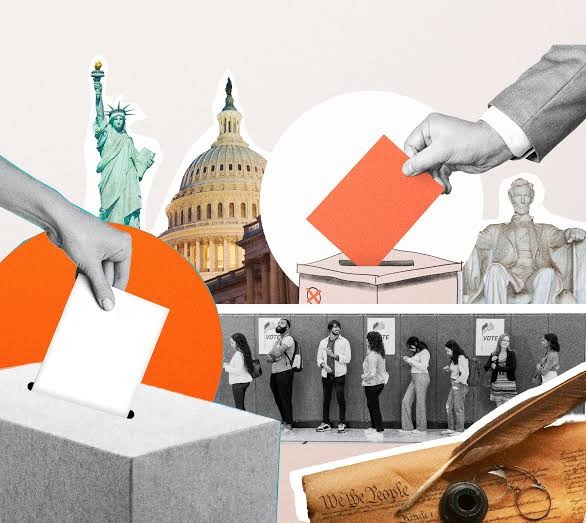
This contradiction produces a dangerous pattern: voters want progress, but vote for comfort; they want visionary governance, but support transactional politics. And so the system gradually collapses, not because democracy is weak, but because citizens vote in ways that weaken it.
Then there is the issue of political apathy, where most of the citizens are not interested in the governance of their country but miraculously want everything to just change overnight, believing someone else will do it and this is leaving the institution to be degraded by those who are not worthy of it.
Many political scientists argue that the quality of a democracy is predictable by analyzing the values of its citizens, not its leaders. Citizens with strong civic values produce strong leaders. Citizens driven by division, apathy, or desperation produce politicians who reflect those same traits. In this sense, democracy is a mirror: what you see is what you put in front of it.
The Culture That Trains Citizens to Be Spectators, Not Participants
A failing democracy is rarely a sudden event; it is the slow decay of civic culture. In many societies, people do not grow up understanding democratic responsibility. They know how to complain. They know how to fear the state. They know how to gossip about politics, joke about corruption, and curse leaders on the internet. They talk about what should be done but they rarely know how to organize, negotiate, mobilize, advocate, or hold institutions accountable.
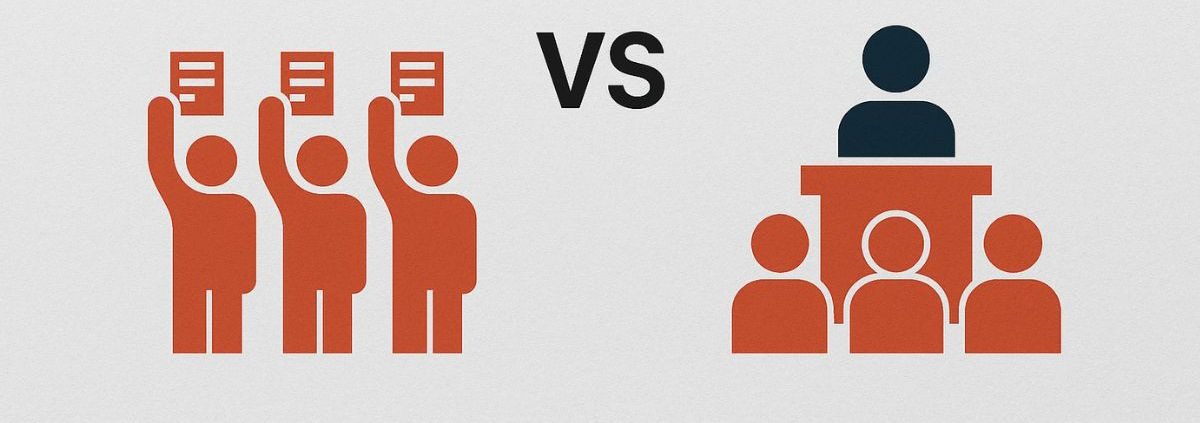
Civic knowledge becomes replaced by emotional outbursts. Political decisions become driven by identity rather than ideas. Elections become moral battles instead of policy choices. And slowly, the voter becomes a spectator, not a participant. Democracy becomes a performance, not a shared project.
The failure, then, is collective: A democracy where voters only react but never build is a democracy destined for collapse. A government where her citizens cannot hold the leaders accountable become a one way ticket to unfair practices.
When citizens give up their voice between elections, they inadvertently empower corrupt systems. When they reduce politics to entertainment and clout chasing, they normalize incompetence. When citizens become apathetic, power becomes concentrated in the hands of the few. When they romanticize strongmen out of frustration, they invite authoritarianism. Thus, democracy dies, not in a dramatic coup, but in a quiet cultural surrender.
The Voter Who Chooses Loyalty Over Logic
Extreme loyalty actually blinds logic and rational thinking, this leads to the use of emotions and an undying sense of alleged togetherness that erodes what should be done, how it should be done and who is actually elected to do it.
So a very good and also not so good trait in the political space is loyalty, many of which are blind loyalty. In many nations, voters align themselves with politicians or parties as if they were football teams. It no longer matters what the candidate has done. It no longer matters what they plan to do. It no longer matters whether their ideas make sense. What matters is tribe, emotion, identity, or inherited political allegiance.
This type of voter is powerful not because they are many, but because they are persistent and consistent in their beliefs and loyalty. They show up. They campaign. They defend the indefensible. If only this energy is channeled to the right course because many of them excuse corruption, silence abuse, and reinterpret failure as strategy. Leaders learn quickly that loyalty matters more than competence. And the democratic culture reshapes itself accordingly, rewards go to the most charismatic, not the most capable.
Political cultures mature only when voters grow uncomfortable with their own biases. Democracies deepen only when citizens ask themselves: Am I voting from reason or from reflex? From evidence or from emotion? From hope or from fear?

When voters become self-aware, democracy sharpens. When they remain unexamined, democracy dulls.
Conclusion: If Democracy Is Collective Power, Then Its Failure Is Collective Responsibility
The most powerful myth in modern politics is the belief that leaders alone determine the fate of nations that is not true. The truth is more complex, more intimate, and more uncomfortable because a nation is the reflection of her citizens, their values and the systems that have been put in place. Democracies rise when citizens rise. They fall when citizens fall. Leaders are not magicians; they are reflections, reflections of the very people that they lead. They come from us. They were once us. They represent our strengths and our weaknesses, our intelligence and our ignorance, our courage and our fears. Also don't forget that one day you too might be a leader and when things go wrong in any circumstances whatsoever, who would you blame? the citizens or yourself that is now a leader?
So the urgent question is not whether democracy is failing, but whether we, its voters are failing it.
Always remember that
If citizens do not read, democracy cannot think.
If citizens do not participate, democracy cannot act.
If citizens do not mature, democracy cannot grow.
If citizens do not care, democracy cannot survive.
The path forward is not merely to demand better leaders but to build better citizens. Democracies do not collapse from the top; they collapse from the ground. And they will only be rebuilt from that same place, the bottom, the grassroots, the everyday voter choosing responsibility over convenience.
Until we stop waiting for politicians to save democracies and admit that voters shape their destiny as much as leaders do, democracy will continue to fail not because its structure is weak, but because its foundation, the voter, is still learning what it means to govern oneself.