What Does It Mean For A Start Up To Be Called A “Unicorn”
An African startup joins the unicorn club, but what does that billion dollar headline actually mean? From Aileen Lee’s 2013 coinage of the term to funding rounds, investor confidence and billion dollar valuations, here is what happens behind the scenes when a private startup becomes a unicorn.

You have probably seen the headline before: African startup joins the unicorn club. Or, Nigerian fintech becomes Africa’s latest unicorn. And if you are not deep into the startup world, there is a very reasonable question hiding underneath all those headlines: what exactly happened?
Did the company suddenly make $1 billion? Did someone transfer $1 billion into its bank account? Does it now have $1 billion in assets? Did it become profitable overnight?
Nope.
A unicorn is simply a privately held startup that reaches a valuation of at least $1 billion. The important word here is valuation, because a company's valuation is not the same thing as the amount of money sitting in its account.
The term itself is relatively new. In November 2013, venture capitalist Aileen Lee published an article on TechCrunch called “Welcome to the Unicorn Club,”where she used the word to describe the extremely rare group of private software companies valued at more than $1 billion. At the time, she found only 39 companies that met her definition, which explains why a mythical creature was a fitting comparison.
More than a decade later, the word has become so common in startup reporting that it can sound like every other company is chasing a unicorn badge.
But understanding what the title actually means tells you much more about how the startup world works, where investors put their money and why a company that nobody had heard of five years ago can suddenly be valued in the billions.

First, What Exactly Is A Unicorn?
Let us start with the easiest part. If a startup is privately owned and investors value it at $1 billion or more, it can be described as a unicorn.
That does not mean the startup has $1 billion in cash. It does not even necessarily mean that the company has made $1 billion in revenue. It means investors and the market have arrived at a valuation of at least $1 billion based on what they believe the company is worth.
Imagine you start a fintech company and an investor agrees to put $100 million into the business in exchange for 10 percent of the company. Very simply, that transaction can imply a $1 billion valuation for the entire company.
The investor has not handed you $1 billion. They have invested $100 million, but the price attached to that 10 percent stake suggests that the whole company is worth $1 billion.
This is why startup headlines can sometimes be confusing. When you see that a company “raised $200 million at a $2 billion valuation,” the two numbers are talking about different things. The first is the amount of new money invested. The second is the estimated value of the entire company based on that investment transaction.
Private startup valuations can also be difficult for outsiders to assess because these companies are not required to publish the same level of financial information as publicly traded companies.
So when a startup becomes a unicorn, what has really happened is that the company has crossed a very specific investment milestone.
It has entered the $1 billion valuation club.
How Does A Startup Actually Become A Unicorn?
There is no application form.
Nobody at Unicorn Headquarters is sitting behind a desk waiting for founders to submit their documents.
A startup usually gets there by growing fast enough, attracting enough investor interest and convincing investors that it could become a very large business.
The journey normally starts much earlier, when a founder has an idea for solving a problem. The company might begin with the founder's savings, money from friends and family or funding from angel investors. If the business starts showing signs that people actually want the product, it may raise larger rounds from venture capital firms.

This is where things start moving quickly.
A startup might raise a seed round, then a Series A, Series B, Series C and later rounds as it grows. Each funding round can give investors a new opportunity to place a value on the company.
Suppose a startup raises $5 million at a $25 million valuation. A few years later, it raises $50 million at a $300 million valuation. Then another investor comes in and puts $100 million into the business at a $1.2 billion valuation.
Congratulations.
You have a unicorn.
But getting there is not simply about collecting increasingly large cheques. Investors need a reason to believe that the company can become much bigger.
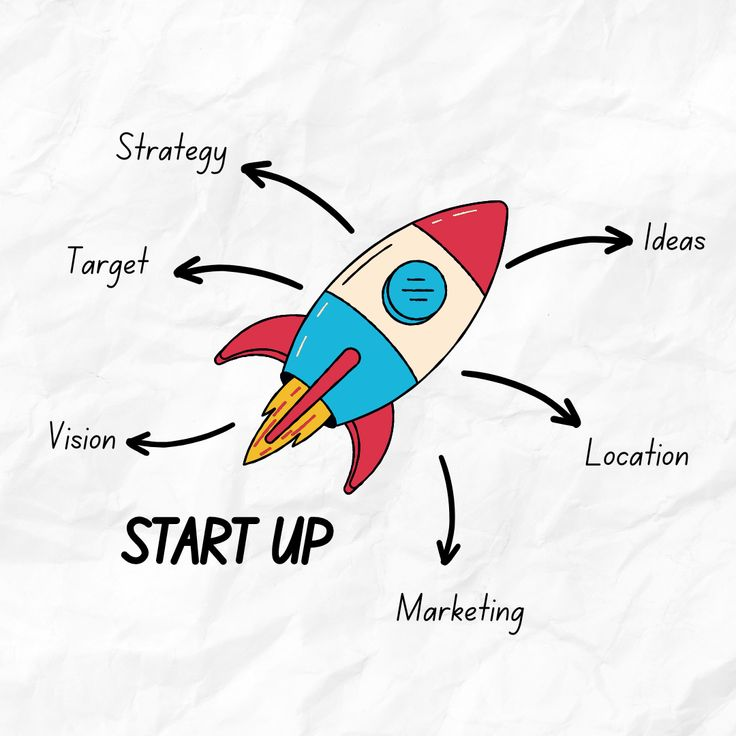
That is why scale is such a big part of the startup game. Venture capital investors are often looking for companies that can serve enormous markets and grow rapidly. A startup that has found a business model that works in one small location may be promising, but a company that can potentially serve millions of customers across several countries can attract a very different level of interest.
This is particularly important in Africa, where startups are often building businesses around problems that affect huge populations, from payments and financial services to logistics, commerce and digital infrastructure.
Interswitch, for example, became one of Africa's early unicorns after Visa acquired a minority stake in the Nigerian payments company in 2019, with the investment giving the company a reported valuation of $1 billion.
Flutterwave crossed the same threshold in 2021 after raising $170 million in a Series C funding round.The company said at the time that its valuation was above $1 billion. It later raised another $250 million in 2022 at a valuation of more than $3 billion.
These examples show why a unicorn is not necessarily created by one magical moment. It is usually the result of years of building, fundraising, expansion and investor confidence.
But there is another part of the story that is easy to miss.
A unicorn valuation is a prediction as much as it is a measurement.
Investors are not only paying for what the company is today. They are also putting a price on what they believe it could become.
That is why a startup can be valued at $1 billion even when it is nowhere near making $1 billion a year.
The investors are betting on the future.
And sometimes those bets work brilliantly. Sometimes they do not.