What Chota AVS' Win Says About the Future of AI & Satellite Tech in Africa
Anadata’s Chota AVS win at Nigerian Satellite Week 2026 highlights how AI and satellite tech are converging to solve Africa’s long-standing address and infrastructure challenges.
If you have ever tried to order something online, especially as a Nigerian, you know this struggle. That struggle where you know deep down the address you typed might have well been the one for the compound 5 houses away, or worse, not exist.
Then, you pray the delivery guy calls because the standard description to your humble abode "behind the big mango tree, second house on the left after the mosque" is just directions and cannot serve as a standard address.
This seemingly minute difference in a country where formal addressing infrastructure barely exists for millions of people is sadly the gap between a business working and a business failing.
That frustration is exactly whatAnadata's Chota Address Verification System set out to solve.
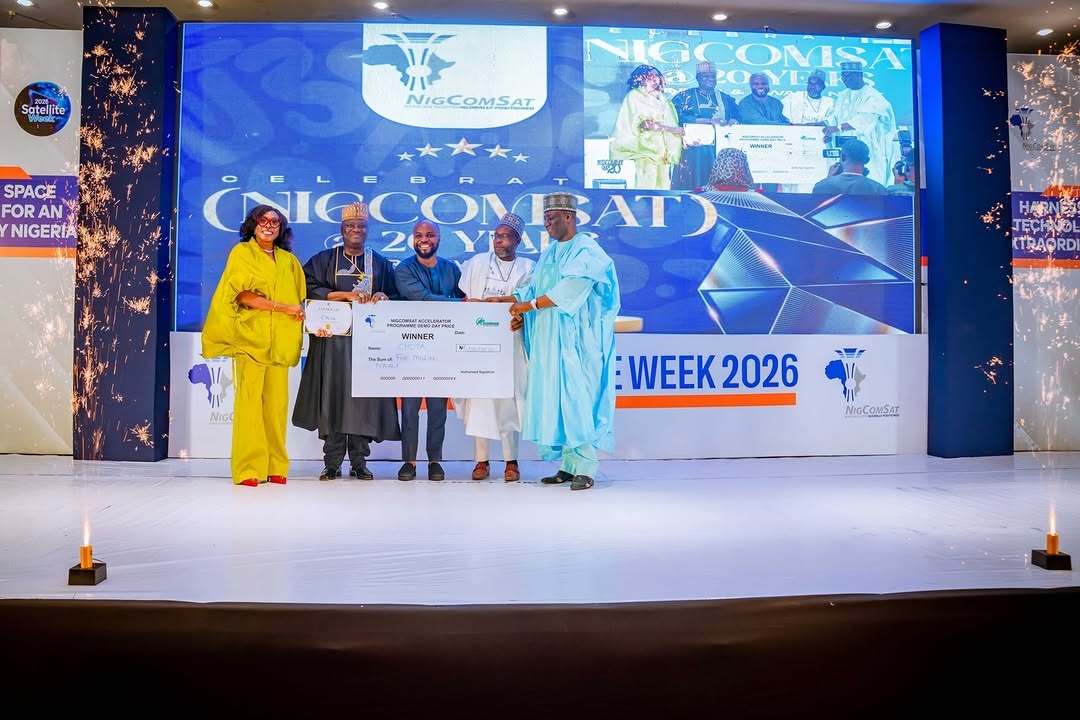
At the Nigerian Satellite Week 2026, held in Abuja in late March to mark NIGCOMSAT's 20th anniversary, Chota AVS was named the Most Outstanding Startup at the NIGCOMSAT Space Accelerator 2.0 Cohort.
It is a win that sounds modest until you start pulling at the thread and realise how much it signals about where African tech is heading.
The Problem Nobody Fixed
Address infrastructure is one of those foundational problems that the African tech ecosystem has danced around rather than solved.

Apps localise their interfaces, fintech companies build mobile-first products, logistics startups develop workarounds but the underlying problem of unreliable location data has remained largely unaddressed at a systemic level.
Chota AVS attacks this directly. The system uses aggregated location intelligence to make addresses verifiable and actionable across sectors.
What this means in practice is that a delivery company can verify where you actually are. A bank can trust that the address attached to a KYC document is real. A government agency can map where services need to go.
It is an infrastructure that is needed and not just a flashy customer product.
Africa's tech decade has been defined by consumer-facing innovation — mobile money, ride-hailing, food delivery. What is increasingly clear is that the next phase requires infrastructure-level thinking.
Solutions that operate beneath the surface and make everything else function better. Chota AVS is leading the way.
Why Satellite Matters Here
The NIGCOMSAT Space Accelerator is a deliberate policy decision to seed startups that use satellite and space-based technology to solve Nigerian and African problems. Cohort 3.0 is already in motion, and NIGCOMSAT has described the accelerator as a permanent feature of Nigeria's space economy strategy..
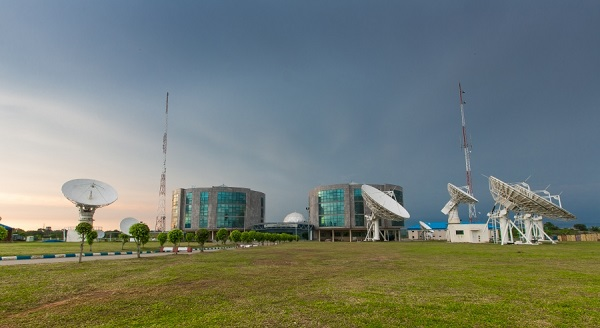
This context makes Chota AVS' win significant beyond the trophy. It signals that the Nigerian satellite ecosystem is beginning to reward solutions with real infrastructure utility.
Address verification powered by satellite-enabled location intelligence is exactly the kind of convergence the programme exists to accelerate.
The timing is also right. Nigeria's only operational satellite, NigComSat-1R, is approaching the end of its functional lifespan.

There is an ongoing $11.4 million debt dispute with China Great Wall Industry Corporation over operational fees, and serious conversations are happening at the policy level about procuring new communication and observation satellites.
Nigeria is at a critical juncture in its space economy, and the question of what that infrastructure will be used for is more live than it has ever been.

Chota AVS answers that question with something concrete.
AI as the Missing Layer
Address verification sounds low-tech until you consider what it requires: aggregating messy, inconsistent, informal location data at scale and turning it into something machines and humans can act on. That is, at its core, a machine learning problem.
You need systems that can learn from existing location patterns, correct errors, fill gaps and continuously update as cities grow and populations move.

In Nigeria, where urbanisation is rapid and informal settlement is the norm rather than the exception, static databases fail fast. However, intelligent, adaptive systems do not.
This is where AI becomes the entire backbone. African AI applications that are genuinely transformative are not the ones grafted onto existing Western frameworks. They are the ones built for the specific data environments of African cities.
What the Win Actually Says
When a satellite accelerator programme picks an address verification startup as its most outstanding cohort company, it is making an argument.
The argument is that Africa's space and AI future is not about replicating Silicon Valley aesthetics in Abuja or Lagos.
It is about using every available technological layer — satellite connectivity, machine intelligence, aggregated data — to solve the specific, stubborn problems that have held African economies back.
The promise of African tech has always been context-native innovation. Chota AVS' win is evidence that the ecosystem is maturing toward that promise.
That mango tree landmark might finally become a real address after all.