US Government Unleashes GDP Data on Bitcoin Blockchain: A Historic Leap for Crypto
The U.S. Commerce Department has begun publishing GDP data on public blockchains, marking a significant integration of the technology into economic reporting. This initiative, supported by the Trump administration and powered by Chainlink, signals a profound shift in U.S. economic policy and solidifies blockchain's role in government operations.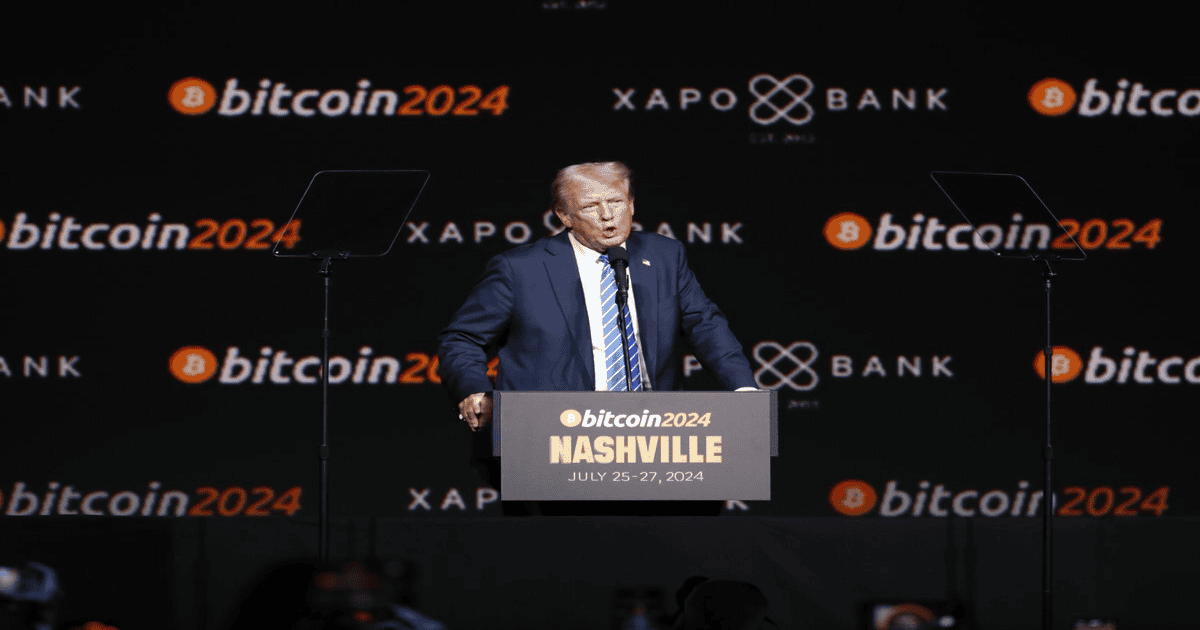
The U.S. Commerce Department has initiated a groundbreaking move by publishing gross domestic product (GDP) data on public blockchains, including Bitcoin, Ethereum, and Solana. This announcement signifies blockchain technology's integration into America’s core economic reporting, making GDP data accessible across nine distinct networks. Commerce officials clarified that this blockchain rollout serves as “another avenue” for data distribution rather than a replacement for traditional economic releases. However, the initiative carries profound symbolic weight, effectively endorsing a technology once met with skepticism in Washington, and demonstrating a comprehensive embrace from the current administration.
Mike Cahill, CEO of Douro Labs, confirmed his involvement with the Commerce Department on this project, stating that with this announcement, “government data lives on blockchains, and market participants can participate in real time.” The process involves posting cryptographic hashes of GDP data, which act as digital fingerprints to verify the information’s integrity. Initially limited in scope, the Trump administration reportedly intends to expand this program further. Commerce Secretary Howard Lutnick, who spearheaded the project, informed President Trump that statistics would be issued via blockchain, acknowledging Trump as the “crypto president.” Lutnick has also previously advocated for changes to GDP reporting, specifically by excluding the impact of government spending.
This initiative marks a significant departure from the previous administration's approach. Under former President Joe Biden, regulators adopted a cautious stance on cryptocurrency, leading to clashes with exchanges and restrictions on digital assets. In stark contrast, President Trump has swiftly moved to integrate Bitcoin into government policy. His actions since taking office include creating a U.S. Bitcoin reserve, stockpiling various cryptocurrencies like Ether and Solana, signing legislation regulating stablecoins, and appointing crypto-friendly regulators who subsequently ended enforcement actions against companies such as Coinbase. Furthermore, Trump’s family has expanded its presence in the digital asset space, supporting ventures like World Liberty Financial. The growing political influence of the crypto industry is evident through substantial donations to Trump's re-election campaign and over $133 million contributed to super PACs supporting pro-crypto candidates in 2024.
The Commerce Department's adoption of public blockchains follows similar exploratory efforts by other government agencies. The Department of Homeland Security has explored blockchain for airport passenger screening, while California’s DMV has digitized car titles using crypto technology. Powering the direct publication of data on these blockchain networks is Chainlink, a prominent “oracle” provider. The LINK token saw a more than 6% surge following this announcement, which Chainlink hailed as a “key milestone” for government adoption of blockchain. Chainlink's technology is also leveraged by major entities like SWIFT, BNY Mellon, BlackRock, Visa, and Mastercard.
This profound shift in U.S. economic policy, with Trump positioning himself as the “crypto president,” further solidifies Bitcoin's role as a powerful political and financial force in Washington. The broader economic context for this initiative includes recent, stronger-than-expected U.S. GDP growth, with the economy expanding by 3.3% in the second quarter and consumption rising by 1.6%. This figure, revised from an initial 3%, represents the best quarter since Q3 2023. While economist Heather Long notes that the U.S. economy is slowing, it “clearly” continues to grow. Despite this relatively robust economic data, the Federal Reserve is still widely anticipated to cut interest rates in the upcoming month.