Uganda's Election Blackout: Nation Votes Under High Tension as Internet Goes Dark
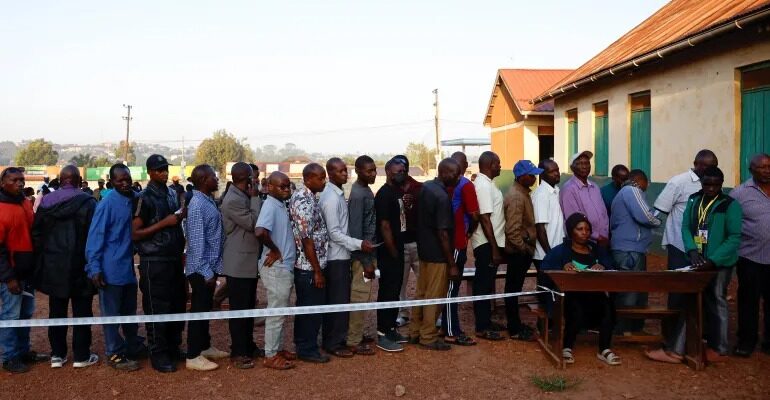
Uganda was gripped by fear and uncertainty on January 15, 2026, as polls opened in a highly charged general election expected to prolong President Yoweri Museveni’s four-decade rule. The election unfolded amidst a sweeping security crackdown, numerous opposition arrests, and a controversial nationwide internet shutdown that plunged the East African nation into digital darkness just days before voting commenced.
A government regulator had ordered mobile network operators to block public internet access late Tuesday, with authorities claiming the measure was necessary to curb misinformation. However, critics vehemently countered that the move was a deliberate tactic to silence dissent and shield potential electoral manipulation from global scrutiny.
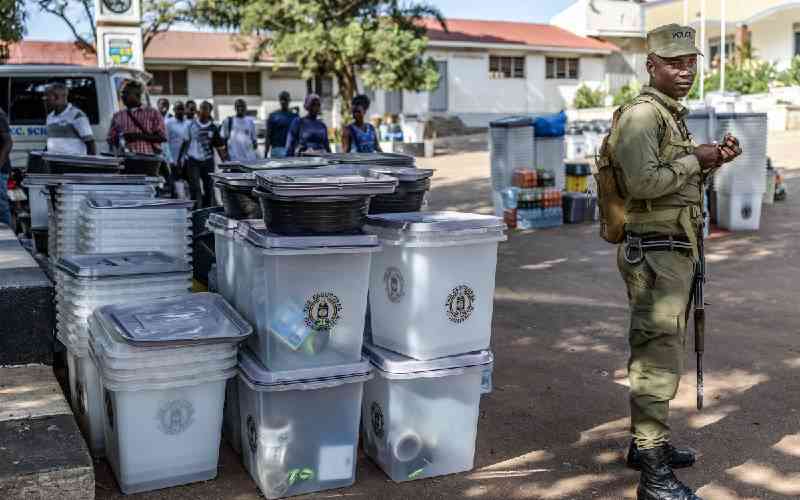
Polling stations across the country experienced significant delays in opening, triggering widespread frustration and anger among the more than 21.6 million registered Ugandans. In parts of the capital, Kampala, crowds gathered anxiously outside closed stations while police and soldiers mounted heavy patrols. Journalists reported staggered starts to voting, with some stations beginning shortly after 7 am, while others remained shuttered for hours into Election Day. The border town of Jinja also saw armed security forces dominating the streets, underscoring fears of potential unrest.
The opposition swiftly condemned these delays, accusing the government of orchestrating chaos to influence the outcome. David Lewis Rubongoya, secretary general of the opposition National Unity Platform, claimed that voting was proceeding smoothly only in areas where the military was casting ballots. The election took place against a backdrop of deep economic frustration, particularly among the youth, with nearly 70 percent of the population under the age of 35 facing high unemployment and rising living costs, fueling a strong desire for change among first-time voters.
The main challenger, 43-year-old singer-turned-politician Bobi Wine, who styles himself the 'ghetto president,' faced what rights groups described as 'brutal repression' during his campaign. Hundreds of his supporters were arrested in the run-up to the vote, and Wine himself wore a flak jacket at rallies, describing the election as a 'war' and Museveni as a 'military dictator.' After casting his vote, Wine accused the government of 'massive ballot-stuffing' and arresting some of his party officials under the cover of the internet blackout. He further alleged that delays, slow ballot box arrivals, and malfunctioning biometric machines—which he attributed to the internet blockage—were designed to facilitate rigging, urging the people of Uganda to resist.
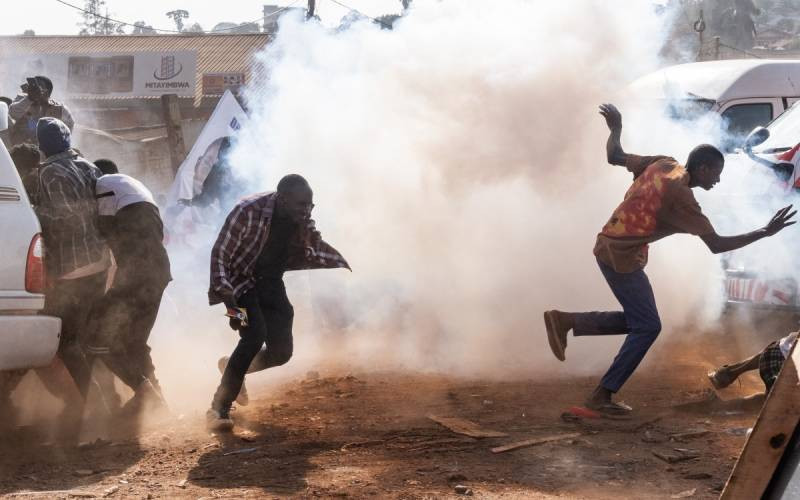
Despite the accusations and widespread technical issues, voting reportedly passed off peacefully. A spokesperson for the Ugandan Red Cross, which deployed across the country, stated they had heard 'no substantive' reports of violence. A heavy police and army presence was maintained throughout the day, with authorities determined to prevent the anti-government protests seen in neighboring Kenya and Tanzania in recent months. Even President Museveni acknowledged having trouble with the voting machines; his machine initially rejected his thumbprints but eventually accepted a scan of his face, allowing him to vote, and he promised to investigate the malfunctions.
International bodies raised concerns regarding the electoral environment. Human Rights Watch denounced the suspension of 10 NGOs, including election monitors, in the week leading up to the vote, while the United Nations called the internet shutdown 'deeply worrying.' Another significant opposition figure, Kizza Besigye, who had run against Museveni four times, remained subject to an ongoing treason trial following his abduction in Kenya in 2024 and subsequent return to Uganda.
Amidst the controversies, many Ugandans continue to praise Museveni for ending the country's post-independence chaos and overseeing periods of rapid economic growth, even if much was lost to a relentless string of massive corruption scandals. Western countries have historically granted Museveni considerable leeway, partly due to his acceptance of neoliberal reforms in the 1980s and his strategic partnership in the US-led 'war on terror,' particularly through troop contributions to Somalia. As the country awaited official results within 48 hours, Museveni stated his vote was for anyone 'who believes in Uganda... who believes in Africa.'
You may also like...
Tottenham's Nightmare: Richarlison Sidelined for Weeks with Hamstring Injury
Tottenham Hotspur faces a critical period with top scorer Richarlison sidelined by injury, alongside a challenging run o...
AFCON 2025 Heartbreak: Super Eagles' Dramatic Exit and Coach Chelle's Shocking Revelations
)
Nigeria's AFCON 2025 journey ended in a heartbreaking semi-final penalty shootout loss to Morocco, largely due to goalke...
YouTube Sensation Markiplier Stirs Controversy, Defying Theatrical Rules Before Indie Horror Debut!
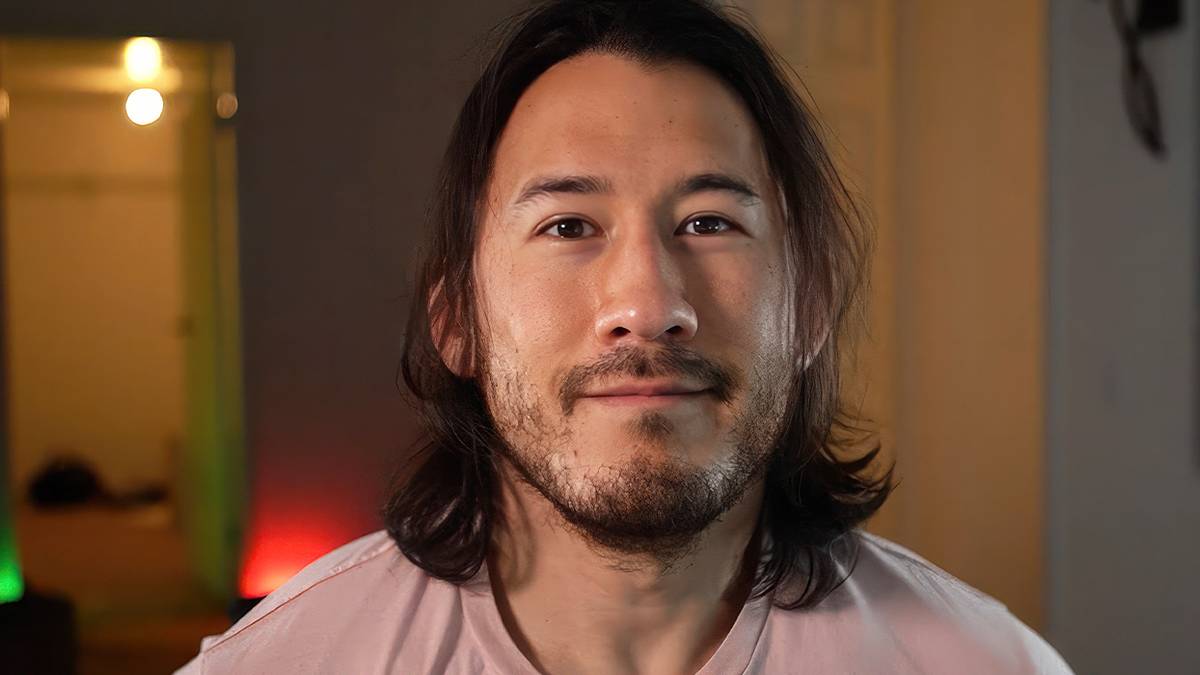
Markiplier's self-distributed horror film, "Iron Lung," is set for a widespread theatrical release, propelled by an unpr...
GoT Stars Sophie Turner and Kit Harington Unleash Brutal Reunion in New Fantasy Horror Trailer!

Game of Thrones stars Sophie Turner and Kit Harington are reuniting for the horror thriller The Dreadful, with its first...
Major Milestone: Alicia Keys' 'Hell's Kitchen' Announces Final Broadway Show, Set For Global Expansion!

Alicia Keys' acclaimed musical “Hell’s Kitchen” is set to conclude its successful Broadway run on February 22 after near...
Harry Styles Unleashes Surprise: New Album 'Kiss All the Time. Disco, Occasionally' On The Horizon!

Pop icon Harry Styles has announced his fourth studio album, "Kiss All the Time. Disco, Occasionally," set to drop on Ma...
Showrunners Dive Deep into 'Star Trek: Starfleet Academy' Premiere Easter Eggs

Star Trek: Starfleet Academy embarks on a bold new era in the 32nd century, as co-showrunners Alex Kurtzman and Noga Lan...
FDA Sounds Alarm: Greens Powder Recalled Amid Nationwide Salmonella Outbreak Affecting Dozens in 21 States
:max_bytes(150000):strip_icc()/Health-super-greens-recall-57be62c936b14cbfb489ca7653de995c.png)
Live it Up Super Greens supplement powder has been recalled nationwide following a Salmonella outbreak linked to 45 illn...