Uganda Votes Under Shadow: Elections Marred by Internet Blackout and Crackdown
Uganda's 2026 general elections are marked by intense tension, with President Yoweri Museveni expected to extend his decades-long rule amidst an internet shutdown and a severe crackdown on the opposition, led by Bobi Wine. Security forces have heightened their presence, and human rights organizations voice deep concerns over repression and the suspension of NGOs, painting a bleak picture for the democratic process.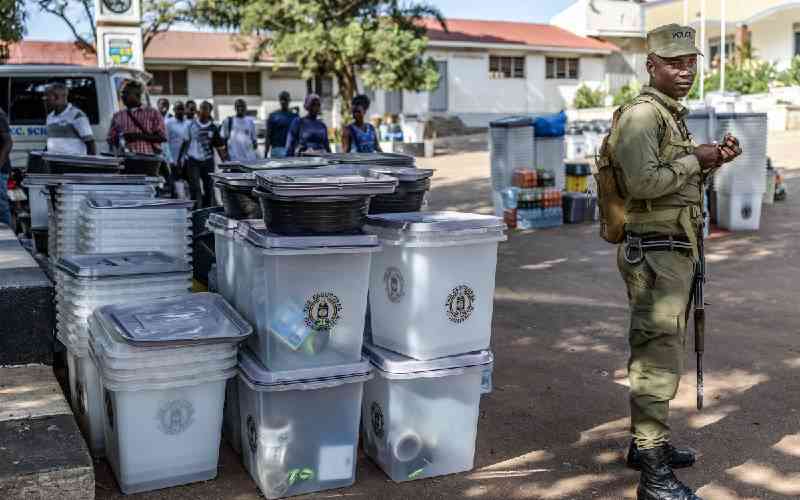
Uganda stood on the precipice of its 2026 general elections, with final preparations underway in Kampala on January 14, 2026, as police officers guarded ballot boxes and other electoral materials. As polls officially opened on Thursday, the nation was gripped by tension, anticipating that President Yoweri Museveni would extend his already four-decade-long rule amidst a widespread internet shutdown and a severe police crackdown on opposition figures.
The Daily Monitor newspaper starkly advised citizens on how to "election-proof your home," recommending reinforced doors and windows and designating a safe-room in anticipation of potential unrest. This sense of unease is deeply familiar to Ugandans, who have lived under Museveni's leadership for over 40 years.
At 81, Museveni, a former bush fighter, has governed with an ideology rooted in revolutionary violence, his tenure frequently marred by accusations of extensive abuses by security forces against his political adversaries.
President Museveni has faced a significant challenge from Bobi Wine, a 43-year-old singer-turned-politician known as the "ghetto president," a title reflecting his origins in a Kampala slum. In the lead-up to the vote, hundreds of Wine's supporters were arrested. Wine himself has taken to wearing a flak jacket at rallies, describing the election as a "war" and labeling Museveni a "military dictator."
He openly accused the government of planning to rig the election, brutalize, and kill people, while striving to conceal these actions from the international community. Wine has also vowed to organize protests should the election results be rigged.
Another prominent opposition figure, Kizza Besigye, who previously ran against Museveni four times, was abducted in Kenya in 2024 and subsequently brought back to Uganda to face an ongoing treason trial in a military court. His wife, Winnie Byanyima, who is the UNAIDS director, critically observed that Uganda possesses only a "thin veneer" of democracy, characterizing the situation as a "total capture of state institutions" by the president.
Despite repeated assurances that it would not happen, the Ugandan government implemented an indefinite internet shutdown on Tuesday, citing the need to prevent the spread of "misinformation" and "incitement to violence." The United Nations expressed deep concern over this measure. On election day, polling stations experienced slow openings, a common occurrence in Uganda, but voting did commence shortly after 7 am (04:00 GMT) in at least one Kampala suburb, as observed by AFP journalists. Heavy police and army patrols were also reported in the border town of Jinja.
Many residents in Kampala expressed nervousness as security forces noticeably increased their presence for election day. An accountant in his thirties, choosing to remain anonymous, highlighted the prevailing fear, stating, "We will not talk about elections. You can ask anything but not that." The police issued warnings that the vote was "not a justification for criminal acts" and deployed newly hired "special constables" to maintain order.
International scrutiny also highlighted the suppression of independent voices. Journalists faced harassment and were prevented from attending Museveni's rallies.
Reporters Without Borders reported that local journalist, Ssematimba Bwegiire, lost consciousness after being electrocuted and pepper-sprayed by a security officer at a Bobi Wine rally. Human Rights Watch condemned the suspension of 10 non-governmental organizations, including those monitoring elections, and denounced the "brutal repression" faced by the opposition.
Western countries have historically afforded Museveni considerable leeway, largely due to his adoption of neoliberal reforms in the 1980s and his role as a crucial partner in the US-led "war on terror" in the 2000s, particularly through troop contributions to Somalia.
While critics point to rampant corruption scandals, many Ugandans still commend Museveni for bringing an end to the country's post-independence chaos and overseeing periods of rapid economic growth. A supporter, Banura Oliver, 41, on her way to Museveni's final rally in Kampala, expressed staunch loyalty, stating, "Forty years doesn't even matter, we need even more."
The president himself adopted a forceful stance, declaring, "Go and vote. Anybody who wants to interfere with your freedom, I will crush them." The images of mototaxi drivers proudly supporting Museveni and the NRM party heading to his closing campaign rally on January 13, 2026, underscored the enduring, albeit contentious, support for a leader who has spent nearly a half-century consolidating power and steadfastly refusing to relinquish it.