Trump's Greenland Grab Ignites Fury: Europe & Republicans Slam 'Gangster' NATO Threats

Donald Trump’s escalating demands for the United States to acquire Greenland, potentially through seizure or purchase, have triggered widespread criticism from both his own Republican party and a united front of European allies. This contentious issue has sparked concerns about its economic repercussions, the stability of the NATO military alliance, and the future of transatlantic relations, with many fearing a dangerous downward spiral.
Trump has consistently advocated for US control of Greenland, citing national security imperatives, particularly the need to counter expanding Russian and Chinese influence in the Arctic. He has pointed to Greenland’s strategic location for early warning systems against missile attacks and monitoring vessels, as well as its abundant natural resources, including at least 25 of the 34 raw materials deemed 'critical' by the EU. He has also mentioned the island's importance for his proposed missile defense shield, dubbed the 'Golden Dome', and has not ruled out military intervention if a purchase is not feasible.
The US president’s tactics have included threatening new tariffs on several European countries, including Denmark, Germany, France, and the UK, which he vowed would start at 10% and potentially rise to 25% if his demands for Greenland are not met by June. This approach, which some have termed 'blackmail,' has been met with fierce condemnation.
Within the Republican party, prominent figures have voiced strong opposition. Senators Thom Tillis and Lisa Murkowski, who visited Denmark to discuss Greenland concerns, sharply criticized the tariff threats. Murkowski labeled them “unnecessary, punitive, and a profound mistake,” arguing they would alienate European allies and benefit adversaries like Vladimir Putin by destabilizing NATO. Tillis called coercive action to seize territory of an ally “beyond stupid” and detrimental to America’s interests and Trump’s legacy. Former Vice President Mike Pence noted that the current posture threatens to fracture strong relationships with Denmark and other NATO allies. House member Michael McCaul warned that a military intervention would 'turn NATO on its very head' and effectively abolish the alliance. Senator Rand Paul dismissed the situation as 'ridiculous,' stating there was no emergency concerning Greenland. However, former US House speaker Newt Gingrich defended Trump's approach as a negotiation tactic to secure 'tourist rights, economic rights, mineral rights and national security rights' in Greenland.
European nations have presented a united front in their rejection of Trump’s demands. Denmark’s Prime Minister Mette Frederiksen, alongside leaders from Finland, France, Germany, the Netherlands, Norway, Sweden, and the UK, issued a joint statement. They affirmed their unwavering commitment to the 'principles of sovereignty and territorial integrity,' standing in full solidarity with the Kingdom of Denmark and the people of Greenland. They stressed their dedication to strengthening Arctic security as a shared transatlantic interest through pre-coordinated exercises like 'Arctic Endurance' and warned that tariff threats 'undermine transatlantic relations and risk a dangerous downward spiral.' Frederiksen explicitly stated, “Europe will not be blackmailed.”
Other European leaders echoed these sentiments. French President Emmanuel Macron declared that 'No intimidation nor threat will influence us,' promising a united European response and considering activating the EU’s anti-coercion instrument. UK Labour leader Keir Starmer called Trump's plan 'completely wrong' and emphasized that applying tariffs on allies for pursuing collective NATO security was unacceptable. Culture Secretary Lisa Nandy stressed that support for Greenland’s sovereignty was 'non-negotiable.' Concerns about the potential cancellation of King Charles’s mooted trip to Washington were also raised. John Bolton, Trump’s former national security adviser, described the tariff threat as 'without doubt his most dangerous and destructive assertion,' with 'incalculable' ramifications for US alliances.
Public sentiment in Greenland and Denmark strongly opposes US acquisition. Protests in Greenland’s capital, Nuuk, and in Danish cities featured chants of 'Greenland is not for sale.' Polling data from January 2025 showed only 6% of Greenlanders supported joining the US, with 85% against. A Reuters/Ipsos poll indicated that most Americans also oppose Trump’s push, with 47% against compared to 17% in favor.
The potential economic consequences of Trump’s proposed tariffs are significant. Economists have warned of a UK 'recession watch' and the freezing of the EU-US trade deal. Geopolitically, the threat to NATO is paramount; leaders like Mette Frederiksen and former UK permanent secretary Simon McDonald have articulated that a military confrontation between NATO allies would signify the end of the alliance, playing directly into the hands of Russia's Putin and China's Xi Jinping. The irony, as noted by critics, is that pursuing Greenland by alienating key allies would ultimately undermine US national security interests in the Arctic.
A meeting at the White House last Wednesday involving Vice President JD Vance and representatives from Denmark and Greenland ended in an impasse, as Trump appears to desire outright ownership rather than merely increased military access. This stark difference in values—Trump's emphasis on might and wealth versus Europe’s commitment to sovereignty and international cooperation—underscores the profound challenge to the post-World War II global order and the transatlantic alliance.
Recommended Articles
Global Tensions Escalate: European Leaders Defy Trump's Greenland Tariff Threats

President Donald Trump has escalated tensions by threatening new tariffs on eight European allies for opposing his propo...
Global Tensions Rise as Trump Renews Pressure to Annex Greenland

The dispute over Greenland intensifies as President Trump pushes for its acquisition, facing strong opposition from Denm...
Global Tensions Erupt: Trump's Greenland Bid Fuels NATO Rift Amid Danish Troop Deployments

Tensions are mounting over US President Donald Trump's desire to acquire Greenland, sparking strong reactions from the E...
Trump's Bold Greenland Claim Ignites Global Alarm: 'Existential Threat' to NATO, Europe Warns

Donald Trump's controversial push to acquire Greenland has sparked international outcry and raised significant concerns ...
Greenland Caught in Geopolitical Crossfire: Islanders Face Uncertain Future

Greenland finds itself in a geopolitical storm as US President Donald Trump expresses a desire to acquire the semi-auton...
You may also like...
How a ₦10 Million GTBank Loan Turned Banke Kuku Into a Global Fashion Brand

From a ₦10 million loan to dressing Michelle Obama and Gabrielle Union, Banke Kuku turned Nigerian fabrics into a global...
Grants or Investors: Which Is Better for Startups?

Funding a Startup is hard enough, deciding where your funding comes from shouldn’t be. Grants or investors? Each has its...
Does Music Shape Who We Are, Or Are We Just Overthinking It?

Does your music taste define you? From psychology and brain science to spirituality and social performance, this piece e...
Relentless Scrutiny: The Unforgiving World of Football Management
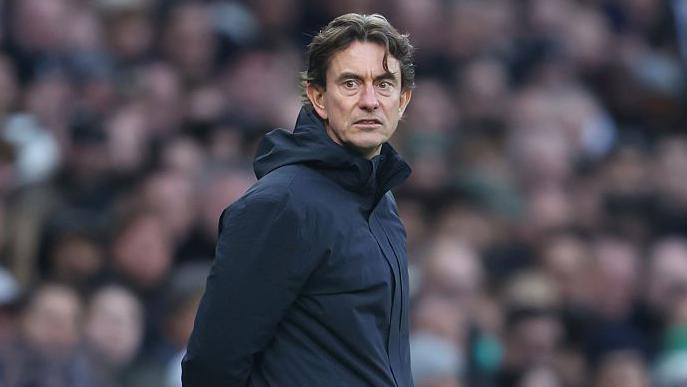
Pressure on Premier League football managers remains ever-present, as evidenced by recent events involving Thomas Frank ...
Exclusive Gala: French Cinema's Elite Gather in Paris with Thierry Fremaux & Stars

Cannes Film Festival chief Thierry Frémaux was honored at Variety's Paris dinner at the historic Lapérouse restaurant, c...
Tragic Loss: 'Lion King' Director Roger Allers Passes Away at 76

Roger Allers, the acclaimed co-director of Disney's "The Lion King" and a key figure in the Disney Animation renaissance...
SNL Mayhem: A$AP Rocky Debuts and Joins Sabrina Carpenter for Wild Sketch

A$AP Rocky made his debut as a musical guest on Saturday Night Live on January 17, performing tracks from his new album,...
Kruger's Resilience: Park Reopens Amidst Lingering Flood Impact, Letaba Camp Still Closed

Kruger National Park is currently facing significant challenges due to persistent, above-average rainfall, leading to th...