Trump's AI Regulation Stance Faces Rebellion: Utah Republican Defies Federal Control
State lawmakers are increasingly taking the lead on artificial intelligence regulation, often in defiance of the federal government's push for a single national standard. Led by former tech employees like Utah's Doug Fiefia, these state-level initiatives aim to address public concerns about AI's societal impact and establish necessary safeguards, despite facing significant opposition from both the federal administration and powerful industry lobbyists.States across the United States are trying to regulate artificial intelligence because there are no clear national laws yet.
This has caused conflict with the federal government, which wants one nationwide rule to keep the country competitive.
In Utah, Lawmaker Doug Fiefia, a former Google employee, pushed for an AI bill focused on protecting children.
The bill was supported locally but later blocked by the Trump administration, which said it could hurt innovation.
Overall, states want to create their own AI rules, but the federal government is trying to stop them, leading to an ongoing disagreement.
Despite federal resistance, the number of state legislative proposals addressing AI has surpassed 1,000, reflecting a widespread uneasiness across the country.
A Quinnipiac poll indicated that about 80% of Americans are concerned or very concerned about AI, with roughly three-quarters believing the government is not doing enough to regulate the technology.
Popular ideas for state regulations include requiring chatbots to disclose their non-human nature and prohibiting the use of AI to create nonconsensual pornography by manipulating images.
States with diverse political landscapes are taking action. In Florida, Republican Governor Ron DeSantis has added AI to a special legislative session, having previously pushed for a bill to implement parental controls for minors using AI and to ban the use of a person's likeness without permission.
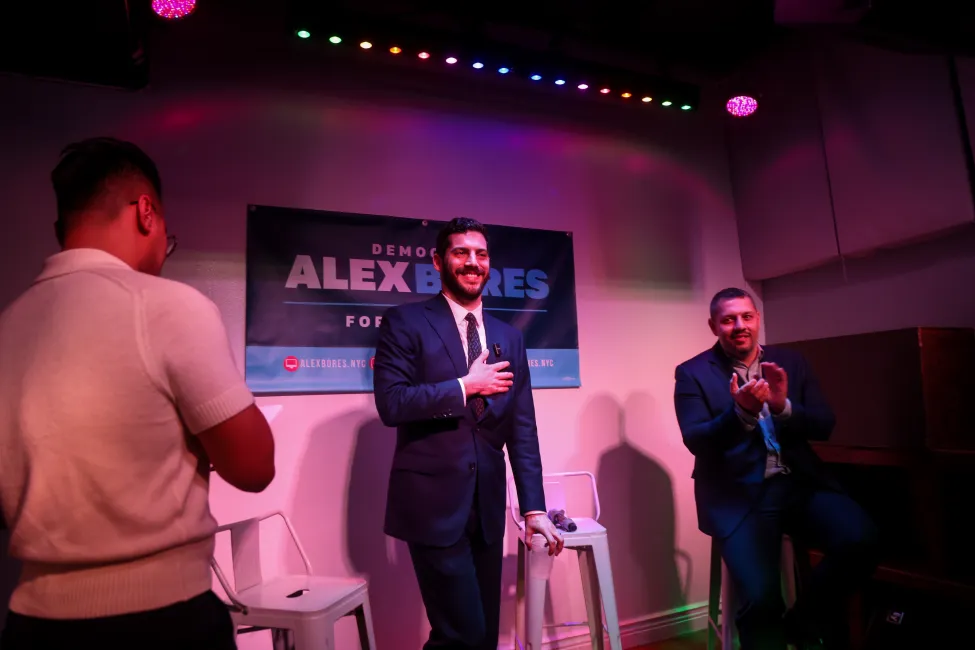
Democratic-controlled states like New York and California have passed significant regulations; New York's law, authored by Former Data Scientist Alex Bores, requires major AI developers to report dangerous incidents, while California's provisions focus on the disclosure of catastrophic risks.
Conversely, AI bills in Republican-led Louisiana and Missouri have stalled due to Trump administration resistance.
A loose network of former tech employees, now state lawmakers, is at the forefront of this regulatory push.
Fiefia co-chairs the AI task force of the Future Caucus with Monique Priestley, a Vermont Democrat who also has a tech background.
This group shares ideas and strategies, often contending with an "army of full-time lobbyists" from the tech industry.
Alex Bores, the New York Democrat responsible for his state's AI law, is currently facing significant industry backlash in his congressional primary, with a pro-AI campaign committee spending millions against his candidacy, an effort he believes is designed to intimidate others from pursuing regulation.
Fiefia's primary opponent for the state Senate, Daniel McCay, represents a contrasting view, expressing skepticism about the need for extensive AI regulation.
He believes that historical technological advancements like fire or the internet did not ruin society and that overly burdensome regulations would drive Utah out of the AI innovation business.
However, Fiefia maintains his principled stance on states' rights, arguing that it's crucial to stand up for state autonomy even when defying an administration of his own party, particularly when he disagrees with a "zero regulations" approach to AI.