Progressive Powerhouses Sanders & Warren Demand End to Bitcoin 401(k) Rule
Senators Bernie Sanders and Elizabeth Warren are urging the Trump administration to withdraw a rule allowing cryptocurrencies in 401(k) accounts, citing risks to workers' financial futures and potential conflicts of interest. They argue the move undermines the 'prudence' standard for retirement plans and could expose trillions in savings to volatile assets, while the administration defends it as an expansion of worker choice.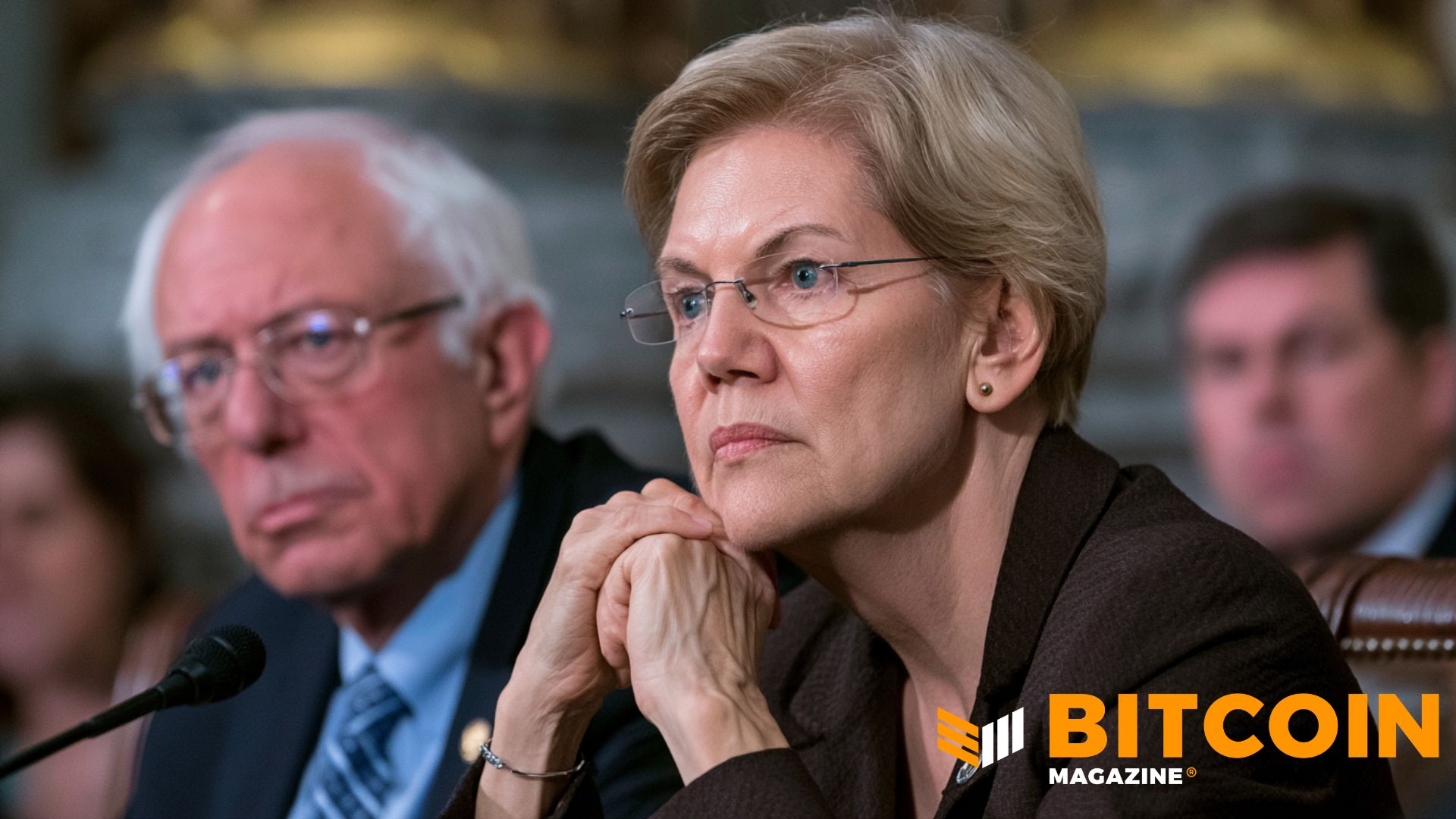
Senators Bernie Sanders (I-VT) and Elizabeth Warren (D-MA), joined by House Education and Workforce Committee ranking member Rep. Bobby Scott (D-VA), have formally called on the Trump administration’s Labor Department to abandon a proposed rule that would permit the inclusion of Bitcoin and other cryptocurrencies in American retirement savings accounts. In a comprehensive 14-page letter dispatched to Acting Labor Secretary Keith Sonderling, the lawmakers expressed strong condemnation, asserting that the rule poses significant risks to workers' financial futures while potentially enriching President Trump and his family.
The controversial proposal, initially floated in March, is an outgrowth of an executive order signed by President Trump last August, which instructed the Labor Department to re-evaluate its stance on alternative assets within retirement plans. The rule intends to provide 401(k) plan fiduciaries with a framework to offer highly volatile assets, including cryptocurrencies, private equity, and private credit, provided they can demonstrate that relevant factors were thoroughly considered before making these offerings available.
The Democratic lawmakers contend that this proposed rule is deeply detrimental to American workers and directly contradicts existing statutes, Congressional intent, established regulations, and prevailing case law. They argue that under current law, fiduciaries managing 401(k) plans are bound by a stringent “prudence” standard, a requirement firmly rooted in the Employee Retirement Income Security Act (ERISA) of 1974 and reinforced by Supreme Court precedent. The new rule, however, would allegedly invert this standard. Instead of mandating fiduciaries to actively demonstrate due diligence, it would presume diligence, so long as a fiduciary adheres to the specific process outlined in the rule. This fundamental shift, the lawmakers assert, clashes with decades of legal precedent and exposes the estimated $14.2 trillion held in American 401(k) accounts to assets characterized by extreme price volatility and limited regulatory oversight.
Concerns regarding the inherent risks of cryptocurrency investments are further bolstered by external warnings. The Financial Industry Regulatory Authority (FINRA) has cautioned that crypto investments “have experienced higher levels of volatility relative to more traditional investment assets” and carry “the risk of losing all of your investment.” Compounding these fears, the FBI reported over $11 billion in cryptocurrency fraud losses in 2025, marking some of the highest losses within any category of cyber-enabled crime.
Beyond the immediate retirement policy implications, the Democratic lawmakers also raised pointed conflict-of-interest concerns directly linked to President Trump. They highlighted that Trump’s adult sons are responsible for managing the family’s cryptocurrency business, ventures that, according to the Wall Street Journal, have generated an estimated $5 billion for the Trump family following the September launch of their digital currency. The family’s crypto portfolio reportedly includes World Liberty Financial’s WLFI and USD1 tokens, alongside the official Trump meme coin, which saw a surge past $75 per token during Trump’s January 2025 inauguration before collapsing to approximately $2. The letter explicitly states that “The change to the prudence standard described above expands opportunities for President Trump and his family to profit at the expense of taxpayers, workers, and retirees.”
Consumer advocacy groups have echoed these profound concerns. Oscar Valdés Viera, a senior policy analyst at Americans for Financial Reform, critically remarked that “Opening 401(k)s to these products risks turning workers’ retirement savings into a Ponzi-like scheme that throws a lifeline to an industry scrambling for fresh cash.” The letter also underscored the dire stakes for retirees who cannot afford significant losses by citing senior poverty statistics, noting that over 22.8% of seniors in the United States live in poverty, a stark contrast to figures in countries like Denmark (5.1%), France (5.8%), and Germany (12.6%).
In response, the Trump administration has defended the proposed rule as an expansion of worker choice. Acting Labor Secretary Sonderling affirmed in a statement that “The department’s days of picking winners and losers are over,” emphasizing that their rule “clearly spells out that managers must evaluate any and all potential product offerings by following a prudent process.” Treasury Secretary Scott Bessent further voiced his support, characterizing the rule as “another step in ushering in President Trump’s ‘Golden Age.'”