Trump's 'Stop The Steal' Call Echoes: A Dangerous Game?
President Donald Trump's recent speech and ongoing actions aim to undermine confidence in American elections through disproved claims and legislative pushes. Despite court losses and state official resistance, Trump continues efforts to influence electoral processes and voter data. This persistent campaign raises concerns about election integrity and potential impacts on future democratic outcomes.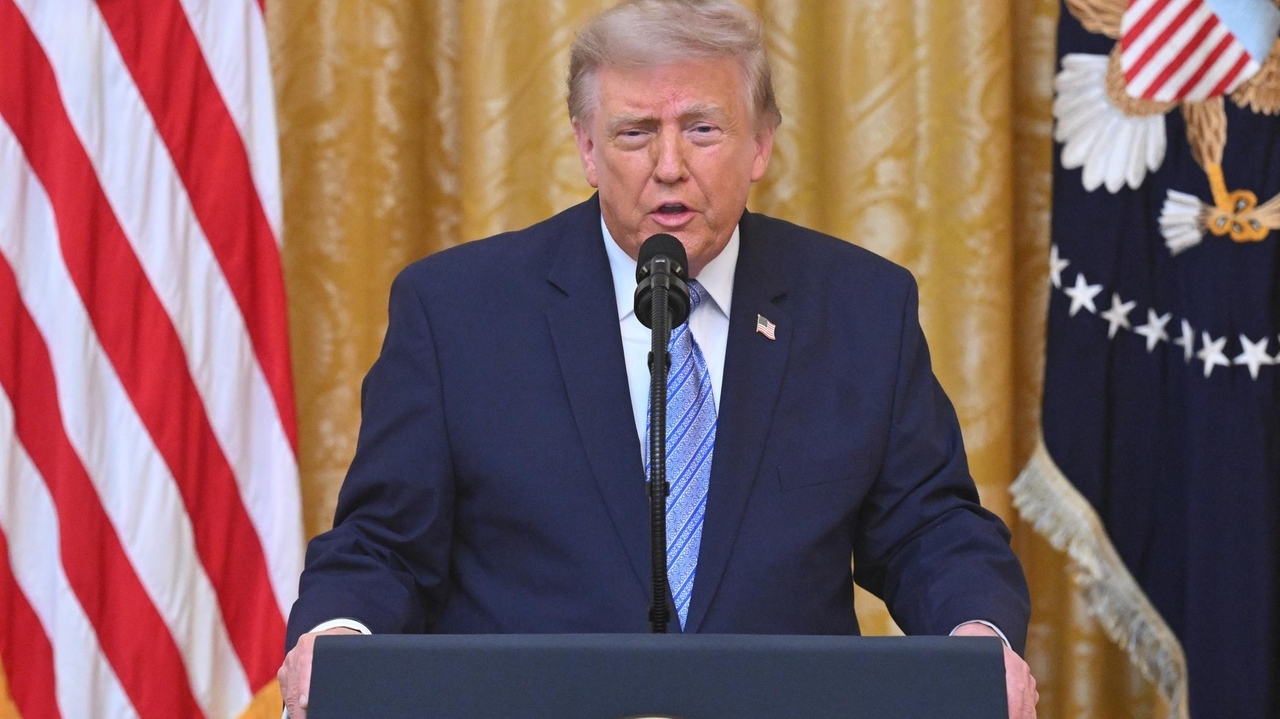
President Donald Trump delivered a 25-minute primetime speech on Thursday, designed to erode public trust in the integrity of American elections. His address was characterized by what critics described as a concocted spray of disproved nonsense, including baseless claims of “deep state” and foreign interference. Trump's clear objective, beyond justifying his past attempts to nullify his 2020 election loss, appears to be to influence the upcoming November House elections, where the Republican majority is perceived to be at risk. Historically, congressional seats often shift in the second year of a presidency. However, for Trump, such a shift would pose a unique threat, as it could introduce checks and balances on his expanded power and privileges, which have been largely unchecked since his return to office last year.
During his speech, the president failed to substantiate his grave assertions with the declassified intelligence reports, internal emails, and other materials he had made public. Evidence presented indicated that while China might have considered influencing opinion, there was no manipulation of voting machines or ballots.
The speech also rehashed disputed claims from the Department of Homeland Security, alleging that 250,000 noncitizens were registered to vote in California, New Jersey, Nevada, and Pennsylvania. State officials vehemently dispute these numbers, and no corroborating evidence has been presented. The White House continues to push for the passage of the highly controversial SAVE America Act, which mandates voter ID at polls and proof of citizenship to vote. However, noncitizen voting is already illegal and exceedingly rare. Critics argue that rushing voter ID legislation through Congress as part of a spending bill just four months before Election Day could severely disrupt ballot operations in the fall, raising questions about the true intent behind Trump’s urgent push for the SAVE America Act.
Following the 2020 election, Trump unsuccessfully attempted to compel the then still-independent Justice Department to interfere with state election processes. In his second term, he has successfully bent the department to his will. Despite this, courts have consistently ruled against his current legal maneuvers, mirroring their dismissal of previous claims regarding rigged voting machines and unfounded allegations against state election employees.
A recent example of the administration's actions, echoing events from 2021, occurred last week when a federal judge dismissed the Department of Justice’s lawsuit seeking access to West Virginia’s unredacted voter rolls. This marked one of 15 consecutive court losses for the department in its broad effort to seize sensitive voter data from all states. U.S. District Judge Thomas Johnston explicitly stated that the demand for West Virginia’s data was “devoid of any factual basis,” indicating no suspicion or evidence of the state failing to maintain its lists properly under federal law or any data anomalies. The administration had initiated lawsuits against 30 states, plus Washington D.C., seeking voter registration information that would include driver’s license numbers and partial Social Security numbers. The Constitution unequivocally grants each state the authority to administer elections, yet Trump persists in pressuring them for special treatment, a pattern observed during his first term.
Idaho's Republican Attorney General Raúl Labrador tersely instructed the DOJ to cease its demands for unredacted registration rolls from the secretary of state and warned against criminal action for noncompliance. James Craig, a division chief in Labrador’s office, wrote in a letter, “First, you can stop threatening your friends in Idaho. Second, you can voluntarily dismiss your lawsuit,” citing that a public version of the list had already been provided to the DOJ.
Further demonstrating what some describe as an absurd waste of resources, the FBI recently directed its field offices nationwide to assign over 200 staffers to investigate the 2020 election results in Fulton County, Georgia. The votes in Fulton County were counted three times, including once by hand, each time reaffirming Joe Biden's victory in the state. The article suggests Trump remains unable to accept his loss.
In January 2021, Trump's recorded phone call to Georgia’s Republican Secretary of State Brad Raffensperger, in which he pressured and threatened Raffensperger to “find 11,780 votes” to overturn the electoral results, became a significant point. Courageously, Raffensperger refused the president’s demand to cheat. This phone call later formed one of the articles of impeachment against Trump.
More recently, on July 9, Trump abruptly fired two Democratic appointees to the bipartisan Election Assistance Commission (EAC), an agency that supports state election operations. With a Republican having already resigned, no commissioners remain. The article emphasizes that, similar to five years ago, election integrity will largely depend on the civic courage of state officials.
Trump’s history includes a federal indictment in 2023 for election interference. However, all U.S. charges were dropped after his re-election in 2024, preventing the allegations from being tested in court. The urgent imperative, according to the article, is to prevent the president from engaging in the very actions he falsely accused Democrats of undertaking during his first term, encapsulated by the phrase “stop the steal.” The article concludes that Trump’s ill-founded finagling and efforts to tamper with upcoming elections under the thin guise of “reform” must cease immediately, or the republic risks having its people’s voting process skewed under presidential pressure.