Trump Ignites Fury: US Demands Payment for Strait of Hormuz Security, Imposes New Fees!
Former President Trump announced the US would guard the Strait of Hormuz and seek compensation from beneficiary nations, citing years of uncompensated protection. This declaration comes amid renewed US-Iran tensions, with the Strait remaining central to the dispute due to its global oil and gas importance. Iran, through its foreign ministry and IRGC, is engaged in mediation while insisting the Strait remains closed until US military operations cease, following recent exchanges of missile and drone attacks that have pushed oil prices higher.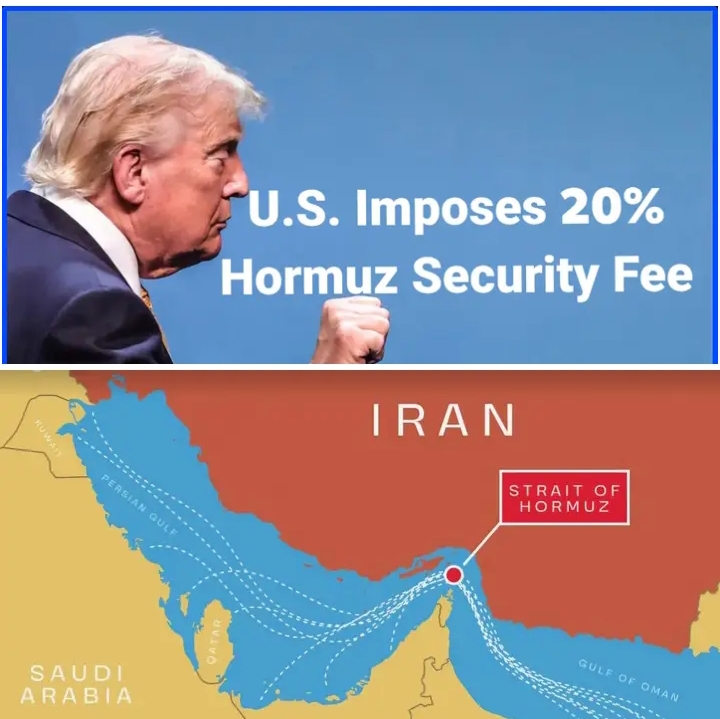
In a recent interview on Fox News’ Fox & Friends on Monday, July 13, former President Trump declared that the United States would assume the role of "guardian" for the strategically vital Strait of Hormuz. He emphasized that countries benefiting from the security provided in this waterway should contribute to covering the associated costs, arguing for reimbursement for the US's long-standing protection efforts and the risks undertaken by its personnel. Trump stated, "We’ll become the guardian of the Strait. We’re going to get paid for guarding it. A lot of money, but we just want to be reimbursed for doing all of this, for putting our people in danger." He further elaborated on the prospect of the US "running" the strait, even humorously suggesting the moniker "guardian angel of the strait" for the US role.
These assertions by Trump emerge amidst a backdrop of escalating tensions between the United States and Iran. A series of recent military exchanges has cast significant doubt over the viability of an interim ceasefire agreement that had been reached earlier in the year. The Strait of Hormuz itself remains a critical flashpoint in this dispute, primarily due to its unparalleled importance to global oil and gas shipments, through which a substantial portion of the world's energy supplies transit.
Trump was also highly critical of Iran's negotiating conduct, alleging that the country has consistently failed to honor previous agreements. He claimed, "We had a deal. It was a done deal, and then they broke it. They always break it. We’ve had 10 deals with these people, and so we’re just going to hit them very hard." He recounted an instance where Iranian negotiators allegedly sought changes after an 11-hour meeting where everything had supposedly been agreed upon, stating, "Yesterday, they had an 11-hour meeting and everything was agreed to. Then they leave the room, call back, and say they had to make a couple of changes."
In response to the mounting tensions, Iran’s foreign ministry confirmed that it is actively engaged in discussions with mediators from Qatar, Pakistan, and Oman. These diplomatic efforts are aimed at preventing any further escalation of the conflict. Concurrently, Iran’s Islamic Revolutionary Guard Corps (IRGC) has maintained its stance that the Strait of Hormuz remains closed. The IRGC has issued a stern warning, indicating that normal shipping operations would only resume if the United States ceased its military activities in the area. They further cautioned that continued interference in the region could precipitate wider, more severe consequences for the global oil and gas market.
The latest wave of confrontation includes missile and drone attacks exchanged by US and Iranian forces over the recent weekend. Tehran reported that it had targeted American military facilities across the Gulf while simultaneously upholding its closure of the critical waterway. These renewed hostilities have sparked significant concerns across international markets regarding global energy supplies, subsequently leading to an increase in oil prices.
The proposed fee, as alluded to by Trump, is specifically designed to help mitigate the considerable expenses associated with maintaining maritime security and safeguarding commercial shipping within this crucial waterway. This measure coincides with the United States' ongoing expansion of its security presence in the Strait of Hormuz, a response to the continually heightened regional tensions.