Trump Administration Suspends Microsoft from Green Card Program Amid Fraud Allegations
The Trump administration has suspended Microsoft and other tech firms from a green card program for H-1B visa holders, citing fraud and claims of replacing American workers with "foreign indentured servants." This crackdown, led by Vice President JD Vance, also targeted universities over J-1 and OPT visa programs, creating tension with President Trump's simultaneous honoring of immigrant tech billionaires.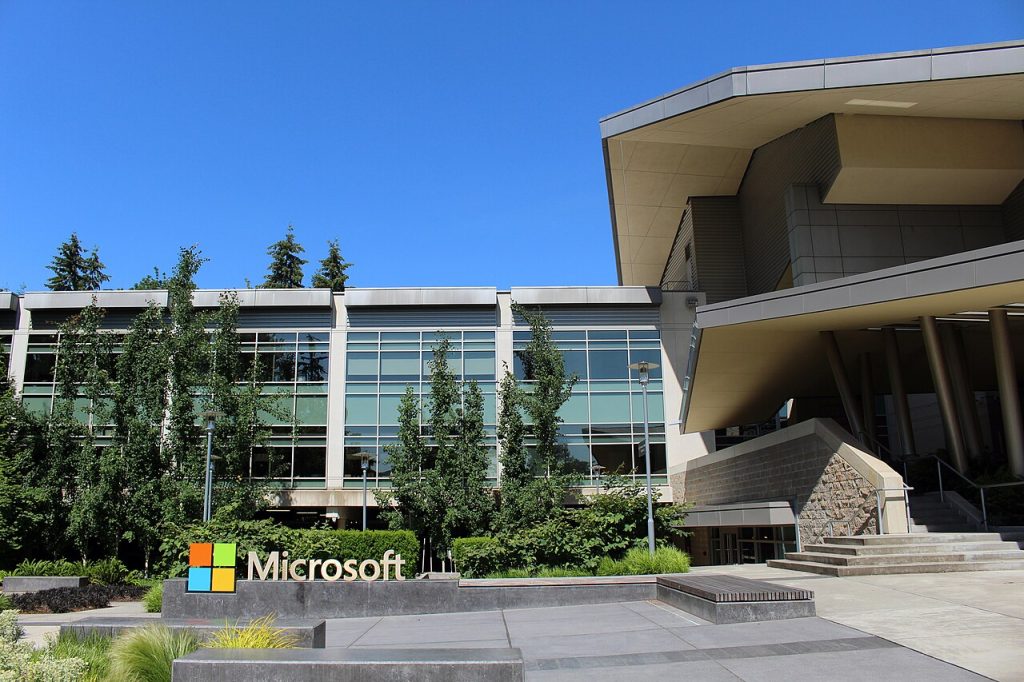
The Trump administration, through Vice President JD Vance, announced a significant crackdown on programs allowing foreign workers to live and work in the U.S., specifically targeting tech giant Microsoft and several universities. This move, unveiled in a White House news conference, involves suspending Microsoft and other firms from a program that facilitates green card applications for H-1B visa holders, citing accusations of fraud and abuse that allegedly undercut American workers.
Vance specifically accused Microsoft of replacing laid-off American employees with "foreign indentured servants," stating that for every worker Microsoft laid off, the company replaced them with one and a half foreign workers. He highlighted that Microsoft, despite laying off 6,000 U.S. workers last year, obtained 6,300 H-1B visas and nearly 3,000 green cards. The Vice President claimed Microsoft exploited the system by making perfunctory job advertisements in small-town newspapers to create a false impression of a lack of American applicants, thereby justifying the need for foreign workers. While Microsoft ranks fifth among U.S. employers in H-1B visa usage, Vance asserted that no other company has used the system more abusively. He further argued that H-1B workers are effectively "foreign indentured servants" because their immigration status is tied to their employer, potentially leading to lower wages and forcing them to leave the country if they lose their jobs.
Microsoft, headquartered in Redmond, Washington, quickly responded to the accusations, stating that the majority (80%) of its H-1B visa applications in the last fiscal year were for extending or changing the status of existing Microsoft employees, not for hiring new individuals. The company added that the remaining filings for new employees, which constituted only 1% of its U.S. workforce, were for individuals already legally residing in the United States and were not new arrivals to the country. Microsoft affirmed its commitment to filing H-1B petitions only for those who meet the rigorous standards of the visa category and expressed readiness to provide additional information to the administration.
The H-1B program, designed for high-skilled jobs difficult to fill with American workers, has long been a contentious issue and a frequent target of Trump supporters who argue it leads to the displacement of American workers and is prone to abuse. Technology companies are the primary users of these visas, with a significant majority of approvals going to workers from India. Previous attempts by the Trump administration to increase H-1B work visa fees, such as a proposed $100,000 fee, were met with legal challenges that were struck down by a federal judge. A more recent proposal for a $103,265 fee aims to recover administrative costs but is also expected to face legal opposition. Experts like Doug Rand, a former USCIS senior adviser, criticized Vance's announcement as "incoherent," arguing that blocking green cards would make H-1B workers more, not less, dependent on their employers, thus counteracting the stated goal of protecting them. Ron Hira, a political science professor and H-1B critic, called the move against Microsoft "very significant," noting a previous executive order aimed at protecting American workers from H-1B abuse had not been enforced.
Beyond Microsoft, Vance announced that the government was also suspending other prominent tech companies and consulting firms, including Adobe, Cognizant, Infosys, Tata, Wipro, HCL, and Capgemini, from the same green card program. The administration’s broadside also extended to educational institutions, with the Department of Homeland Security proposing a substantial $70,000 fee for international students participating in the Optional Practical Training (OPT) program, which allows them to work in fields related to their studies. Vice President Vance additionally singled out nine universities—Harvard, Yale, Stanford, Brown, the University of Pittsburgh, the University of California, Davis, the California Institute of Technology, Arizona State, and the Massachusetts Institute of Technology—for potential investigation into J-1 visa fraud, alleging their disproportionate use of exchange visitor programs. Stanford confirmed it would cooperate, while MIT and Brown acknowledged receiving subpoenas, with MIT emphasizing its adherence to U.S. law and the vetting of J-1 visa holders by the U.S. government.
Adding a layer of complexity to the administration's stance, President Trump celebrated several tech billionaires for their contributions to American innovation just hours after Vance's stern announcement. Notably, five of the six leaders honored with the National Medal of Technology and Innovation or the National Medal of Science were immigrants: Microsoft CEO Satya Nadella (India), SpaceX CEO Elon Musk (South Africa), Google co-founder Sergey Brin (Russia), Nvidia CEO Jensen Huang (Taiwan), and Advanced Micro Devices CEO Lisa Su (Taiwan). The only U.S.-born recipient was Dell Technologies CEO Michael Dell. Trump lauded these individuals as "national treasures," praising their roles in revolutionizing technology and driving the "golden age" of science, particularly in artificial intelligence, without any mention of the visa program controversies. When questioned about the apparent contradiction, Vance stated the administration would "continue to support Microsoft and have a great relationship with Microsoft." Nadella, for his part, expressed humility and looked forward to continued collaboration for American prosperity. This juxtaposition highlighted the inherent tension between the administration's efforts to curb immigration and its reliance on immigrant talent to fuel the U.S. economy and technological advancement.