Tragedy at Europe's Doorstep: Ceuta Migrant Surge Claims Lives, Exposes EU's 'Selfish' Response
Spain grappled with an unprecedented influx of migrants into its North African enclave of Ceuta, leading to a humanitarian and political crisis with significant EU fallout. While Spanish authorities blamed human trafficking and implemented robust security measures, some EU nations reacted controversially, underscoring broader European tensions on migration policy.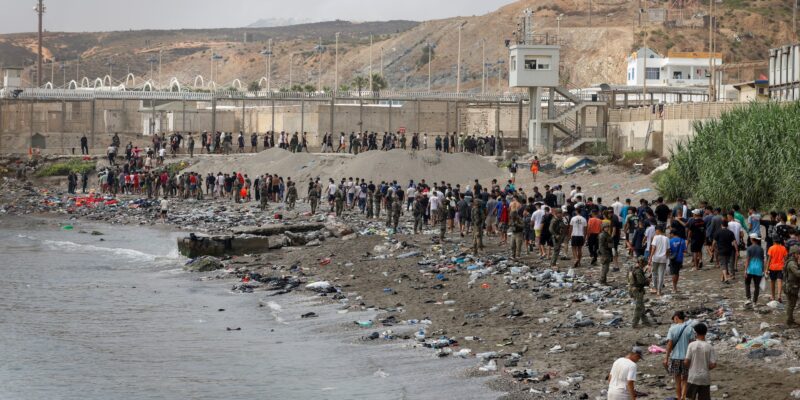
Spain faced an unprecedented humanitarian and political crisis following one of the largest mass border crossings in recent years, as tens of thousands of migrants entered the Spanish North African enclave of Ceuta from Morocco. Initial reports indicated approximately 50,000 migrants crossed within 24 hours, overwhelming the city of 85,000 residents, with the death toll during the perilous journey rising from at least 57 to 67.
Spanish Prime Minister Pedro Sánchez, upon visiting the enclave, condemned the influx as a violation of Spain’s territorial integrity. He pledged to deploy all available resources to restore order and protect residents, including additional police officers, military personnel, drones, divers, and boats, as well as reinforcing security in the nearby enclave of Melilla. The government announced plans for a temporary reception center to register new arrivals, assess asylum claims, and expedite deportations for those without legal grounds to remain. Authorities also intended to install floating buoys near Ceuta’s Tarajal beach to clearly mark the maritime border.
Sánchez attributed the surge to human trafficking networks, accusing them of exploiting a recent Spanish Supreme Court ruling. This ruling barred the immediate return of migrants intercepted at sea while attempting to reach Ceuta or Melilla, without due process. According to Sánchez, criminal networks spread misinformation about this decision, prompting an “avalanche” of migrants attempting the dangerous journey. By Friday evening, Spain’s Interior Ministry reported that over 48,300 migrants had voluntarily returned to Morocco, and by Saturday, officials stated almost all those who reached the enclave on July 30 had returned, with the situation