Top 10 Longest Bridges in Africa and the Extraordinary Stories Behind Them
Africa's longest bridges were not built in a day. Some survived wars, coups, and decades of delay. What is the engineering and political story behind eight structures holding the continent together?
Bridges rarely get the credit infrastructure deserves. A skyline gets photographed but a bridge gets driven over, complained about in traffic, and largely ignored until it stops working. Yet across Africa, ten structures of steel and concrete quietly hold national economies together more than almost any other category of public infrastructure.
Here is a list of eight longest bridges in africa, and the histories behind them that rarely make the headlines.
1. 6th October Bridge — Egypt (20.5 km)
Africa's longest bridge crosses the Nile twice as it threads from Cairo's western suburbs through Gezira Island into downtown Cairo, eventually linking up with the road network leading to Cairo International Airport.
What most people do not realise is just how long it took to build. Construction began in 1969 under the working name Ramses Bridge, but war, political resistance, and even religious objections delayed the project for nearly three decades. It was finally completed in 1996, with a final phase added as late as 2005.
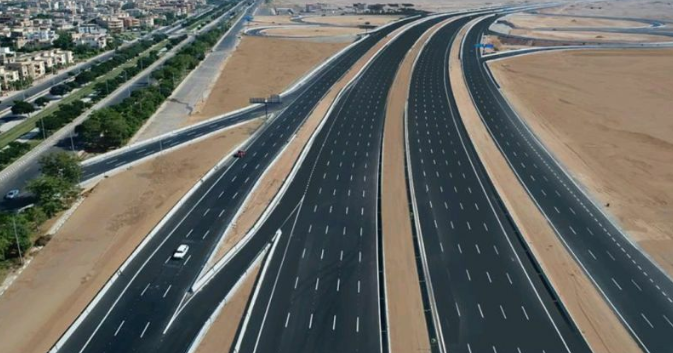
Its name commemorates Operation Badr, the surprise Egyptian crossing of the Suez Canal in October 1973 that opened the Yom Kippur War. Today, Cairenes have nicknamed it the “spinal cord” of the city, with roughly half a million people using it daily, and a full crossing taking up to 45 minutes during peak congestion.
During the 2011 Egyptian Revolution, the bridge became both a route to Tahrir Square and a battleground itself, with protesters and security forces clashing on its span.
2. Third Mainland Bridge — Nigeria (11.8 km)
Nigeria's longest bridge connects Lagos Island to the mainland, running from Oworonshoki to the Adeniji Adele Interchange, with a midway link to Herbert Macaulay Way in Yaba.
Its origins trace back to the oil-boom years of the 1970s under General Olusegun Obasanjo, whose government recognised that Lagos was straining under its own population growth.
The bridge's construction history reads almost like a political timeline of Nigeria itself. Foundation work began under President Shehu Shagari's civilian government in 1980, only for the 1983 military coup to stall the project for years.
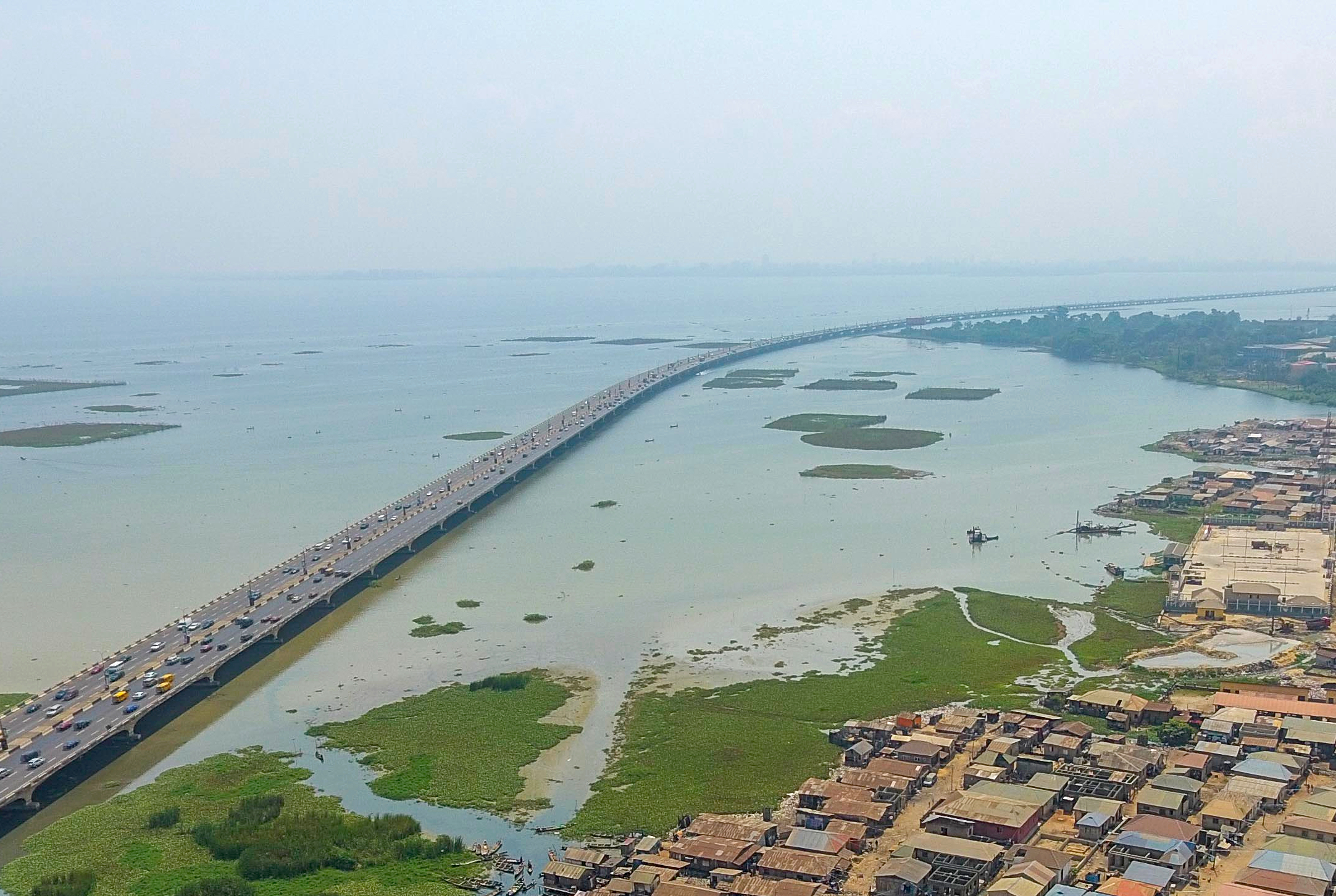
It eventually reached completion in 1990 under General Ibrahim Babangida, built by Julius Berger Nigeria PLC. At 11.8 kilometres, it was Africa's longest bridge until Cairo's 6th October Bridge overtook it in 1996. It remains the longest bridge in West Africa, and the longest in Nigeria overall.
3. Suez Canal Bridge — Egypt (3.9 km)
Also called the Mubarak Peace Bridge or the Egyptian-Japanese Friendship Bridge, this cable-stayed structure crosses the Suez Canal at El-Qantara, physically connecting the African and Asian continents. Its two pylons rise 154 metres into the sky, deliberately shaped to echo Pharaonic obelisks.
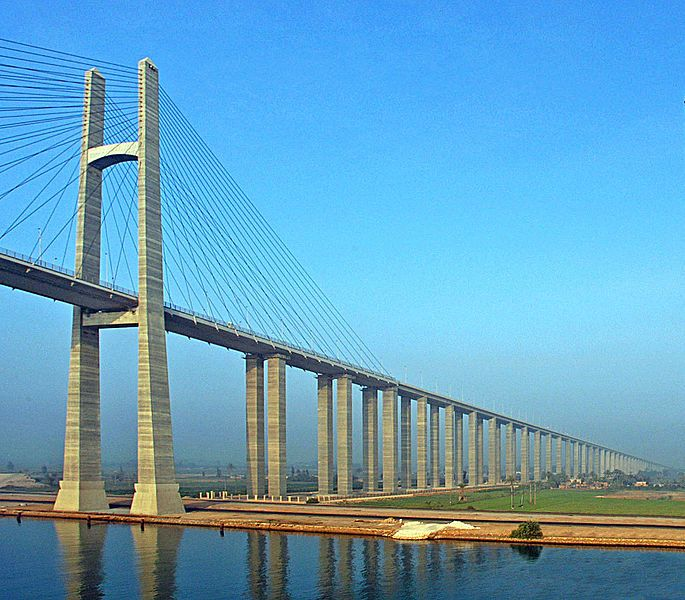
The bridge was financed through a Japanese grant covering 60 per cent of construction costs, agreed during President Hosni Mubarak's 1995 visit to Japan, with Egypt funding the remaining 40 per cent.
It opened to traffic in October 2001, with a 70-metre clearance above the canal to allow large vessels to pass beneath it uninterrupted, regardless of the volume of road traffic crossing overhead.
4. Mozambique Island Bridge — Mozambique (3.8 km)
This crossing links the Mozambican mainland to Mozambique Island, a UNESCO World Heritage Site whose Swahili, Arab, Indian, and Portuguese architectural layers tell the story of centuries of Indian Ocean trade.
Social Insight
Navigate the Rhythms of African Communities
Bold Conversations. Real Impact. True Narratives.
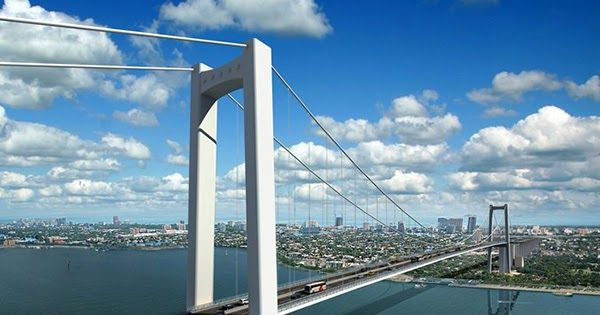
The bridge has done more than ease transport. It has meaningfully expanded access to a heritage site that, for centuries, could only be reached by boat, opening the island to a tourism economy that previously depended entirely on maritime access.
5. Dona Ana Bridge — Mozambique (3.7 km)
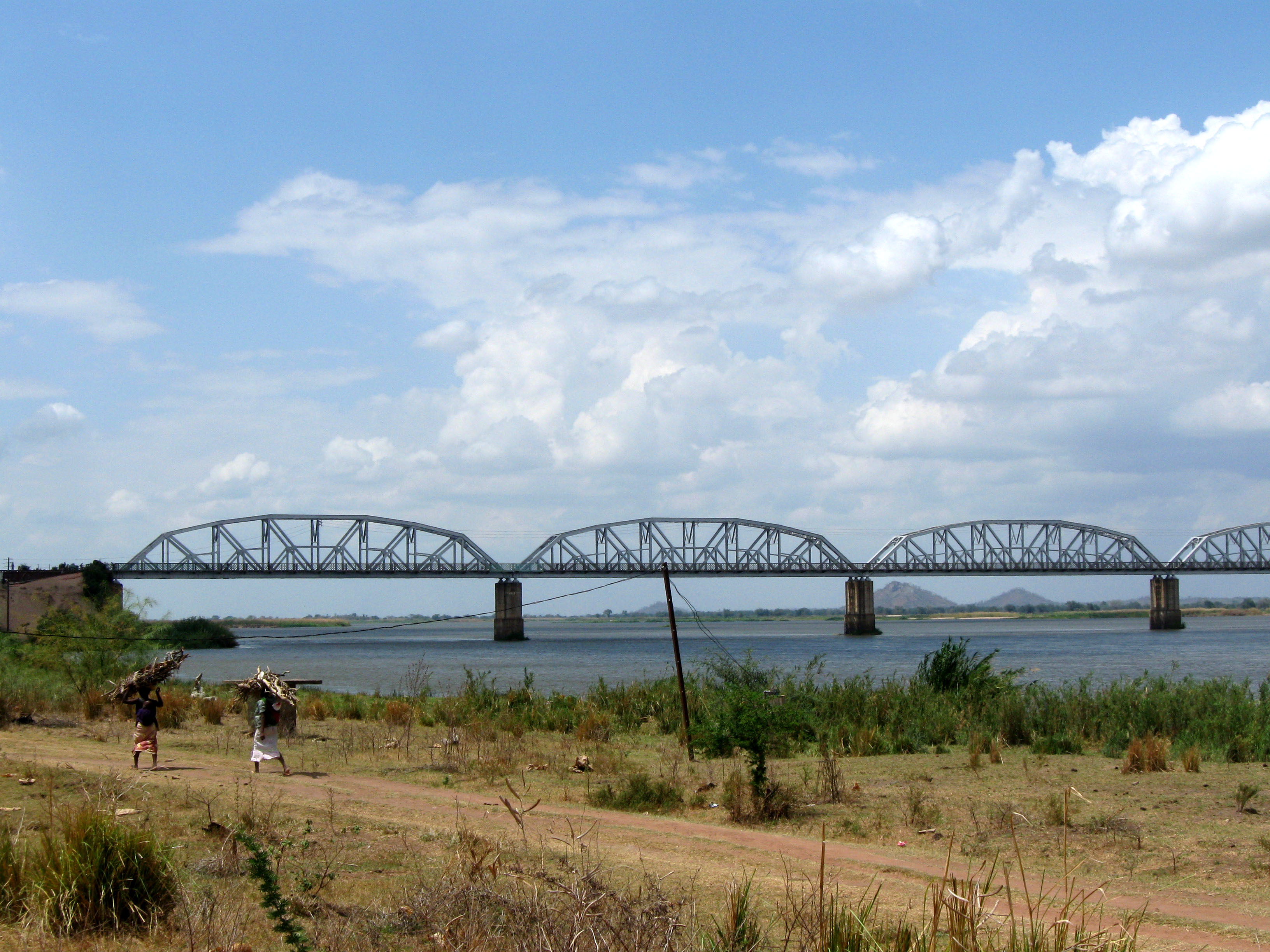
Built originally as a railway crossing over the Zambezi River, the Dona Ana Bridge remains one of the longest river crossings on the continent.
Its industrial-era design, built primarily to move freight rather than people, reflects a different era of African infrastructure, one shaped by colonial-era extraction economies rather than urban commuter needs.
It continues to serve as a vital transport corridor today.
6. Armando Emilio Guebuza Bridge — Mozambique (2.37 km)

This Zambezi River crossing, named after a former Mozambican president, is a notably modern addition to the list, providing a critical link between the country's northern and southern regions.
Before its construction, travel between the two halves of the country often required lengthy detours or ferry crossings, making this bridge a significant unifying piece of national infrastructure in a country whose geography has long made internal connectivity a logistical challenge.
7. Qasr al-Nil Bridge — Egypt (1.9 km)
Cairo's most photographed bridge is also one of its oldest. Originally constructed in the early twentieth century and famous for the pair of bronze lion statues guarding each end, the Qasr al-Nil Bridge links Tahrir Square to the Cairo Opera House on Zamalek island.
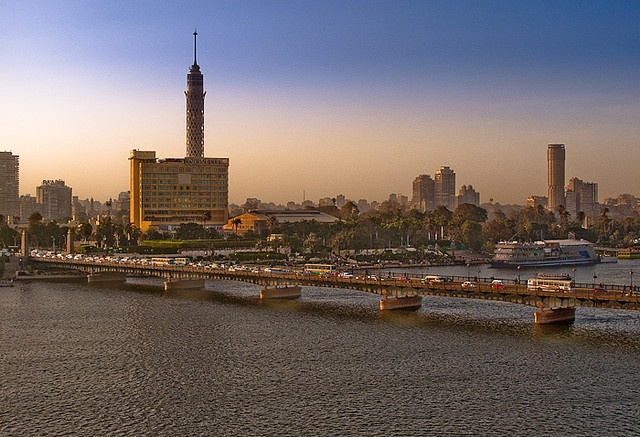
Unlike the engineering scale of its sister bridges on this list, its significance is largely cultural and symbolic, a landmark woven into Cairo's identity rather than a heavy traffic artery.
8. Wouri Bridge — Cameroon (1.8 km)
Spanning the Wouri River in Douala, Cameroon's commercial capital, this bridge functions as a critical artery for the country's import and export economy. Douala's port handles the overwhelming majority of Cameroon's maritime trade, and the Wouri Bridge is the connective tissue that allows goods to move from the docks into the country's road network and onward to neighbouring Chad and the Central African Republic.
Conclusion
Taken together, these eight structures map something larger than engineering achievement. They trace where African nations chose, often under enormous financial and political constraint, to invest in connecting people to economic opportunity rather than letting geography decide who gets left behind.
Some, like the Third Mainland Bridge, survived coups and changes of government to get built at all. Others, like the Suez Canal Bridge, exist because of careful diplomacy between nations decades apart in culture and geography.
Each one stands today as a small monument to the idea that movement, trade, and connection are worth building for, even when the building itself takes decades.