Thomas Partey's World Cup Visa Debacle: Government Under Fire Over Diplomatic Failure
Ghana's star midfielder Thomas Partey has been denied entry into Canada for a World Cup qualifier due to pending UK criminal charges, sparking a diplomatic controversy. This incident highlights the clash between Ghana's plea for presumption of innocence and Canada's strict immigration laws, raising concerns about the integrity of multi-host international tournaments.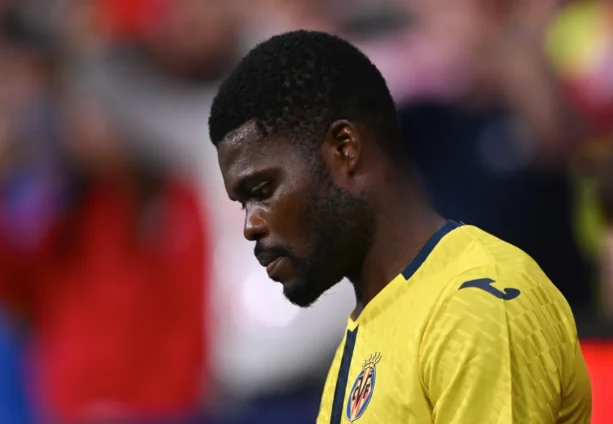
Ghana's star midfielder, Thomas Partey, has been denied entry into Canada, preventing his participation in the Black Stars' FIFA World Cup Group L opener against Panama at Toronto's BMO Field on June 17. This dramatic development has sparked significant legal, diplomatic, and sporting controversy, leading to formal protests from Ghana's Ministry of Sports and Recreation, as well as its foreign affairs ministry and football association.
The Ghanaian authorities have expressed deep concern, arguing that all qualified nations should have access to their eligible players and officials. They have called on FIFA to take a more active interest in safeguarding the rights of participating nations and to engage host nations on safeguards that protect accredited players and officials. Ghana contends that excluding an unconvicted elite athlete is fundamentally unfair, discriminatory, and violates the Rule of Law, asserting that FIFA's commitment to fairness must extend beyond the field of play to ensure competitive integrity and equal participation.
The root cause of Partey's denial stems from pending criminal charges in the United Kingdom, where he faces five counts of rape and one count of sexual assault, with two additional rape charges filed later. Partey has pleaded not guilty to all charges, and his trial is scheduled to be heard at Southwark Crown Court in London, potentially delayed until early 2027. Under British and international human rights frameworks, he remains legally innocent until proven guilty. However, Canada has remained tight-lipped regarding the definitive legal basis of its refusal, invoking privacy protocols, while FIFA has deferred to Canada's sovereign authority over its borders.
The core tension in this dispute lies between Ghana's reliance on the presumption of innocence and Canada's immigration risk assessment framework. International immigration law operates on a separate axis from criminal law. While criminal law demands certainty before imposing penalties, immigration control is preventive and protective, focusing on prospective assessments of public safety and statutory risk. A traveler's right to the presumption of innocence does not grant an unbridled right to cross international borders.
Within the Canadian framework, Section 36(1)(c) of the Immigration and Refugee Protection Act (IRPA) allows for a foreign national to be deemed inadmissible for "serious criminality" if they have committed an act outside Canada that would constitute an offense punishable by at least 10 years imprisonment within Canada. Crucially, a formal conviction is not a prerequisite for exclusion. Allegations such as rape and aggravated sexual assault carry maximum sentences exceeding this 10-year benchmark. Canadian jurisprudence, specifically the Supreme Court's decision in Mugesera v. Canada, establishes that immigration decision-makers operate under a "reasonable grounds to believe" evidentiary standard, which is less rigorous than the criminal standard of "beyond a reasonable doubt." This allows visa officers to rely on conduct-based assessments and supporting evidentiary materials from foreign police, even if a trial is pending. Landmark cases like Tran v. Canada and Hill v. Canada further support the breadth of Canada's criminal inadmissibility regime, emphasizing that immigration authorities can assess foreign conduct independently of criminal proceedings to manage prospective risks.
Alternatively, Canada may have opted for a simpler, purely administrative route by denying a Temporary Resident Visa (TRV) based on broad discretionary powers. Under this pathway, an applicant must convince an officer that they are of good character and pose no risk to public order. A pending criminal prosecution for a violent offense could be a sufficient basis for a discretionary refusal. While a Temporary Resident Permit (TRP) offers a mechanism for temporary entry where benefits outweigh risks, it is unknown if Canada considered or rejected this option.
This incident also highlights a significant structural flaw for global sports governance, particularly with major tournaments adopting multi-host formats across different nations, such as the upcoming FIFA World Cup co-hosted by the United States, Canada, and Mexico. Conflicting immigration regimes create administrative complexities. While the United States often emphasizes formal convictions and offers waivers for international delegations, Canada's IRPA enforces stricter and less flexible standards of criminal risk. Canada's position aligns with a broader trend in common law jurisdictions like Australia (as seen with Novak Djokovic), the UK, and New Zealand, which possess broad character-based exclusion powers.
Ghanaian Member of Parliament Nana Asafo-Adjei Ayeh, serving as the Deputy Ranking Member on Parliament’s Foreign Affairs Committee and MP for Bosome Freho, has sharply criticized the handling of Partey's travel arrangements. He argued that authorities should have anticipated potential challenges given Partey's well-known legal issues and called for intensified diplomatic efforts. Mr. Asafo-Adjei Ayeh questioned the effectiveness of Ghana's World Cup planning structures and the World Cup Committee, stating that Ghana missed critical opportunities for proactive risk assessment and early diplomatic engagement, reflecting a broader failure in the country’s diplomatic engagement processes. He emphasized the need for stronger collaboration between sporting bodies and foreign policy institutions to prevent similar setbacks.
Ultimately, the Partey visa dispute underscores the sobering reality of national sovereignty over international sporting aspirations. If Canada's decision is anchored in IRPA Section 36, backed by certified UK prosecutorial documents, its legal position is significantly strengthened, as international law generally recognizes a state's sovereign right to control its borders. While Ghana's arguments for competitive equity and the presumption of innocence resonate publicly, they hold less weight at the border. Given the limited time, Ghana's immediate recourse may be intensified bilateral and diplomatic engagements for a waiver. This situation leaves FIFA with a daunting systemic challenge: without harmonized border policies among multi-host nations, the integrity of global tournaments remains vulnerable to localized, sovereign risk assessments. Thomas Partey, however, remains eligible to play in Ghana's subsequent group matches against England on June 23 and Croatia on June 27, both scheduled to be played in the United States.