The Role of Movies And Literature in Shaping Culture
An insightful commentary on how film and literature shape culture, influence identity, preserve memory, and redefine social norms across generations.

Many times than not when the topic of culture surfaces in rooms or discussion, it is often spoken about as though it is fixed, something inherited, preserved, and passed down unchanged. In reality, culture is actually dynamic and it is constantly being negotiated, reshaped, and reimagined by the very people who believe that the cultures of their society cannot be changed. Few forces have played a role in all of this such as social conflicts, economical change, alteration in storytelling of customs and tradition, selfish interests and even personal issues with others. But among all of that is a more defining force that many people may not actually realize and that is movies and literature. Even in the whole buzz of social media timelines and viral trends, well crafted and scripted stories are already and are still doing the quiet work of defining how people see themselves, how societies remember their pasts, and how they imagine their futures. Movies and books do not merely reflect culture; they participate in its construction, drive narratives and fantasies, sometimes reinforcing dominant values, other times challenging them, and often doing all at once.
To understand culture without examining its stories that are being pushed out in the environment of that culture is to miss its very heartbeat. From oral traditions to novels, from cinema screens to streaming platforms, narratives have always been where societies rehearse their fears, ambitions, contradictions, and hopes.
Stories as Cultural Memory and Moral Compass
Literature was one of the earliest tools through which societies preserved memory. Before archives and databases, stories carried history, ethics, and identity. Epic poems, folktales, novels, and plays were not only for entertainment; they were repositories of collective experience and a world of its own. Through them, communities decided what was worth remembering, what was worth fantasizing about and what lessons should endure.

Consider how novels often outlive systems, how readers immersed themselves in worlds that felt real to them and it seemed like only the authors could get their point of view. Empires fall, borders change, times pass but stories remain intact in the memories of those who have come across them and have even become an integral part of their lives. A single book can preserve the emotional truth or even a misleading fact of an era more accurately than official records ever could. Literature, both fiction and non fiction, captured how people felt, not just what happened. It documented the inner lives of individuals navigating love, injustice, faith, ambition, and loss. In doing so, it quietly shapes how future generations interpret the past.

Movie production and screens partnered with literature on this role and maybe has even out raced literature and expanded its reach. Where books require time, literacy, and solitude, movies speak through images, sound, and shared experience. A movie can compress complex social realities into two hours and project them onto a collective consciousness. It can make distant cultures feel familiar and familiar cultures feel newly strange. When a society repeatedly sees certain stories on screen, about heroism, romance, success, or failure, those narratives begin to influence how people define normalcy and aspiration.
This is why representation matters, not as a slogan but as a cultural reality. When entire groups are absent, stereotyped, or flattened in stories, the culture absorbs those distortions. Conversely, when stories are told with depth and honesty, they expand empathy and moral imagination. Movies and literature subtly teach societies what should be the norm and who deserve dignity, whose pain is visible, and whose voice carries authority.
Shaping Identity, Desire, and Social Norms
Beyond preserving memory, movies and literature actively shapes identity. They influence how people understand gender roles, family structures, love, power, and even success. Many of the ideas individuals hold about romance come not from lived experience but from novels and movies encountered long before adulthood. These narratives subtly instruct audiences on what is desirable, acceptable, or shameful.
In literature, inner monologues allow readers to inhabit minds unlike their own. This intimacy fosters empathy but can also normalize certain worldviews. In film, visual storytelling amplifies this effect by attaching ideals to faces, bodies, accents, and environments. Over time, repeated imagery becomes cultural conditioning. The “successful” life begins to look a certain way. The “hero” speaks a certain language. The “villain” carries familiar traits.
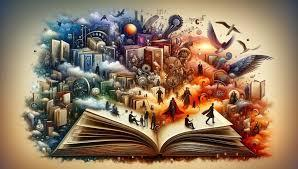
This influence is not inherently negative. Stories can inspire courage, resistance, and imagination. Many social movements have drawn strength from literature that articulated injustice long before laws caught up. Films have humanized struggles that statistics could not, mobilizing public sentiment and shifting cultural conversations. A powerful narrative can make the invisible visible and the ignored impossible to dismiss.
However, the same power can also reinforce harmful norms. When stories consistently glamorize violence, marginalize certain identities, push a narrative about a certain issue or present narrow definitions of worth, they shape cultures that internalize those limits. This is why critical engagement with film and literature matters. Culture is not only shaped by what is created, but by how audiences interpret and challenge those creations.
Culture
Read Between the Lines of African Society
Your Gateway to Africa's Untold Cultural Narratives.
Globalization, Power, and the Battle for Narrative Control
In the modern world, film and literature operate within global systems of power. Stories now travel faster and farther than ever before, crossing borders through publishing, cinema, and digital platforms. This has created opportunities for cultural exchange, but it has also raised questions about whose stories dominate and whose are sidelined.
For decades, global culture has been disproportionately shaped by a few powerful industries. This concentration influences how entire regions are perceived. When stories about certain places are repeatedly told from the outside, they risk becoming caricatures. Film and literature then cease to be mirrors and instead become lenses that distort reality.
So in light of this it is important to say that there should be a quiet shift underway. Creators should reclaim the narrative authority, telling stories rooted in local realities while speaking to universal themes. Literature from previously marginalized regions should gain global readership and let it drive a better narrative of a community and its culture. Films made on traditional power and pride should be given good promotions to find international audiences. All these works would do more than diversify entertainment; they rebalance cultural power and who gets to tell our story, and not just any story, The African story.


This shift is very crucial and it reveals an important truth: culture is not static, and storytelling is not neutral. Every story carries assumptions, values, and perspectives. The decision of which stories are funded, distributed, and celebrated shapes cultural hierarchies and way of life. When societies support a plurality of voices, culture becomes richer, more honest, and more resilient.
At the same time, audiences should no longer be passive. Viewers and readers should question narratives, critique stereotypes, and demand accountability from creators. The dialogue between storytellers and their audience is itself a cultural force. It reflects a growing awareness that stories shape reality, and therefore deserve scrutiny.
Conclusion: Why Stories Still Matter
In an age saturated with content, it may be tempting to dismiss movies and books as mere entertainment. Yet culture is not shaped only by policies or institutions; it is shaped by imagination. Movies and literature influence how people think before they act, how they feel before they decide, and how they interpret the world around them.
Stories teach societies how to remember, how to empathize, and how to envision change. They can uphold traditions or challenge them, reinforce power or question it. They can narrow perspectives or expand them. The responsibility, therefore, does not rest only with creators but also with audiences to engage thoughtfully, to seek diverse narratives, and to recognize the quiet power of the stories they consume.
In all, culture is a conversation across generations, and movies and literature are among its most enduring voices. What we choose to tell, and what we choose to believe, continues to shape who we are becoming.