The Race to 5 Gigawatts: How NVIDIA and CoreWeave Are Building the AI Factories of Tomorrow
NVIDIA and CoreWeave are racing toward 5 gigawatts of AI computing power, building massive “AI factories” that could reshape global innovation. This piece explores what that scale means for Africa, climate concerns, and who truly gets to benefit from the AI future.
The Race to 5 Gigawatts: How NVIDIA and CoreWeave Are Building the AI Factories of Tomorrow
Two tech giants are making efforts to build the backbone of an AI-powered future. NVIDIA and CoreWeave announced on January 26, 2026, that they are going all-in on what they call AI factories; massive data centers designed to power the next generation of artificial intelligence.
Their target is 5 gigawatts of computing capacity by 2030. For context, that is enough electricity to power several million homes, all dedicated to training AI models that could change everything from how we diagnose diseases to how we grow food.
Decoding the Tech Speak
Let’s break this down without the corporate jargon. NVIDIA makes the most powerful AI chips in the world; the kind of processors that make ChatGPT, Midjourney, and other AI tools actually work. CoreWeave is a cloud computing company that specializes in renting out massive computing power to anyone who needs it, from startups to Fortune 500 companies.

Together, they are building what Jensen Huang, NVIDIA’s CEO, calls AI factories. Think of them as industrial-scale facilities packed with thousands of ultra-powerful graphics cards, all working in harmony to crunch numbers at speeds that would make your gaming PC cry.
These are not just upgraded server rooms, they are purpose-built complexes designed to handle the computational demands of modern AI.
The 5-gigawatt target represents a massive scaling up of AI infrastructure globally. To put it in perspective, the average solar farm produces about 100 megawatts. We are talking about 50 times that amount, purely for AI computation. This is infrastructure at a scale we have never seen before in the tech industry.
Why African Youth Should Pay Attention
You might be wondering why this matters to you. Here is why: AI infrastructure is not just about making Silicon Valley richer. It is about who gets to participate in the AI revolution and who gets left behind.
Right now, Africa is home to some of the most innovative AI applications in the world. We have developers building language models for Yoruba, Swahili, and Zulu. We have startups using AI to predict malaria outbreaks and optimize bus routes.
However, most of these innovations depend on computing infrastructure built and controlled elsewhere.
When NVIDIA and CoreWeave expand AI infrastructure globally, they are essentially deciding where the next wave of AI innovation happens. If Africa is not part of that equation, we risk becoming permanent consumers rather than creators of AI technology. This is why understanding these developments matters because it is more about demanding a seat at the table.
The Industries Getting Transformed
This infrastructure pushes targeted sectors that directly impact African lives. Healthcare is at the top of the list.
AI models that can read X-rays, detect diseases early, and recommend treatments need massive computing power to learn from millions of medical cases. With better AI infrastructure, a clinic in rural Nigeria could access diagnostic capabilities that rival top hospitals in London or New York.
Agriculture is another critical area. AI systems that predict weather patterns, identify crop diseases, and optimize planting schedules could revolutionize farming across the continent.
But these systems need powerful infrastructure to process satellite imagery, weather data, and soil conditions in real-time. The AI factories being built now could make precision agriculture accessible to smallholder farmers throughout Africa.
Financial services are already being transformed. Mobile money platforms showed the world how Africa leapfrogs traditional banking.
Now, fraud detection and investment tools are making financial services even more accessible. More robust AI infrastructure means these services can scale faster, serve more people, and provide smarter insights.
The Energy Elephant in the Room
Now, 5 gigawatts is an absolutely massive amount of electricity. We are living through a climate crisis, and here come tech companies building facilities that consume as much power as entire cities. For Gen-Zs, the generation that will inherit this planet, this raises serious questions.
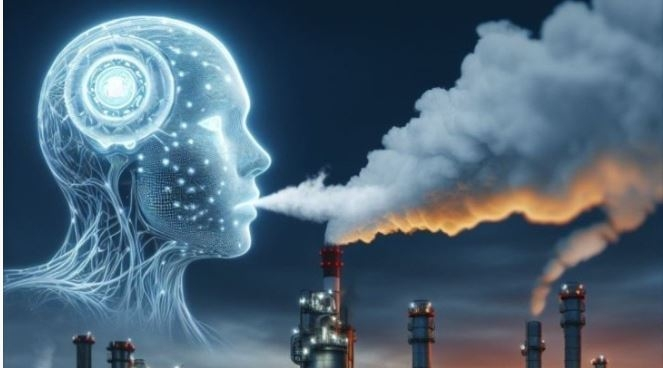
Both NVIDIA and CoreWeave acknowledge the sustainability challenge and claim they are committed to exploring green energy solutions. But exploring and implementing are two very different things. The tech industry has a habit of making big environmental promises while continuing to expand energy-intensive operations.
For Africa specifically, this creates a complex dilemma. Our continent has contributed least to global emissions but suffers most from climate change impacts. If AI infrastructure expands to African markets, which it eventually must for equitable global development, it absolutely has to be powered by renewable energy.

Solar and wind resources across Africa could actually make the continent ideal for sustainable AI infrastructure, but only if companies commit to it from day one.
The Opportunity and the Warning
We are watching the AI infrastructure that will define the next decade being built in real-time. The decisions being made now about where these facilities go, who controls them, and who benefits from them will shape technological inequality for years to come.
African governments, tech ecosystems, and young innovators need to be strategic. We can’t afford to be passive observers while the AI infrastructure gets built around us.
Countries like Rwanda are already positioning themselves as tech hubs with favorable policies for data centers. South Africa, Kenya, and Nigeria have growing tech sectors that could leverage improved AI infrastructure.
But infrastructure alone is not enough. We need African AI researchers, African datasets, and African perspectives shaping how these technologies develop. Otherwise, we risk having incredibly powerful AI systems that work brilliantly for problems in California but fail to understand the complexities of African contexts.
What Happens Next
The NVIDIA-CoreWeave partnership represents more than just a business deal. It is a statement about the scale at which AI is moving from experimental technology to essential infrastructure.
By 2030, when these AI factories are fully operational, the gap between those with access to advanced AI and those without could be wider than ever.
For African Gen-Zs, this is both a challenge and opportunity. The challenge is ensuring Africa is not just a market for AI products but a participant in AI development.
The opportunity is using this moment of massive infrastructure expansion to demand that African voices, African problems, and African innovations are centered in how AI evolves.
The race to 5 gigawatts is happening whether we are ready or not. The question is: will we be running in that race, or just watching from the sidelines? Because one thing is certain, the AI-powered future is being built right now, and it is too important to leave entirely in someone else’s hands.