The Great Unwinding: Paper Bitcoin Summer Ends, True Crypto Value Emerges
The 'bitcoin paper summer' of issuing overvalued shares to acquire bitcoin has ended, giving way to a 'nightmare' as financial gravity reasserts itself. Companies like NAKA, MicroStrategy, and Metaplanet have seen significant stock price declines, highlighting the unsustainability of capital raising as a primary business model. Experts predict the demise of many bitcoin treasury companies as the era of 'financial delusion' concludes.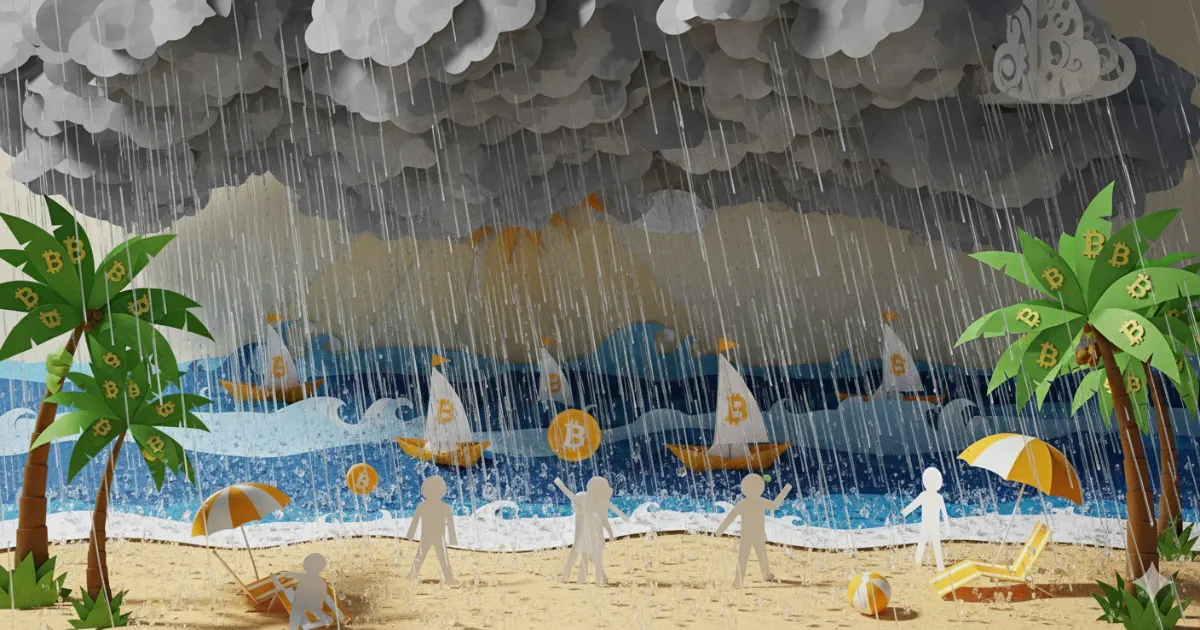
As the northern hemisphere transitions from summer to fall, the optimistic vision of bitcoinizing finance, often referred to as the 'stonkcoiner dream,' is reportedly dissolving into a challenging reality. The strategy of issuing shares to financial markets at extreme overvaluations to subsequently acquire bitcoin cheaply, a trend dubbed the 'bitcoin paper summer,' is concluded not with triumphant success but with a subdued downturn. Initially, the concept of a 'bitcoin treasury' held appeal, even for some critical observers, and for a period, Wall Street actively supported and fueled this financial froth.
However, financial fundamentals are now reasserting themselves. The market is reportedly waking up from a 'summer fling with financial delusion,' where asset prices detached from their objective worth. The return to standard corporate finance principles is observed as both a positive and a challenging development. Earlier, David Bailey, CEO of BTC Inc., stated, "if you can sell a dollar for more than a dollar, you do that trade all day long." This seemingly 'free-lunch strategy' has proven costly, resulting in significant investor losses and a painful lesson. Bailey, while acknowledging the downturn in stock prices affecting shareholders, affirmed his commitment to acting in their best interest and executing the company's strategy.
A critical issue for retail investors, often described as 'bagholders,' has been purchasing security in these companies, rather than actual bitcoin, typically at a premium—an 'mNAV' (market-to-net-asset value) above 1. This practice, while seemingly irrational (buying a dollar for more than a dollar), paradoxically fueled the existence of these bitcoin treasury companies. Critics initially anticipated that mNAVs would converge towards 1, either through a decline or stagnation in share prices while bitcoin's fiat value appreciated. However, an unexpected turn of events saw the bitcoin price crash, leading to even more drastic declines for these 'airy, financial-alchemy monstrosities.'
The financial struggles of these companies are evident in several examples. NAKA, a company for which Bitcoin Magazine provided marketing services, experienced a significant collapse. After announcing a $5-billion share issuance program, its stock plummeted by approximately 30% and continued to fall, eventually reaching a 70% decline from its initial surge following a reverse-merger announcement with KindlyMD. From its peak in May, NAKA's value has fallen by a staggering 85%, recently hitting a new low of $3.28. Moshe Shen, managing director at APAC Wintermute Trading, commented at Bitcoin Asia in Hong Kong that "The market price tells you whether you’re right or wrong," suggesting a grim outlook for Nakamoto and similar bitcoin treasury entities.
The 'bitcoin treasury magic' seems to have ended. The previous 'pump-and-dump' cycle, where issuing more shares for a bitcoin treasury strategy led to a significant increase in share price, no longer holds true; instead, prices now fall, aligning with traditional corporate finance expectations. Even MicroStrategy (MSTR), led by Saylor, despite continuously acquiring thousands of coins, has seen its share price consistently decline, yielding zero percent returns to common shareholders since November of the previous year. Similarly, Metaplanet, after much fanfare for accumulating over 20,000 coins, has witnessed its stock price revert to levels seen before the 'paper bitcoin summer' began.
Nikou Asgari from the Financial Times observed that "The crypto-buying strategy largely relies on issuing shares or raising debt to buy bitcoin and other tokens, hoping that this fuels share price growth." She further noted the increasing difficulty of raising capital as company valuations fall, leading to the collapse of the 'free-money magic' when share prices decline and mNAV compresses toward 1. The sustainability of the hundreds of treasury companies remains uncertain once this 'magic money-printing era' concludes. The notion of 'capital raising' as a primary business model is questioned, likened to a business whose sole function is to raise capital.
Tyler Evans of UTXO Management, another entity associated with BTC Inc. and Nakamoto, admitted in the same FT article that the market had become "irrationally overheated," and that the 'paper bitcoin summer' represented the peak for both hype and the number of new companies launching. As this era draws to a close, reality is reasserting itself, dramatically correcting the collective misconception that market prices in highly liquid markets could deviate so significantly from their net asset values. A bold prediction is made: within a year, bitcoin treasury companies will largely cease to exist. Many of the lower-tiered entities are expected to fail, divesting the coins they had acquired. While companies with substantial moats and competent management, such as MicroStrategy or Metaplanet, may survive, their mNAV is predicted to shrink to a negligible amount, reflecting their logical market valuation. The 'paper bitcoin summer' has ended, bringing an anticipated end to these 'nightmares.'