The Dream of a Connected Continent, Have You Ever Imagined The Future Of Africa?
Are you ready to explore the vision of a connected African continent? Examine what it would mean for mobility, intra-African trade, the role of AfCFTA, and the cultural and economic transformation that can be possible through integrated systems.
Have you ever imagined a continental railway system that connects every African country? something fast enough and efficient enough to make it possible to live in Nairobi while working in Kampala, or to commute between Dar es Salaam and Nairobi, something about thinking of moving to a location and not having to bother about transport logistics, delay or stress, the way Europeans move between France, Belgium, and the Netherlands. Nevertheless in these few seconds of simple fantasy, we can actually see the complex dynamics of mobility, economics, culture, and the missed potential of a continent whose borders were drawn without its permission. This actually becomes less about railway lines and more about the invisible lines, political, economic, psychological, that separate African countries from one another.
This imagination is not absurd. Europe already lives this reality. With the Schengen Agreement and a well-knit transport network, Europeans experience mobility as a normal part of life. High-speed trains take workers, students, tourists, and investors across borders so seamlessly that the idea of “another country” feels like a neighbourhood. An Italian can live in Milan and work in Lugano. A French student can attend classes in Belgium and return home the same day. A German engineer can consult in Amsterdam without ever entering an airport. This is not magic. It is the product of deliberate political integration, infrastructural investment, and a shared understanding that mobility fuels economies.
Africa, on the other hand, has been conditioned to see movement as privilege. Flights between African countries are more expensive than flights to Europe. Visas within Africa can be harder for Africans to obtain than visas to the West. Borders are treated as barriers, not bridges. And the railway lines we inherited, built by colonial powers, were created not to link African nations but to move raw materials from the interior to the coast for export to Europe. They were corridors of extraction, not integration.
So just imagine this: cow hides taken from Zimbabwe being processed in Zambia, turned into leather in Kenya and Tanzania, designed into fashion in Kigali, and marketed globally by Ghana, they are not fantasizing, this is the real dream of an individual whose video I watched on Instagram. This is more like sketching a blueprint for intra-African collaboration. Proposing an Africa where raw materials no longer leave the continent unprocessed, where value is retained and multiplied within African borders, where trade, mobility, and manufacturing form an ecosystem, not a scattered set of disconnected national silos.
Mobility as the Missing Currency of African Development
The transformative power of mobility is the anchor of this article and the central theme of reflection. Imagine what it would mean for a young professional in Lagos to take a weekend job opportunity in Accra without the financial shock of flight tickets or the burden of immigration hurdles. Imagine a student in Kigali attending conferences in Addis Ababa without needing a visa or spending half their savings on transport. This is the everyday reality of youth in Schengen countries, where borders are administrative, not emotional.

The African Continental Free Trade Area (AfCFTA), operational since 2021, is supposed to be the beginning of this vision. Its intention is to boost intra-African trade and reduce reliance on external markets. But trade cannot flourish where mobility is restricted. The AU protocol on the free movement of persons, adopted in 2018, remains largely symbolic because many African states have not ratified or implemented it. Countries fear migration pressures, economic competition, and security threats. Yet these same countries welcome European or American tourists without hesitation. The contradiction speaks volumes: Africa trusts outsiders more than it trusts itself.
If mobility is the missing currency, then railway connectivity is simply the physical infrastructure that allows this currency to circulate. Europe did not become Europe through trade agreements alone. It became Europe through trains, roads, and shared systems that allowed ideas, labour, and goods to move without friction. Africa’s attempt to industrialize without mobility is like trying to irrigate farmland without water.
Beyond transport, the same principle applies to technology, education, healthcare, manufacturing, and cultural exchange. Africa cannot unlock its potential until it unlocks itself. The individual’s video of Zimbabwe, Zambia, Kenya, Tanzania, and Ghana working together on a single value chain is a microcosm of what AfCFTA could mean if mobility is prioritized. It is not merely about moving goods more easily; it is about giving African countries the opportunity to specialize, collaborate, and build industries that serve each other before they serve external markets.
A Future Beyond Borders: Building Systems That Serve Us, Not History
This also would make us as a continent to confront an uncomfortable truth: many of the infrastructures Africans rely on today were never built for African progress. They were built for colonial extraction and European benefit. Ports, roads, and railways were designed to move copper, cocoa, timber, gold, and agricultural products out of the continent, not to create integrated markets within it. Africans inherited skeletons of systems that do not align with the continent’s economic destiny.
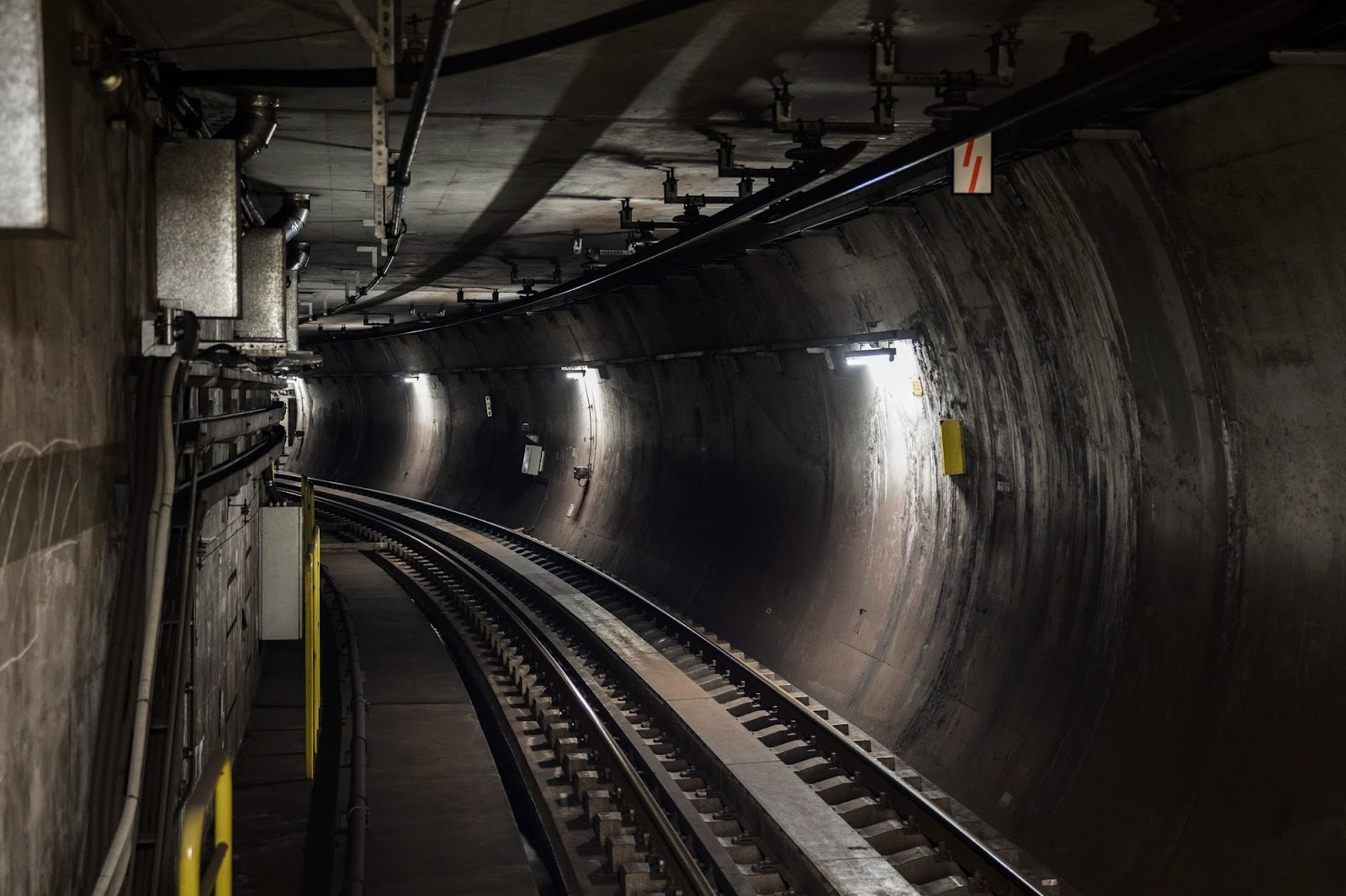
To build a new Africa, the continent must undo the silent logic of colonial infrastructure and create systems that reflect African aspirations. This goes beyond physical transport. Digital infrastructure must connect innovators from Cairo to Cape Town. Cultural industries must circulate freely across borders. Academic research should move from nation-specific silos to continent-wide collaborations. Healthcare solutions should travel from Senegal to South Africa without bureaucratic delay. Even tourism must stop flowing outward and begin circulating within the continent.
An integrated railway system becomes a metaphor for integrated thinking. It becomes a symbol of what Africa could be if its leaders embrace the idea that cooperation is not optional but necessary. It becomes a reminder that development is not a gift but a decision.
Today, young Africans travel more frequently to Europe than to neighbouring African countries. Multinationals can move products across the continent faster than African businesses can. African airlines struggle while European airlines dominate African skies. Even the cultural imagination of the continent is shaped more by Hollywood than by African regional storytelling. All these realities reinforce the underlying message: Africa must build for itself.

This conversation is not romantic; it is practical. If Africa wants to break the cycle of raw material exports and expensive imports of finished goods, it must develop internal production chains. If Africa wants to reduce youth unemployment, it must create industries that rely on continental collaboration. If Africa wants to negotiate globally from a position of strength, it must first strengthen its internal bonds. None of these goals are possible without mobility of people, goods, knowledge, and culture.
In all of this, we are reminded that progress often begins with imagination. The question is whether Africa is willing to turn imagination into policy, policy into infrastructure, and infrastructure into shared prosperity.