The Crack in Nigeria’s Christian Genocide Debate
As violence grips Nigeria’s Middle Belt, the world debates whether it’s genocide or chaos. With Donald Trump’s threats to intervene, Nigerians are asking how much longer will we pretend not to see?
“I planted yams last year, this year I’m planting fear.”
— A farmer from Benue
They say nothing lasts forever but in some corners of Nigeria, the sound of gunfire seems determined to prove otherwise. What once felt like distant “Middle Belt violence” now feels uncomfortably close, echoing off timelines and back into people’s sense of safety. Each new report of another massacre lands like a push notification no one asked for another headline soaked in grief, another reminder that the country’s most vulnerable are running out of places to run.
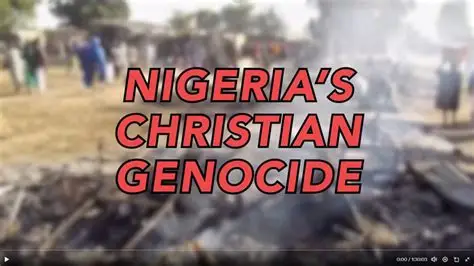
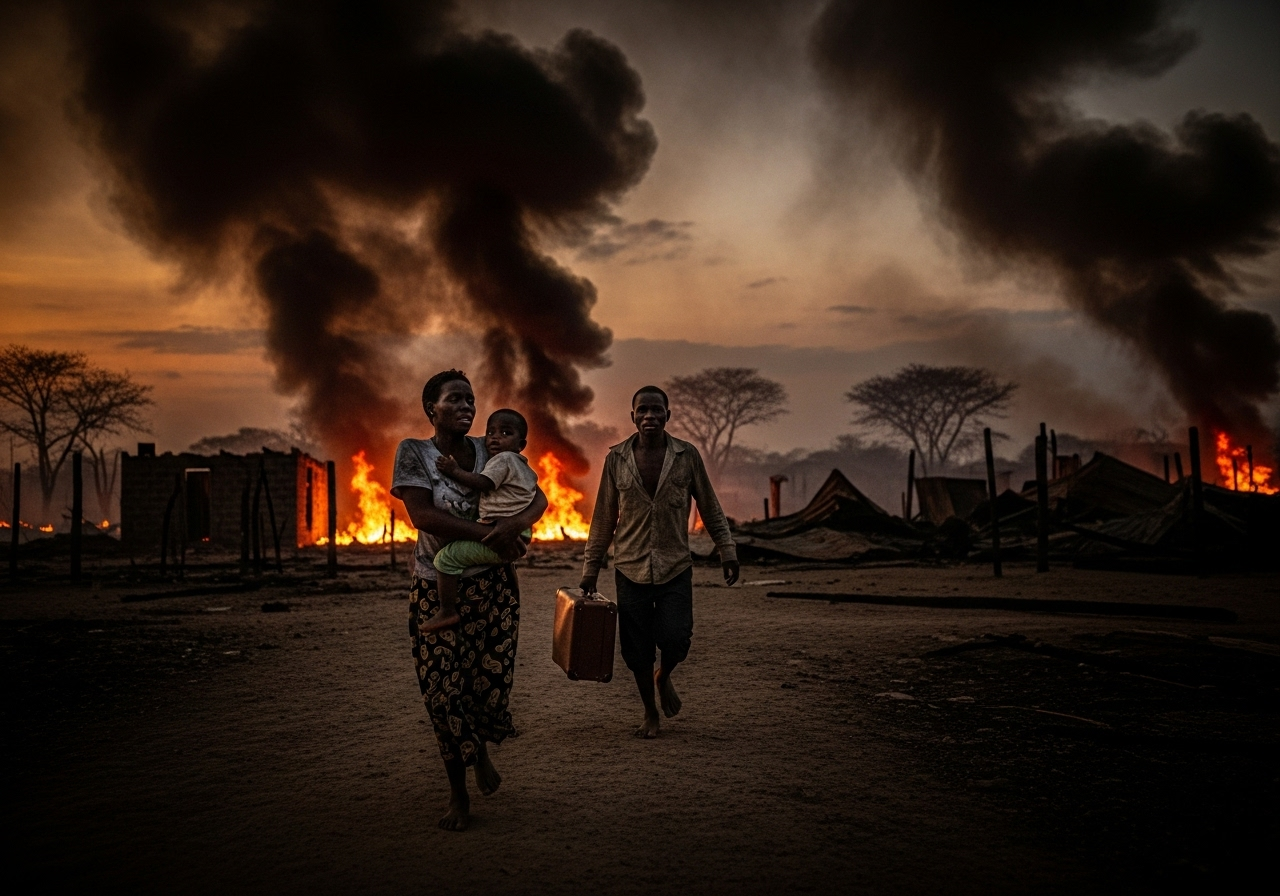
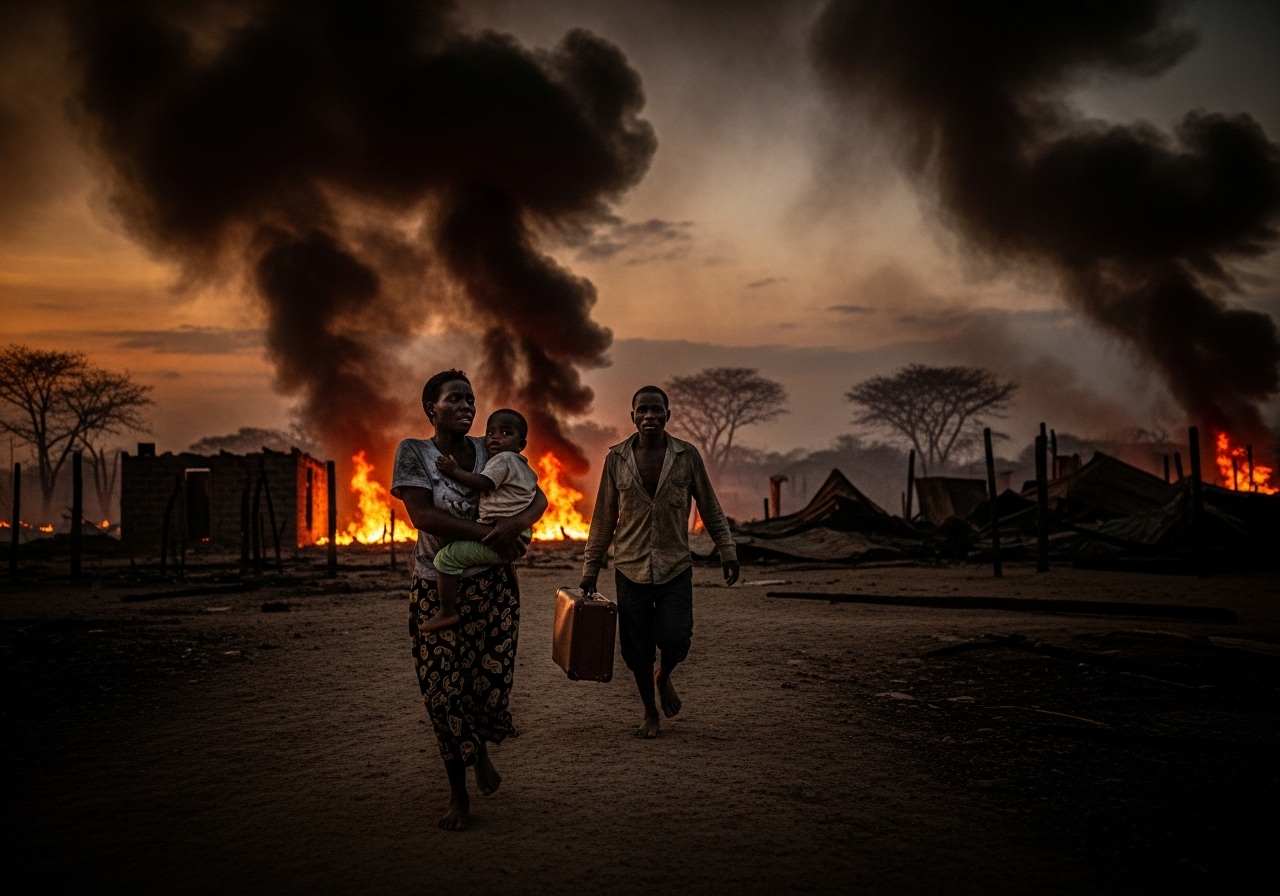
The Middle Belt, once Nigeria’s fertile spine, has in recent years turned into a graveyard of dashed hopes. In April 2025, over forty people were gunned down in Zike, Plateau State. Barely a month later, attackers struck four Benue villages, killing at least forty-two residents in a coordinated night raid.
Then came June, hundreds slaughtered in Yelwata, a small Christian settlement where survivors said their only crime was belonging to the wrong faith. The images burned churches, ash-covered Bibles, and displaced children reignited a global debate: is Nigeria witnessing a Christian genocide, or simply the violent collision of land, faith, and survival?
The federal government rejects the “genocide” label, calling the killings “criminal acts” by “armed bandits.” The Information Ministry has dismissed accusations as “divisive and misleading.”
But the Christian Association of Nigeria (CAN) disagrees, calling it a “silent genocide” ignored by the world, a term echoed in AgenSIR’s coverage.
For many on the ground, this divide feels like a chasm. “I planted yams last year,” one farmer lamented, “this year I’m planting fear.”
On social media, emotions are raw. Posts ask: “If the government won’t protect Christians, should they protect themselves?” Hashtags trend, tempers flare, and grief turns algorithmic. In a country where hashtags once brought reform (#EndSARS, anyone?), the fear is that another massacre could ignite a movement or a meltdown.
Meanwhile, churches burn, schools close, and families flee. Every new displacement feels like the state shrinking in real time. When your home is torched for the third time, words like clash sound like insults.
“Simplifying this crisis as ‘Muslims killing Christians’ misses the complex local dynamics driving the violence.”
— Al Jazeera Analysis
Many analysts insist that Nigeria’s central crisis is an overlapping tragedy, a collision of land scarcity, climate stress, weak governance, and unchecked arms. Entire communities, both Christian and Muslim, are fighting for survival as desertification pushes herders southward.
But the religious undertone cannot be erased. Victims are still asked about their faith before being killed. Priests still vanish. And for many Christians, attending church now feels like walking into a war zone.
The media ecosystem, too, faces its own test. Sensational headlines often do more harm than good. When international outlets proclaim “Christian Genocide” without context, they make the story more dramatic but less accurate. When domestic outlets downplay attacks as “isolated clashes,” they betray victims. The truth as always lives somewhere in the middle. And young Nigerians, digital natives that they are, have the tools to find it. What they need is courage to cut through propaganda, from both sides.
The human toll, however, is undeniable. Over 2.5 million people have been displaced across Nigeria’s central and northern regions over the past decade, according to humanitarian groups. Food production has plunged. Children are growing up in camps where schooling has stopped and faith feels fragile. And yet, conversations in the cities often drift back to politics and celebrity gossip, leaving the countryside to bleed unseen.
Trump, Twitter, and the Geopolitics of Grief
Enter Donald Trump, who recently declared he would “go into Nigeria guns blazing” if the “slaughter of Christians” didn’t stop.
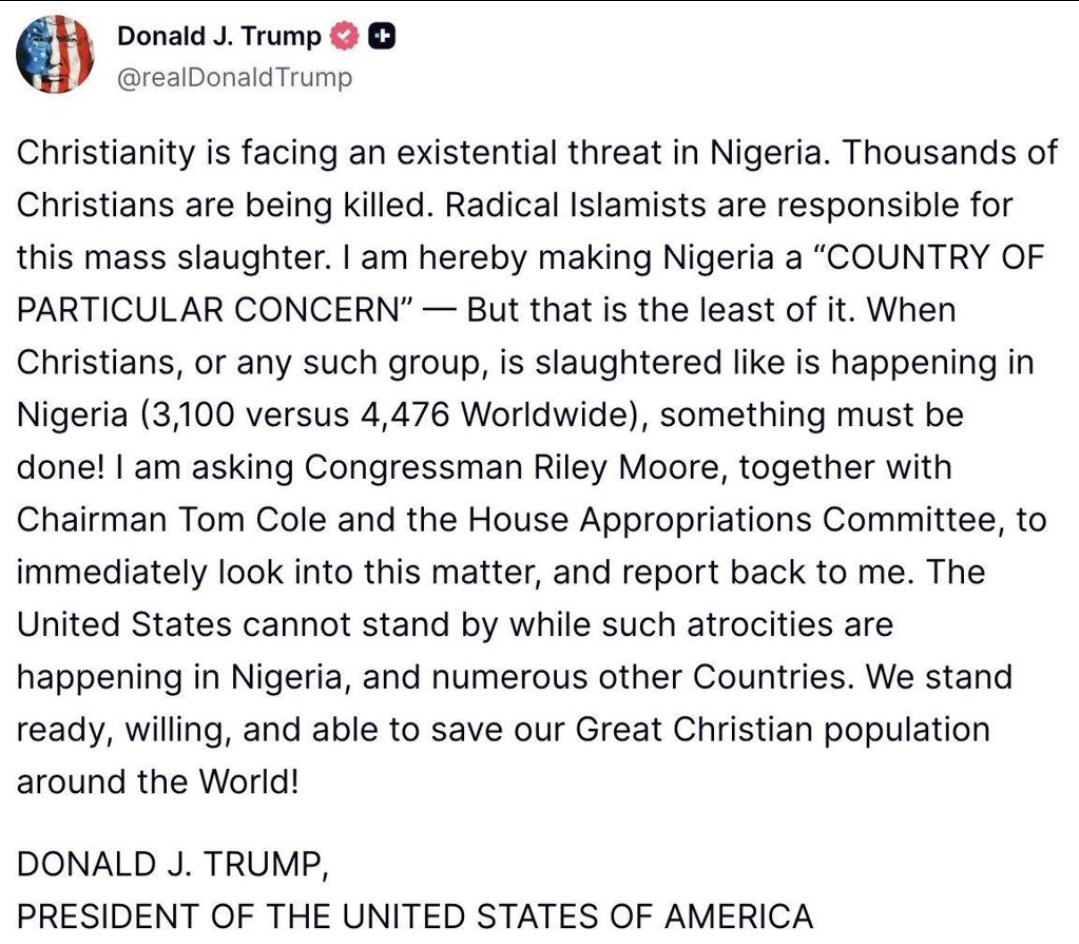
Nigeria’s foreign ministry quickly clapped back, calling the comments “misleading and coercive” in Politico, while the Times of India quoted officials insisting the nation is “not religiously intolerant.”
For Nigerians, Trump’s words felt both shocking and validating proof that the world was watching, but also a reminder of how easily human tragedy becomes political theater.
For anyone who’s seen how Washington’s “rescue missions” usually end, skepticism feels like common sense. The United States has claimed to help countries like Iraq, Libya, and Venezuela, and each time the story started with moral outrage and ended with smoldering chaos. In Iraq, the mission was “freedom,” yet what followed was decades of insurgency and a fractured state. Libya was “humanitarian intervention,” until it became a graveyard of governance. Even Venezuela, which Washington swore to “liberate” economically, got sanctions and spiraling poverty instead. So when America now vows to “save Nigerian Christians,” many Nigerians are asking save us like that?. Then, Solomon Buchi, a popular social media influencer made a video stating that the Nigerian Government has sone nothing, so it’s better we have the United State come to our rescue even if they allegedly have any intention to exploit or resources.
When foreign outlets scream “Christian genocide,” they risk oversimplifying. When local ones downplay massacres as “bandit attacks,” they betray the dead.

The truth inconvenient, tangled, but essential lies in between. And young Nigerians, digital natives that they are, have both the tools and the urgency to uncover it.
Over 2.5 million people are displaced across Nigeria’s central and northern regions. Food production has collapsed. Children grow up in camps instead of classrooms. Yet in the cities, attention shifts back to politics and pop culture while the countryside bleeds in silence.
When farms burn, food prices rise. When mistrust grows, unity crumbles. When despair deepens, migration spikes. The ripple touches everyone from the farmer in Benue to the designer in Lagos scrolling through the news at midnight.
The Bitter Irony
A country that once sent missionaries now risks being a footnote in reports on religious violence. Nigeria’s moral authority, once anchored in diversity, now teeters. And as the government fights the “genocide” label, it risks losing credibility with the very generation it needs to believe again.
“We can’t debate suffering out of existence.”
Whether we call it genocide, terrorism, or communal conflict, people are dying and they look like us. If it takes Trump’s careless outburst for the world to notice, that says more about the world than it does about Nigeria.
But we don’t need foreign threats to do what’s right. We need empathy that turns into action, journalism that doesn’t flinch, and leaders who stop treating grief like a political tool. Because if this isn’t genocide, then what is it and how much longer will we pretend not to see?