The Christmas Story You Should Know


Right from my childhood days, I have always found Christmas fascinating, the thrills, tension and tension that built up every time it was approaching, ooh can someone take me back to those good old days—it wasn't just about the lights, the carols, or food, it was the way December seems to soften even the hardest hearts and everyone relaxed into their shell as the year slowly began to end, and that is the layered story beneath it all, one that reminds everyone of peace, family and the beauty of looking forward to something.
I want you to sit back and let me tell you the story about Christmas that you probably might not know. Christmas, as we know it today, is not just a simple tale with an entirely single origin. It is an intersection of faith, history, culture, politics, and human longing.
For you to fully understand the concept of Christmas properly, you must be willing to sit with its contradictions, trace its evolution, and separate what it truly represents from what we have dressed it up to be over centuries and I believe that this article would make you understand it in the simplest way possible. So stay with me.
Because this is not a story meant to strip Christmas of its beauty. If anything, it is meant to deepen it and fully shed light on it.
Before Christmas Had a Name
Long before December 25 meant anything to Christians, the date already mattered to humanity, so yes the date wasn't for christmas celebration until some centuries back. Back then the period was marked by some observations by ancient civilizations who paid close attention to the sun—the winter solstice; when days were shortest and darkness longest, this was both a moment of fear and hope for many individuals at the time. Fear, when the sun seemed to be retreating and hope, when in some of those moments, light was seen slowly returning.
According to some records the Romans marked this season with festivals like Saturnalia, a time of feasting, gift-giving, role reversals, and public joy. In northern Europe, pagan communities celebrated Yule, lighting fires to symbolize warmth, life, and the promise of brighter days. These were not celebrations of Christ; they were just celebrations borne from rituals, survival, renewal, and the human belief that they had time.
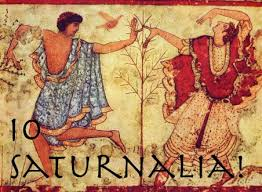
When I learned this, it did not make Christmas feel less sacred or did not dispute the true intention of how Christmas is celebrated today. It actually showed me a perspective that long before theology, people were already searching for meaning in darkness, already telling stories of hope when the world felt cold and uncertain—looking for ways to bond and enjoy the beauty of existence in itself.
The Child, the Christ, and What Christmas Truly Means
There is quite a number of debates about christmas, the date and it origin, but honestly if you ask me, i would say all that doesnt matter, why not allow people enjoy the beauty that a season brings and bring everything to a logical standpoint—we all need to live more beyond arguments on every matter.

But here is the part many forget: the Bible never gives a date for the birth of Jesus Christ. The Gospels of the bible focused on the meaning of His birth and not the calendar day, it literally focused on his personality and the gains and not just propaganda and random facts.
The figure of Jesus as portrayed by the bible entered the world quietly, born to a young woman in a marginal setting with no trace or ties whatsoever with power, wealth, or imperial recognition. There was no fanfare, loud announcements or any party charade, it was all humility that was described.
.png&w=1920&q=75)
That, to me, is the core of Christmas.
I want to sit back and actually understand that Christmas is not primarily about a date, a tree, selected colours or even a celebration. It is about the birth of a personality—the Christian belief that God stepped into human fragility, not as a conqueror, but as a fragile child. This actually represents humility in the simplest form that anyone can attest to. It showed sacrifice over excess, and love over spectacle.
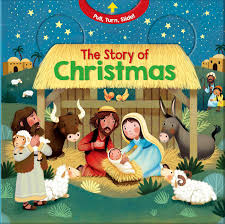
What Christmas is not, however, is not prosperity packaged as spirituality. It is not a season where material abundance proves divine favor or even colourful aesthetics proves that you understand the reason for the celebration. It is not a competition for decorations, outfits, or gift receipts. Because it seemed to me that somewhere along the way, the message shifted, from Jesus as the centre of the story to things that actually concern us and fit our aesthetics.
Anyways, even with all the noise, the original story of Christmas still whispers beneath everything else and it is actually loud: a reminder that Christianity is anchored in self-giving love and not just consumption. That is the Christ that Christians celebrate and not December, not 25th, not decorations, but a life and message that disrupted power, challenged hypocrisy, and centered the forgotten.

From Saint Nicholas to Santa Claus
Everyone including sent that silent wish to santa claus hoping that it got granted because santa claus was the beautiful friend of everyone during the christmas season.
Santa Claus—arguably the most recognizable figure during christmas celebration today and also the most misunderstood.

The story around Santa Claus did not actually begin as a marketing invention of any sort, his roots trace back to Saint Nicholas, a 4th-century Christian bishop from Myra (modern-day Turkey). Nicholas was known for overly and obvious generosity, especially toward the poor. There are various stories and accounts that actually tell of him secretly giving gifts to struggling families, often at great personal cost. His genuine kindness and love towards those around him—and not his costume made him legendary.
Over time, as Christianity spread and cultures blended, the story of Saint Nicholas evolved and somehow through maybe a carefully crafted pattern, his story found way into Christmas celebrations. In Europe, his story evolved to and he was known as Sinterklaas.
In America, the story was in the nook and cranny of every street, children waited and longed to experience the Santa story—thanks to poems, illustrations, and the corporate branding that we all know today—the red-suited, chimney-sliding figure that fills our screens and billboard.
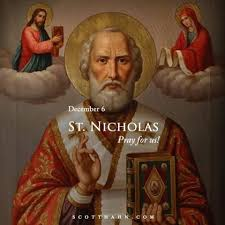
Santa’s story is not inherently wrong. It is simply incomplete because the full story that shows the celebration of Christmas is that the personality of Jesus Christ is actually shown and not Santa Claus. This is not to dispute any long standing traditions but to shed more light on it.
This is important to note because what began as a symbol of quiet generosity was eventually absorbed and fully branded into a consumer culture. The focus moved from the birth of Jesus Christ, from giving to buying, from compassion to performance. Santa became a tool, not just of joy, but of sales.
Anyways, I still find it interesting that even in this evolution, the core idea survived: love, generosity, wonder, and belief. The tragedy is not Santa himself; it is forgetting why he existed in the first place.
How Christmas Entered the Church and the World
Christmas was not originally celebrated by the early church. In fact, early Christians focused more on the death and resurrection of Christ than His birth. It was only in the 4th century, as Christianity became more established within the Roman Empire, that December 25 was officially adopted.
Why that date? Nobody can say entirely for sure, everything is based on evidence and claims everyone can get—but if you ask me—I would actually say that it is not because of historical certainty, but a show of strategic wisdom.

By placing Christ’s birth within an already significant season, the church actually redefined existing celebrations rather than fully erasing them. In this context light was given new meaning and hope was given a face that everyone was already familiar with.
This incorporation is often criticized, but I see it as a reminder of how faith and culture constantly interact—so instead of constantly fighting it why not just actually embrace it and if you are already celebrating christmas why not spread the good news—many people would say it is popular celebration but not everyone fully understands the true meaning of Christmas.
This is because that Christianity did not grow in isolation; it grew within human societies, absorbing different language, customs, and symbols along the way—and you can actually attest to the fact that a society and the culture of a particular set of people actually influence how they actually practice any particular religion, you would notice this, if you change environment often or you travel a lot.
The challenge and perspective shows that we can actually find a balance and also we come to understand the true reason for celebrating Christmas. When culture serves faith, it enriches it and the people of this society get to fully understand and express themselves.

Christmas today still sits at that crossroads and even in all of it—it can be a season of deep reflection or shallow excesses. It can remind us of divine humility or distract us with endless noise. The difference lies not in how loudly we celebrate, but in what we remember and how we really share the story.
For me, the Christmas story you should know is not about perfection or too much explanation. We should all know that it is about layers and understanding—that it is about a faith born into a complex world, shaped by history, and constantly reinterpreted by every generation that tells it again and you can get to interpret it right.
And perhaps that is the quiet invitation of Christmas itself: to look past the glitter, sit with the story, and decide what it will mean in our own time.
You may also like...
The Christmas Story You Should Know
A reflective historical storytelling piece showing the true origins of Christmas, the birth of Jesus Christ, the evoluti...
Tunisia's Ascent: Carthage Eagles Dethrone Nigeria in AFCON Group C Battle
)
Tunisia has seized the top spot in AFCON 2025 Group C after a dominant 3-1 victory over Uganda, displacing Nigeria despi...
Super Eagles' Triumph and Turmoil: Nigeria's Victory Over Tanzania Sparks Debate
)
The Super Eagles secured a 2-1 victory against Tanzania in their AFCON 2025 opener, with goals from Semi Ajayi and Ademo...
Star-Studded Korean Thriller 'Made in Korea' Premieres on Disney+

"Made in Korea," a new 1970s crime noir series starring Hyun Bin and Jung Woo-sung, premieres December 24 on Disney+. Th...
Hollywood Mourns Loss of Esteemed SAG-AFTRA Executive Bart Story

Veteran entertainment research executive Bart Story has died at 63 in Los Angeles from complications related to metastat...
Bubblegum Pop Pioneer Jerry Kasenetz Passes Away at 82

Jerry Kasenetz, a pivotal figure in 1960s bubblegum music, has died at 82. Alongside Jeff Katz, he produced six million-...
France Grants Electronic Music 'Intangible Cultural Heritage' Status

Electronic music has been officially recognized as a pillar of French culture, added to the national Inventory of Intang...
Venus Williams Weds Andrea Preti in Multi-Country Extravaganza, Serena Shares Heartfelt Message

Tennis legend Venus Williams married Italian actor Andrea Preti in a joyful celebration spanning Italy and Florida. The ...