The Cardiopad: How An African Innovation Rewired Cardiac Care in Africa
How a medical tablet transformed cardiac diagnosis across Africa, reshaping healthcare access and proving that African innovation can lead globally through relevance, ingenuity, and impact.
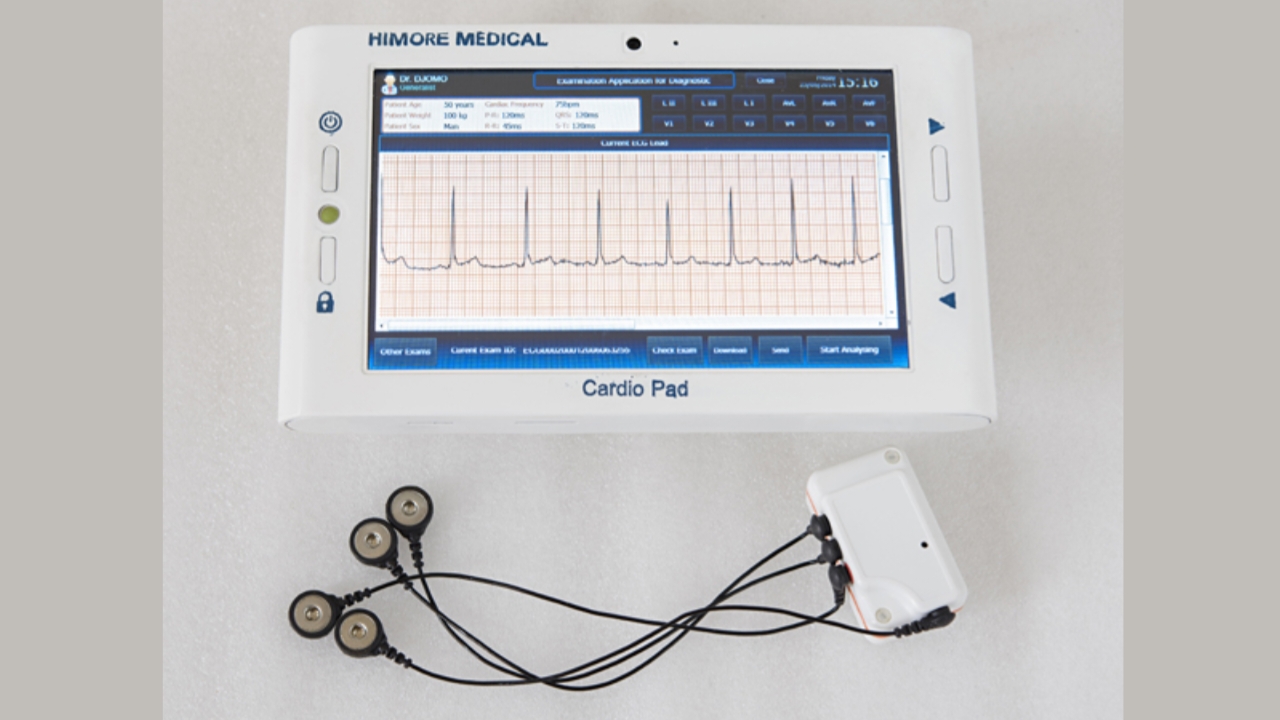
Innovation is often discussed as though it must emerge from Silicon Valley laboratories or European research hubs before it can be considered legitimate. Africa, in this situation, is often cast as a recipient, a continent in need of aid, technology, or solutions designed elsewhere. Yet some of the continent’s most powerful innovations were never meant to impress global tech conferences, they were solely built to solve immediate, life-threatening problems where infrastructure is weak, specialists are scarce, and distance can mean death.
The CardioPad stands firmly in this category. Not because it is flashy, but because it is functional. Not because it is imported, but because it is rooted in lived African realities.
The Cardio-Pad is Africa’s first medical tablet capable of performing electrocardiogram (ECG) tests and transmitting the results via mobile networks to cardiologists miles away.
In regions where heart specialists are concentrated in cities while patients live in rural or underserved areas, this innovation has quietly collapsed the distance barrier. It turned mobile connectivity into a diagnostic bridge for both patients and doctors, allowing early detection of heart conditions that previously went unnoticed until it was too late. The cardiopad is more than a device, it is a statement: that African innovation can be precise, medical, and globally relevant without waiting for external influence.
Innovation Born from Gaps, Not Glamour
The Cardio-Pad was invented by Arthur Zang, a Cameroonian engineer, Zang developed the Cardio-Pad in 2011 after observing the structural gaps in Africa’s healthcare system, particularly the lack of cardiologists in rural and underserved communities. His innovation was not driven by the pursuit of novelty, but by urgency that would stop an issue he witnessed.

The Cardio-Pad stands as a testament to African innovation born from lived realities, proving that impactful technology does not always emerge from abundance, but from a deep understanding of local problems and the resolve to solve them.
The problem the Cardio-Pad addresses is neither abstract nor rare. Cardiovascular diseases are among the leading causes of death globally, and sub-Saharan Africa is no exception. Yet access to cardiologists and diagnostic equipment remains limited across much of the region.
Hospitals in rural areas often lack ECG machines, while patients must travel long distances, sometimes for days to consult specialists in urban centers. In many cases, the cost, time, and logistics make such journeys impossible.
The Cardio-Pad has reframed this from a different perspective: so instead of moving patients to specialists, why not move diagnostic capability to patients? The tablet allows healthcare workers, even in remote clinics, to perform ECG tests and send the data instantly through mobile phone networks to specialists for interpretation.
This shift is subtle but profound. It recognizes that Africa’s most widespread infrastructure is not hospitals or highways, but mobile connectivity. By building on what already exists, the innovation becomes scalable rather than fragile.
What makes this approach particularly instructive is its refusal to imitate foreign models wholesale. The Cardio-Pad was not designed as a stripped-down version of Western medical equipment. It was purpose-built for environments where electricity can be unreliable, budgets are tight, and specialists are few.
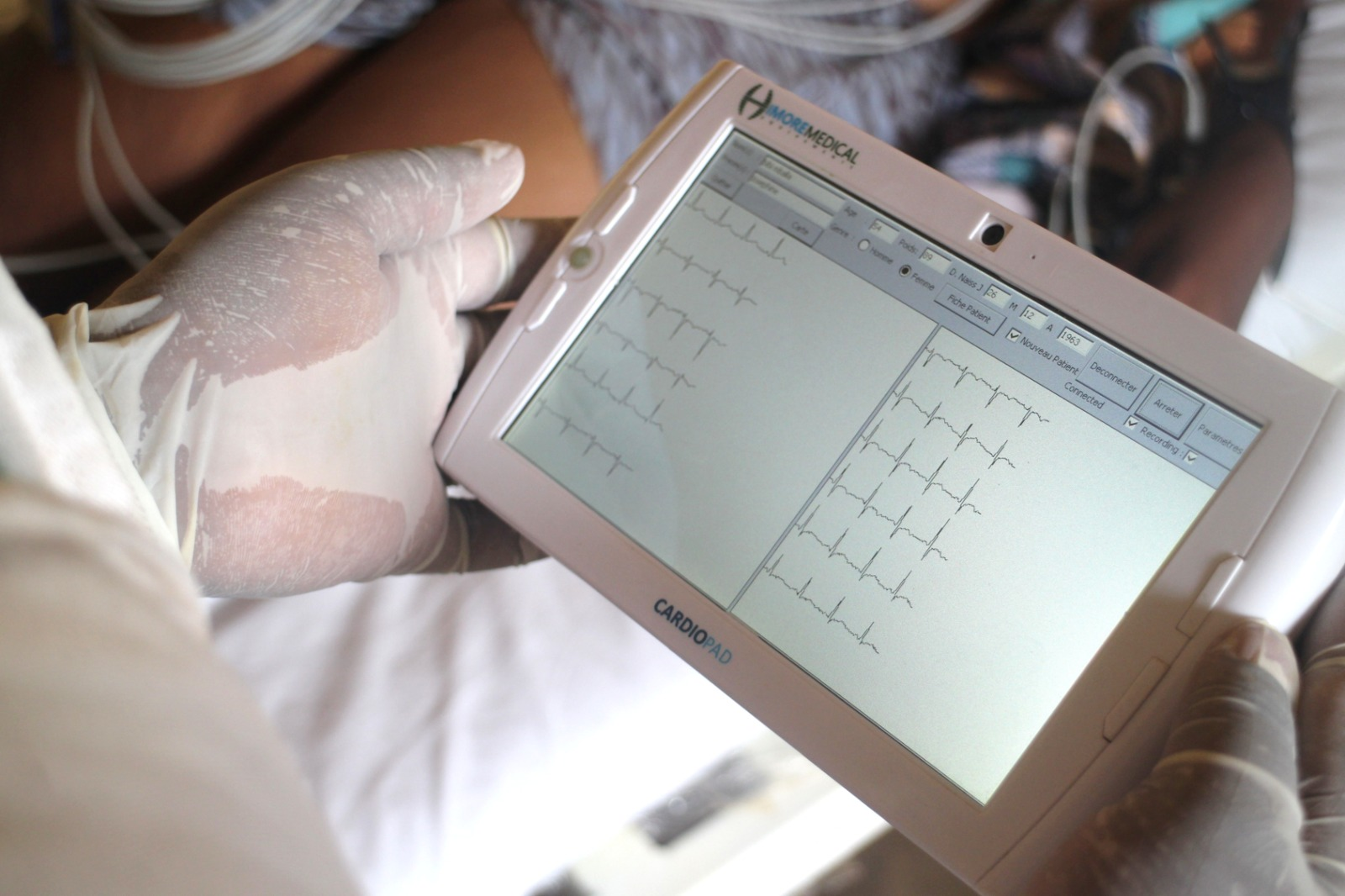
This is innovation as adaptation to local realities and not imitation. It shows that relevance often matters more than sophistication, and that technology gains power when it listens closely to context.
Beyond Africa, the implications are equally significant. Remote diagnostics are increasingly central to global healthcare, especially in aging societies and underserved rural areas worldwide. The same logic that makes the Cardio-Pad essential in sub-Saharan Africa applies to isolated communities in parts of Asia, Latin America, and even developed countries with uneven healthcare access.
In this sense, this innovation does not merely “catch up” to global standards; it anticipates where global healthcare is going.
What Africa Should Learn from the Cardio-Pad Story
The Cardio-Pad offers more than medical value; it provides a blueprint for how African innovation can reposition itself. First, it demonstrates the power of problem-driven thinking. Too often, innovation is framed around trends, artificial intelligence, blockchain, or the latest digital buzzwords, without anchoring them to concrete needs.

The Cardio-Pad began with a clear problem: preventable deaths due to lack of cardiac diagnostics. Everything else followed from that clarity and safety.
It also challenges the belief that African innovators must wait for external validation before acting or even sought for help in any circumstances that they find themselves in. The Cardio-Pad was not the result of a multinational corporation deciding Africa was a new market. It was an African solution, conceived by an individual within the constraints and realities of African healthcare systems, after witnessing it firsthand. Its success underscores a critical lesson: those closest to a problem are often best positioned to solve it. External partners can amplify impact, but they do not need to initiate it.
This innovation also highlights the importance of interdisciplinary thinking. The Cardio-Pad sits at the intersection of medicine, engineering, telecommunications, and public health. It reminds young Africans that innovation does not always require choosing a single lane. Some of the most impactful solutions emerge when disciplines overlap and collaborate. For a continent with a young population and diverse challenges, this kind of cross-functional mindset is invaluable.
There is also a cultural lesson embedded here. African societies often celebrate wealth before impact, titles before contribution. Innovations like the Cardio-Pad invite a different metric of success, one measured in lives improved rather than headlines gained. This is not to diminish commercial viability; rather, it reframes profitability as a consequence of usefulness, not its replacement. Sustainable innovation, especially in healthcare, earns trust before it earns revenue.
Celebrating African Innovation as History in the Making
One of the quiet tragedies of African progress is how rarely it is written in the books of history as they are happening. Innovations usually emerge, problems are solved but many times they fade into obscurity without being properly documented or celebrated. The Cardio-Pad deserves more than a footnote. It belongs in the broader narrative of how Africa is shaping its own technological destiny.
Celebrating such innovations is not about individual hero worship. It is about collective confidence. When young Africans see solutions like the Cardio-Pad acknowledged, they internalize a powerful message: that excellence can emerge from their environment, using their resources, for their people and most importantly that they too, are capable of igniting that change too. This matters in a world where representation often dictates aspiration. Visibility turns possibility into ambition.

On the global stage, African-led healthcare innovations challenge persistent stereotypes. They counter the notion that Africa is merely a testing ground for external solutions or a beneficiary of charitable interventions. Instead, it positions the continent as a place filled with great minds and people that are contributors to global knowledge, particularly in areas like telemedicine, mobile health, and low-cost diagnostics.
These are fields where Africa’s experience with constraint can become a competitive advantage rather than a limitation.
The Cardio-Pad reminds us that innovation is not defined by where it is born, but by what it enables. In collapsing the distance between patient and specialist, it restored something fundamental: timely care. In doing so, it also restored agency, proving that African problems do not always require imported answers, only attentive minds and committed execution.
As Africa continues to navigate complex health, economic, and infrastructural challenges, the lesson is clear. Innovation does not have to wait for ideal conditions. It can begin exactly where the need is greatest. And when it does, it does more than solve a problem, it makes history.