The 600-Year History Behind Ikeja's Name: Where Did Ikeja Get Its Name?
The story that Ikeja stands for "Ikorodu And Epe Joint Administration" has been shared millions of times. And It is completely false. The real origin is older, stranger, and far more interesting.
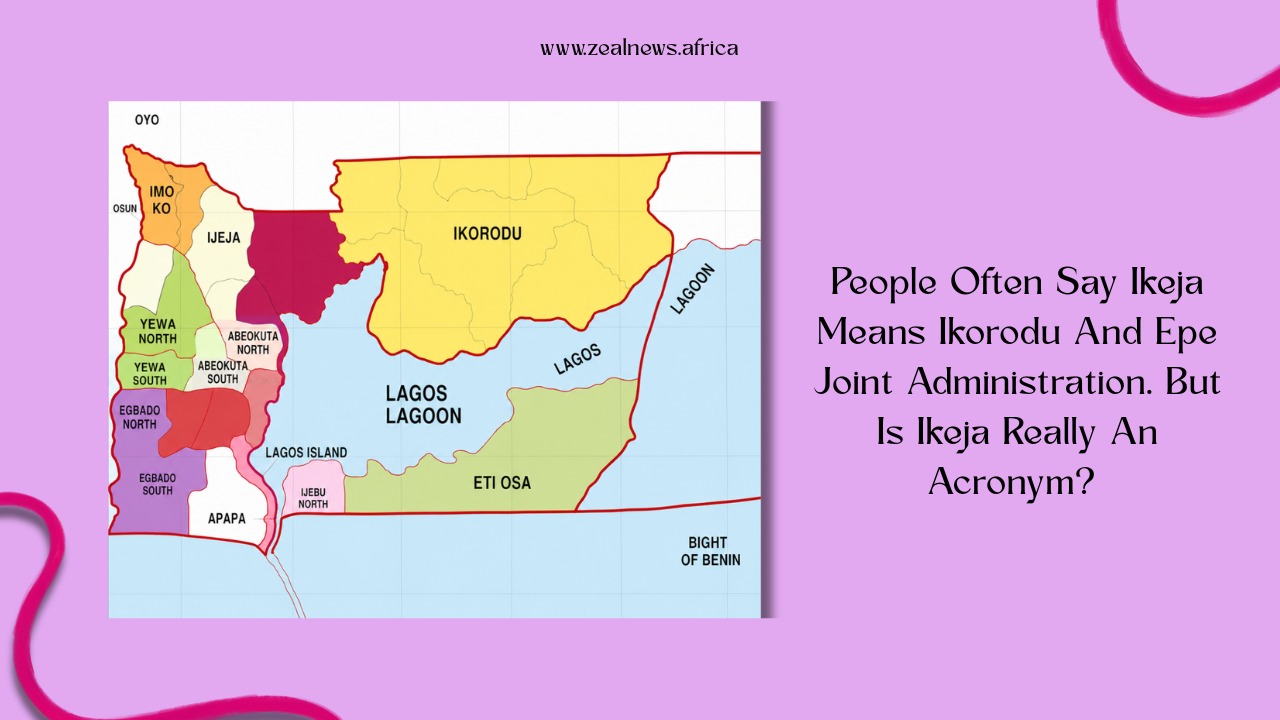
Around 1425, a prince named Ogunfunminire left Ile-Ife with a band of followers after the death of his father.According to oral history kept by the Olofin of Isheri, Ogunfunminire consulted Ifa before he left and carried a ritual plate that he was instructed to set on a river and follow until it sank.
The plate stopped for stretches of seventeen days at a time near Olokemeji and Oke-Ata, drifted on, then settled at Isheri on the Ogun River, where the migrants finally built a permanent base.
The name Awori, which came to describe the people themselves, supposedly comes from the answer Ogunfunminire gave when his followers asked where the plate had gone: Awo ti ri, the plate has sunk.
From Isheri, Ogunfunminire's descendants fanned out across the region in waves that continued for generations. One branch reached Ota, where Oba Akinsewa Ogbolu, a grandson of the founding line, was crowned the first Olota in 1621.
Another branch kept moving south toward the lagoon, founding settlements at Iddo, Ebute Metta, and eventually Lagos Island itself. It's this same current of Awori expansion, spreading out from Isheri and Ota over roughly two centuries, that eventually produced the settlement at Ikeja.
Amore, Akeja, and the Meaning Behind the Name
Among the families that moved on from Ota was one led by a man named Amore, who arrived in the area now called Ikeja under the authority of an Olu, bringing with him households remembered today as Osoja, Maku, Afariogun, and Kusheri Moses.
They named the settlement after Akeja, an ancestral figure from their lineage in Ota. Oral accounts differ slightly on how to render the name, some calling him Akeja Onigorun, others Akeja Oniyanrun, but every version traces back to the same founding figure.
Centuries later, when Oba Momodu Illo took the throne as Ikeja's first king in 1957, his right to the crown rested on direct descent from that same ancestor. He reigned for forty years, until 1997.
The word carries a second layer too. Break it into its Yoruba parts and you get ike, meaning character or inner strength, and ja, to confront or contend, a reading Ikeja Local Government's own historical account still uses.
Ikeja, then, doubles as the place where character gets tested, a description that fit a community of migrants who'd had to hold their ground among neighbouring Awori, Ijebu, and Egba settlements. Yoruba town names tend to work this way, carrying an ancestor's identity and a community's self-image at once, built up over generations rather than assigned in a single act.
Slave Raids, Colony Province, and a Railway
For roughly four centuries Ikeja functioned as Awori territory, farming the land and trading with neighboring towns. That changed after the British forced the Treaty of Cession in 1861, formally establishing the Lagos Colony.
The area around Ikeja was raided for slaves into the middle of the nineteenth century before the practice faded, and by the early twentieth century the colonial government had folded Ikeja into a cluster of towns, Agege, Mushin, Ojo, Ikorodu, Epe, and Badagry among them, administered collectively as the Colony Province under the Western Region government.
Ikeja Local Government's own historical account adds a more specific detail: at one stage in this period, the town fell under what colonial administrators called the Epe Division, a real administrative pairing between the two towns that predates the modern myth by decades, even if it had nothing to do with how Ikeja got its name.
What actually reshaped the town wasn't a decree. It was the railway. When the Lagos-Ibadan line opened in 1901, it cut straight through Ikeja, and the town shifted within a generation from agricultural hinterland into a transport and trading node.
History
Rewind the Stories that Made Africa, Africa
A Journey Through Time, Narrated with Insight.
By 1947, the West African Airways Corporation had based its main fleet there, flying De Havilland Doves out of an airstrip first built during the Second World War. Ikeja had become useful to the colony in a way it had never been to the Awori who founded it, and that usefulness would eventually decide its future.
1967, IBILE, and Where the Acronym Myth Actually Comes From
Nigeria's military government, under General Yakubu Gowon, created Lagos State on 27 May 1967 through the States Creation and Transitional Provisions Decree No. 14, carving it out of the old Western Region and the Federal Territory of Lagos. The new state became operational the following April, with Mobolaji Johnson installed as its first military governor.
To organize it, the government split Lagos State into five divisions, Ikorodu, Badagry, Ikeja, Lagos, and Epe, an arrangement Lagosians still shorten to a single word: IBILE. Ikeja sat on that list as its own division, distinct from both Ikorodu and Epe, a structure that survives largely intact on today's local government map.
This is almost certainly where the acronym myth took root, not invented from nothing, but garbled from two real facts layered on top of each other: the genuine administrative link between Ikeja and Epe under colonial rule, and the genuine five-letter acronym IBILE that followed it.
Somewhere in the retelling, someone collapsed both into a tidier claim, that Ikeja itself stood for “Ikorodu And Epe Joint Administration,” and the story spread fast enough to outrun the facts behind it. It was popularized by viral social media accounts, real estate marketers, and popular blogs, but completely contradicts the accepted historical origin of the name.

Lawyer and historian Tanimola Anjorin took the claim apart directly in a 2017 piece marking Lagos State's fiftieth anniversary, calling it a distortion built on the false premise that Ikeja's story begins with colonial paperwork rather than five centuries before it.

From Industrial Estate to State Capital
An industrial estate arrived in Ikeja in the mid-1960s, drawing factories and a wage-earning population to a town that had spent most of its history as farmland. Around the same period, colonial and early post-independence planners carved out the Ikeja Government Reserved Area, a low-density residential layout originally built for British officials and expatriate staff, its wide roads and large plots still recognizable today.
By 1976, after a federal committee led by Akinola Aguda recommended relocating Nigeria's federal capital to Abuja, Lagos State moved its own capital off Lagos Island and into Ikeja, choosing a town whose roots in the area outdated the state itself by roughly five hundred years.
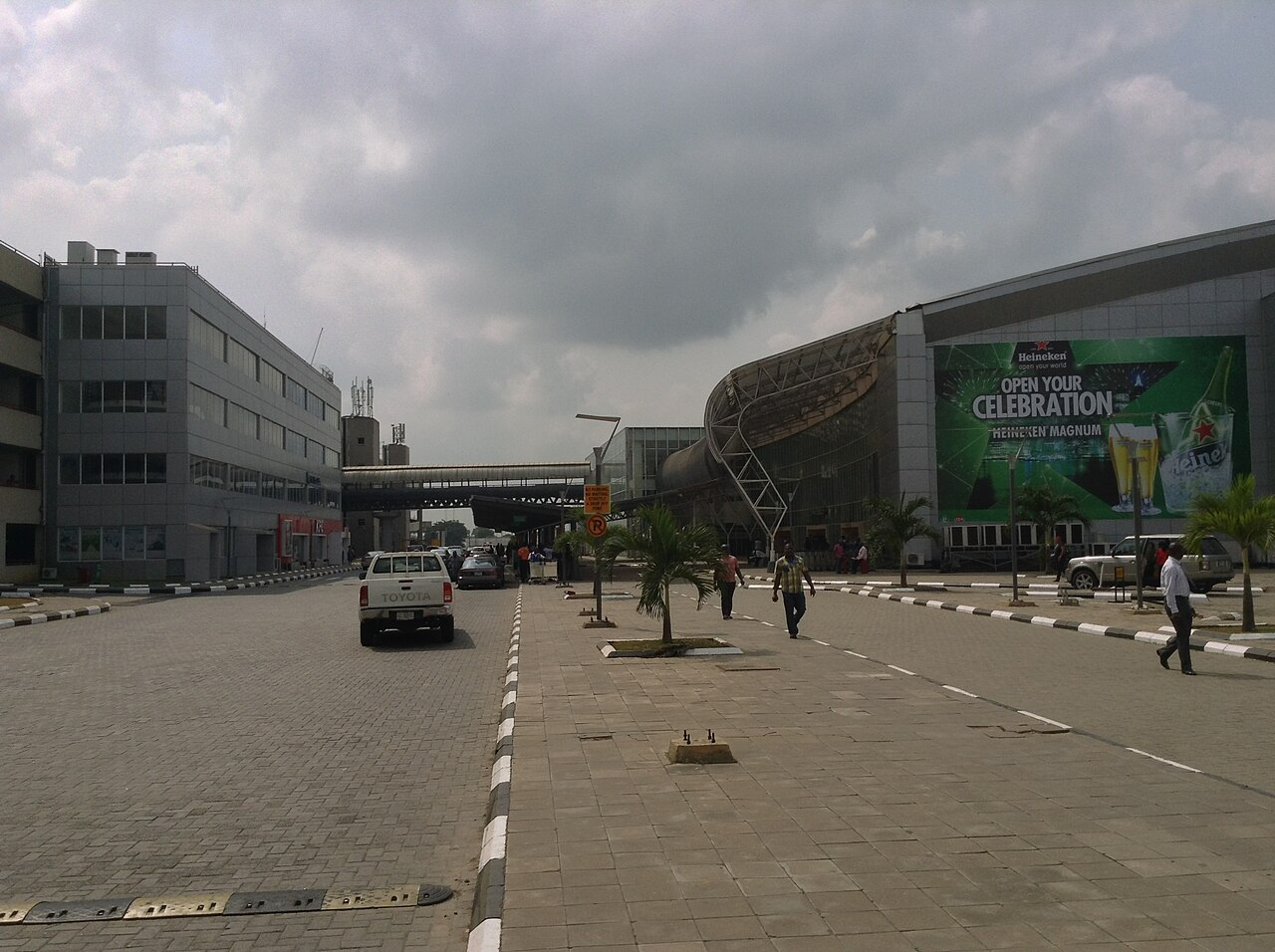
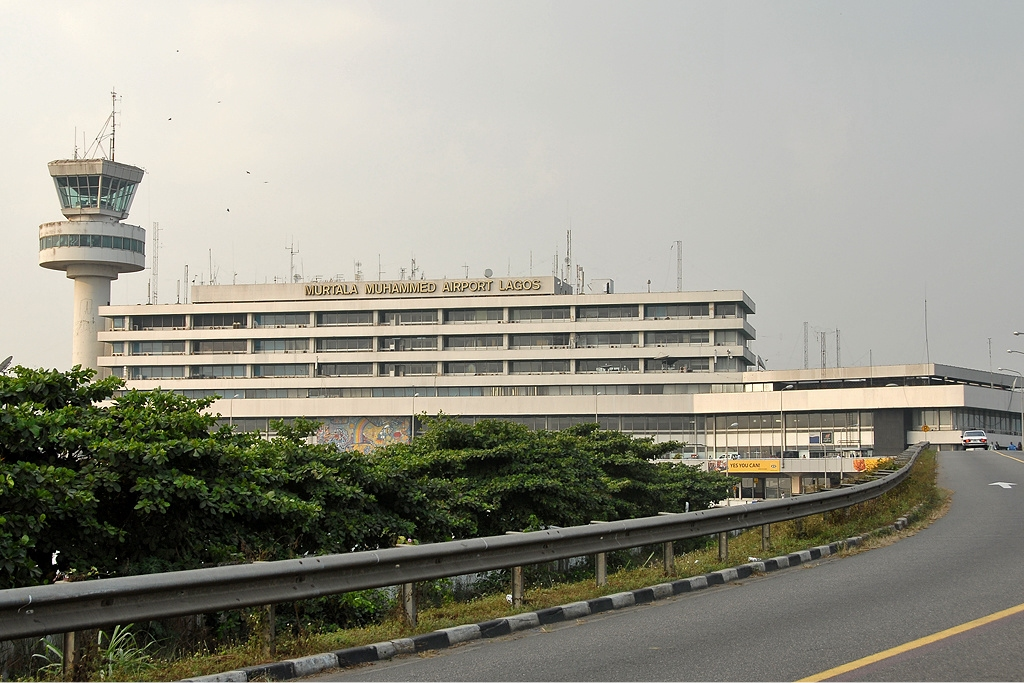
That same year, the city's airport, in continuous use since the war, was renamed Murtala Muhammed International Airport after the assassinated head of state. A new international terminal modeled on Amsterdam's Schiphol opened in 1979.
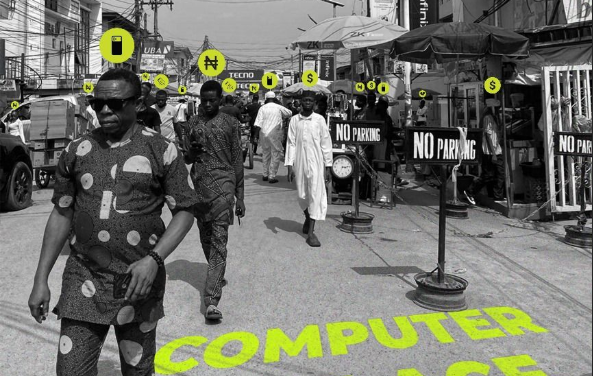
Ikeja kept growing into the role. The Otigba neighborhood birthed Computer Village in the late 1990s, an unplanned cluster of electronics traders that grew into the largest IT market in West Africa.
Today Ikeja Local Government Area sits at the center of all of it, home to the Lagos State Secretariat at Alausa, an airport that handles millions of passengers a year, and a name that traces back not to any colonial filing cabinet, but to a man called Amore and an ancestor called Akeja, four hundred years before any of it existed.