The 1887 Betrayal: How Jaja of Opobo Was Taken From His Kingdom
A retelling of the 1887 betrayal of King Jaja of Opobo, seeing how diplomacy, power, and colonial ambition led to one of the most defining exiles in Nigerian history.
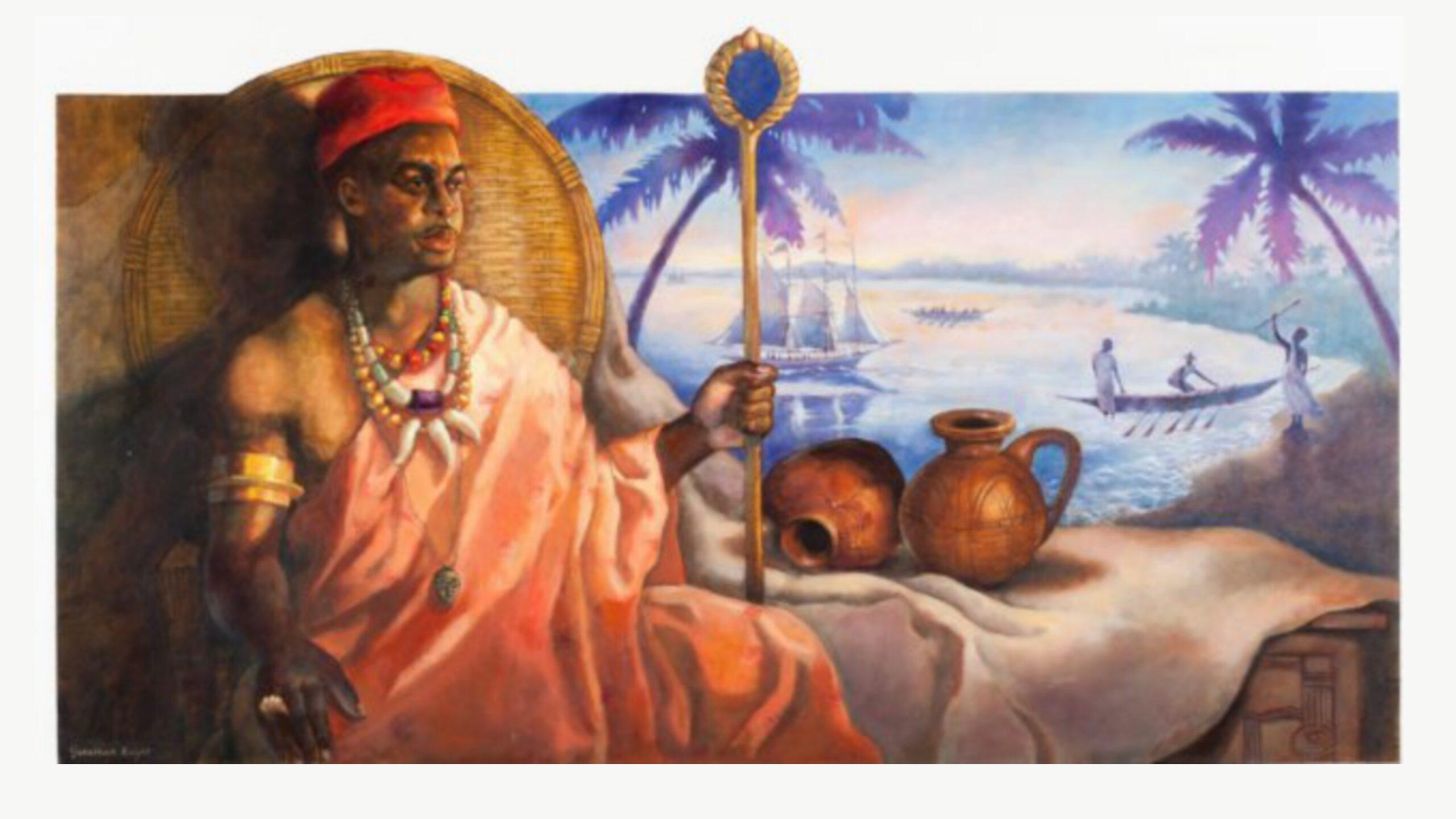
In the late 1800s, the Niger Delta was home to thriving city‑states, ruled by powerful merchant‑kings who managed trade along the rivers. Among them stood Jaja of Opobo, a man whose life journey turned him from a slave to one of the richest and most influential rulers in the region.
His eventual betrayal by European colonial powers remains one of the most dramatic and tragic episodes in West African history.
Jaja was born around 1821 in Umuduruoha, Amaigbo (in present‑day Imo State). He was originally named Mbanaso Okwaraozurumba. As a young boy, he was sold into slavery and taken to the coastal city‑state of Bonny. There, under the name “Jubo Jubogha”, later shortened to “Jaja” by European traders, he served his master. Over time, through diligence, intelligence, and business skill, he won his freedom.
He eventually rose to lead the powerful trading House known as the Anna Pepple House, one of the key commercial factions in Bonny. Under Jaja’s leadership, the House absorbed other trading houses, expanded trade into the hinterlands, and established direct contacts with European merchants.
Founding Opobo: Independence and Control of Palm‑Oil Trade
As tensions grew between rival factions in Bonny, led partly by disputes within the merchant Houses, Jaja made a decisive move. In 1869 he left Bonny and founded the city‑state of Opobo. With this, he declared independence and became its first King (Amanyanabo) in 1870.
Under his rule, Opobo rose rapidly. Fourteen of Bonny’s eighteen trade houses relocated there, giving Opobo a dominant position in the region’s lucrative palm‑oil trade. Jaja established a near‑monopoly: he blocked British traders from direct access to the interior and insisted all trade pass through him or his agents. In some cases, Opobo shipped palm oil directly to Liverpool, bypassing intermediaries.
This economic independence and control made Opobo wealthy and Jaja powerful. His wealth and influence positioned him as a major figure in the Niger Delta at a time when European powers were increasingly hungry for control.
European Ambitions Versus Local Sovereignty
By the early 1880s, the landscape of colonial competition in Africa was transforming. At the 1884 conference among European powers, territories in the Niger Delta including Opobo were designated under the British sphere of influence.
The British, eager to gain full access to palm‑oil trade and to dismantle local monopolies, began pressuring Jaja. They demanded free trade, meaning that European firms could sell and buy directly, bypassing him. Jaja refused. He insisted that trade routes within his territory remain under his control, a stand rooted in protecting the economic rights and independence of his people.
This resistance made him a serious obstacle to British commercial ambitions. British traders and colonial officials began to view him not just as an economic competitor, but as a political threat.
The 1887 “Negotiation” — A Trap Turned Betrayal
In September 1887, the British acting consul (Henry Hamilton Johnston) extended an invitation to Jaja for negotiations, offering safe passage and discussion aboard a British warship. This was presented as a diplomatic meeting to settle trade issues.
Trusting the offer, Jaja boarded the warship (the HMS Goshawk). But the invitation was treacherous. Once aboard, he was confronted with an ultimatum: either surrender control over trade and allow free access to British firms or face destruction of Opobo by naval bombardment. Realizing his people’s lives were at stake, he refused the surrender.
History
Rewind the Stories that Made Africa, Africa
A Journey Through Time, Narrated with Insight.
Instead of preserving diplomacy, the British arrested him without warning. He was accused of obstructing trade, enforcing illegal monopolies, and violating treaties that now supported free navigation of trade routes.
Trial, Exile, and Final Years
After the arrest, Jaja was transported first under British consular custody, then to Accra in the Gold Coast (modern Ghana), where he stood trial starting 29 November 1887 before a British tribunal.
He was convicted. The verdict: guilty of obstructing trade, enforcing monopolies, and breaching agreements meant to secure free European trade. On 1 December 1887, he was sentenced to exile.
Jaja was deported to the West Indies, sent to the Caribbean island of Saint Vincent. There, far from his homeland, he lived in exile.
Despite the distance, news of his fate spread. Many in Opobo and beyond saw his removal not as justice, but as a profound injustice, a betrayal under the guise of diplomacy. His exile became emblematic of colonial deceit.

Years later, under pressure and persistent appeals, the British granted him permission to return. But fate intervened. In 1891, while en route back to Opobo, Jaja died in Tenerife, in the Canary Islands. Some accounts claim he was poisoned, possibly betrayed again; others suggest illness.
His body was buried in Tenerife, but his people protested. Eventually his remains were exhumed and returned to Opobo, where he was honoured with traditional rites.
Legacy: A Symbol of Resistance and a Fallen Kingdom
The fall of Jaja marked more than just the loss of a king, it signalled the decline of indigenous control over trade and governance in the Niger Delta. After his exile and death, Opobo’s political and economic strength waned. The independent palm‑oil trade he once controlled fractured under colonial domination.
Yet, in memory and history, Jaja of Opobo remains a powerful symbol. He represented what many African leaders attempted, a balance of commerce, political autonomy, and dignity in the face of mounting foreign pressure. His life story has become a testament to resilience, ambition, and tragic betrayal.
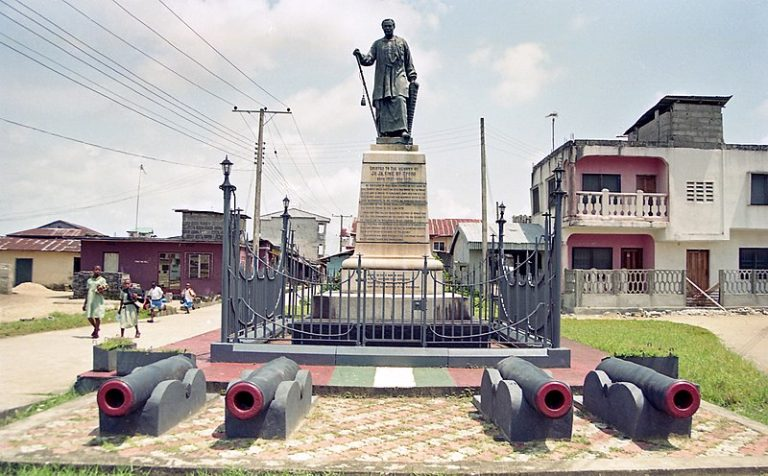
In Opobo town centre stands the King Jaja of Opobo Memorial, erected in 1903 by public subscription. The inscription describes him as “A king in title and indeed. Always just and ever generous.” The statue serves as a reminder, not just of a man, but of a kingdom, a people’s hope for self-determination, and the harsh realities of colonial power.
The story of Jaja’s betrayal is not just about one man, it mirrors the broader experience of many African states during the colonial period. What began as trade negotiations ended in arrest, exile, and loss of autonomy. The methods used, diplomacy, treaties, coercion foreshadowed a pattern of colonial control that would reshape the continent.
Jaja’s life also challenges stereotypes. He was not a hereditary king born into royalty. He rose from slavery, educated himself, built alliances, mastered trade and created a kingdom. His achievements show that African societies had agency, ambition, and capacity long before full colonial rule.
In remembering Jaja of Opobo, we recall both a proud legacy and a painful betrayal. His story calls on current and future generations to reflect on the value of sovereignty, self‑determination, and dignity and to recognise the complex history behind present‑day Africa.