Tensions High: Iran Deal on Brink Amid Reports of Imminent Signing and US Warnings
Negotiations between the US and Iran remain complex and contentious, with differing views on a potential agreement. While President Trump announced an imminent deal focusing on non-nuclear proliferation and reopening the Strait of Hormuz, Iran maintains a cautious stance, demanding financial concessions and rejecting discussions on nuclear issues at this stage. Regional actors like Israel express deep concerns, viewing a deal as a strategic failure.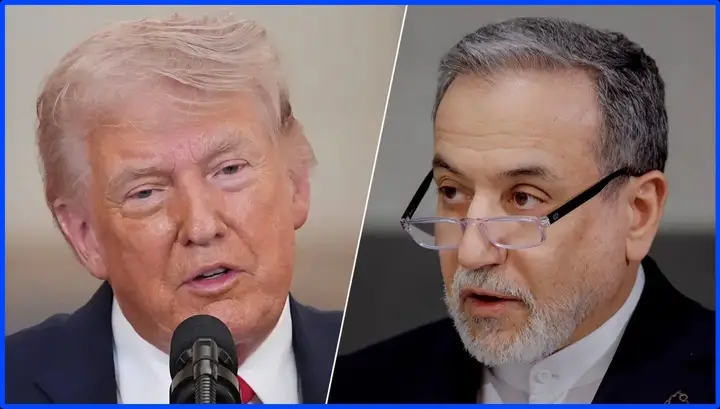
Ongoing negotiations between the United States and Iran continue to be marked by caution and conflicting statements, with a final breakthrough not yet secured despite a potential agreement being discussed. While Iran has not definitively ruled out a deal in the coming days, officials have indicated a delayed timeline and no immediate signing.
US President Donald Trump, however, announced on Truth Social that a deal with Iran was scheduled for signing on Sunday, claiming it would immediately reopen the Strait of Hormuz. Trump characterized his agreement as “a wall to no nuclear weapon,” asserting that Tehran would be prevented from acquiring nuclear weapons through any means. He drew a sharp contrast with Barack Obama’s 2015 nuclear deal, stating that his agreement would involve no exchange of money. Trump also mentioned a controversial plan for the United States to remove and destroy “nuclear dust” deep underground in Iran following US B-2 bomber strikes, expressing hope for a “quickly, easily, and smoothly” process, but reiterating the availability of an “ultimate alternative” if negotiations faltered.
Adding to the complexity, Trump reportedly assured Israeli Prime Minister Benjamin Netanyahu that any agreement would comprehensively address Iran’s nuclear program, missile capabilities, and support for Hezbollah. According to a senior diplomatic source cited by Israel Hayom, Trump made it clear that no deal would be finalized unless these core issues, which have historically led to conflict between the US, Israel, and Iran, were resolved. The source also indicated that while Israel would not be bound by a US-Iran agreement, it would be expected to coordinate actions with Washington, especially during the negotiation phase. Furthermore, a warning was issued that if talks with Tehran failed after an initial understanding and Iran continued its military activities, the possibility of regime change in Tehran could be put on the agenda for US decision-makers.
Iran’s Foreign Ministry spokesman, Esmaeil Baghaei, reiterated Tehran’s cautious stance, noting that several key issues remain unresolved. The spokesman later, identified as Esmail Baghaei, added that Iran expects payment for services provided in the Strait of Hormuz and stressed that the release of Iran’s blocked funds would be an “integral” part of any agreement. Significantly, he stated that the nuclear issue and related matters would not be addressed at this stage, with the current focus instead on ending the war and resolving issues pertinent to Lebanon. Iran also demanded the cessation of foreign military bases and forces in the region, characterizing its efforts to manage safe traffic through the Strait of Hormuz as both a national security imperative and a service to international interests.
Israeli opposition leader and former prime minister Yair Lapid strongly criticized the potential agreement, labeling it a “strategic failure” for Prime Minister Benjamin Netanyahu. Lapid posted on X that the emerging deal would not achieve any of Israel’s war objectives, as Iran’s government would remain in power, its missile program intact, and its ability to rebuild its nuclear program preserved. He further asserted that this represented a “total failure by Netanyahu,” accusing him of turning Israel into a “vassal state” that takes instructions on its national security. Lapid concluded by stating that no media spin or AI video could hide this failure, and that the subsequent Israeli government would face the historic task of repairing the damage resulting from Netanyahu’s inability to translate military achievements into strategic successes.
Skepticism about the negotiations also came from Mark Dubowitz, chief executive of the Foundation for Defense of Democracies. Dubowitz questioned the benefits of additional negotiations for Tehran, arguing that previous periods of ceasefire and diplomacy have allowed Iran valuable time to recover from damage sustained during recent conflicts. In a post on X, he highlighted how a 38-day war and a 12-day war had inflicted severe damage on Iran’s nuclear program, missile arsenal, military defenses, economy, leadership, and terror network. He then noted that three months of “ceasefire” with mounting economic pressure also provided time for the regime to recover, rebuild, and leverage assets like Hormuz and Hezbollah. Dubowitz concluded by asking whether an additional 60 days of negotiations, an arena where he believes Iran consistently outmaneuvers American presidents, would truly favor the US or if President Trump would succeed in converting military successes into a tangible victory.