Starlink is in 24 African countries. The one country it can't enter is where Elon Musk was born.
Elon Musk says South Africa is blocking Starlink because he's not Black. South Africa says he just needs to follow the law like everyone else. This dispute has been building for over a year and millions of South Africans are caught in the middle.
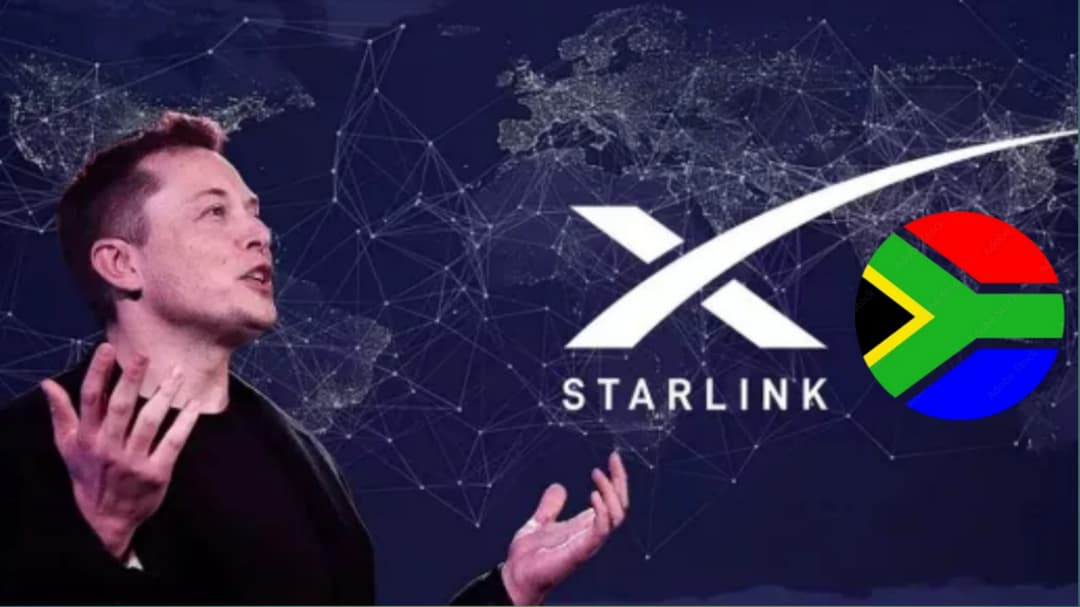
On April 12, 2026, Elon Musk got on X – the platform he owns and reignited a fight that has been simmering since March 2025.
In a post that immediately went viral, he wrote:
"South Africa won't allow Starlink to be licensed, even though I was BORN THERE, simply because I am not Black."
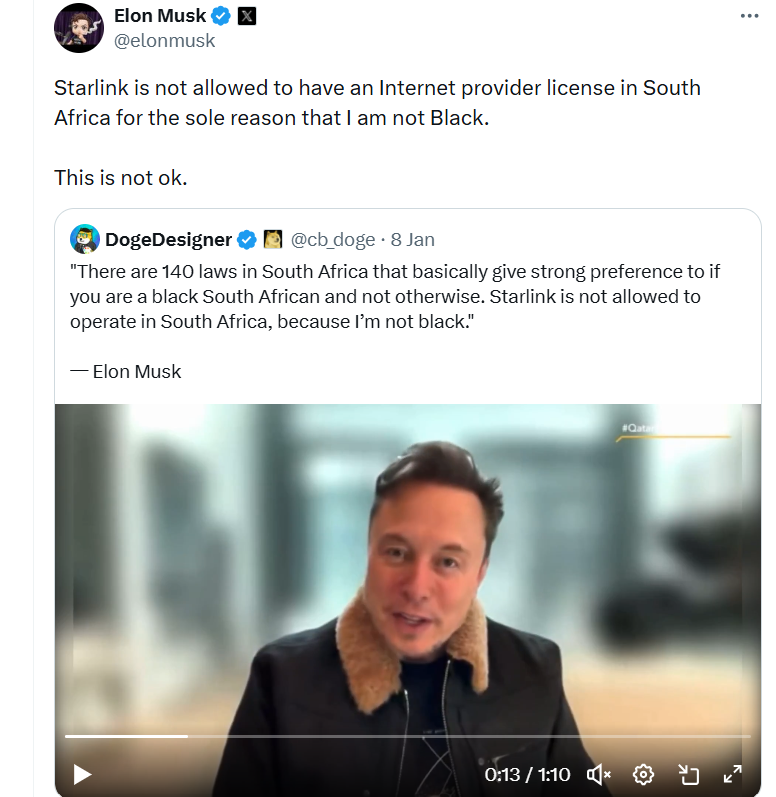
He claimed his company was repeatedly offered approval through what he described as bribery fronting a Black executive to satisfy local ownership rules and that he refused on principle.
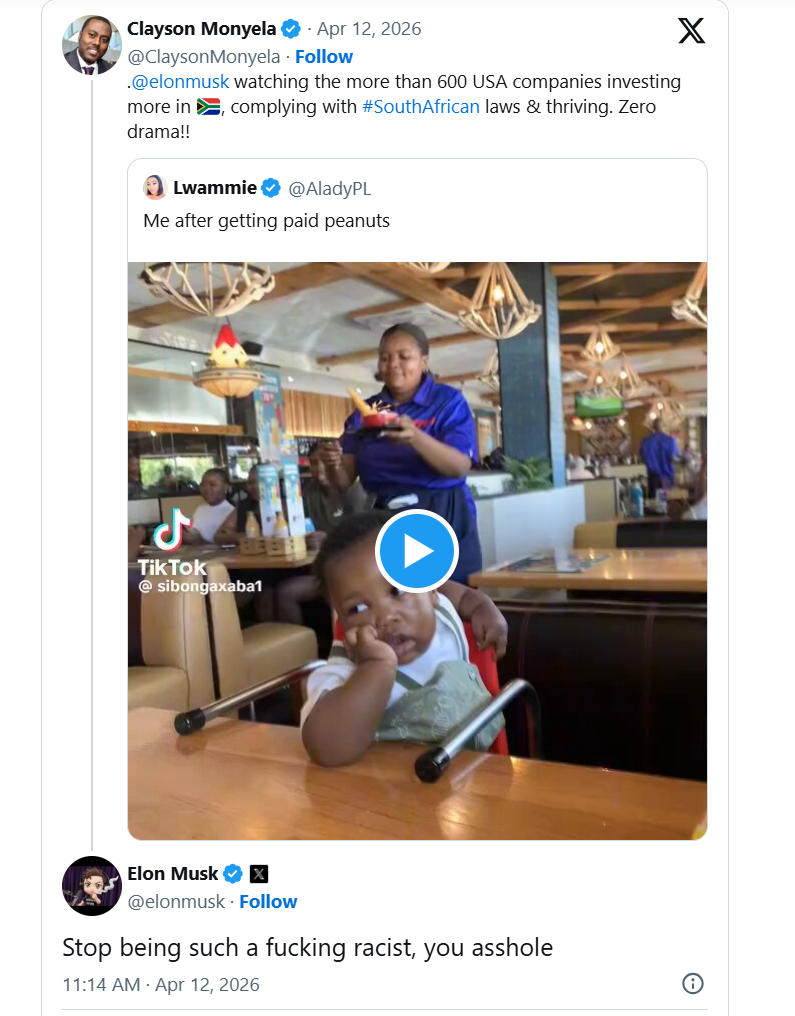
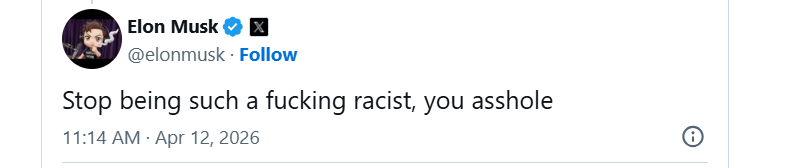
He called South African politicians "unashamedly racist" and demanded they be shunned globally. When South Africa's head of public diplomacy Clayson Monyela pushed back, Musk told him to "stop being such a f***ing racist, you asshole."
Explosive? Yes. New? No. This war has been building for more than a year.
How we got here — the actual timeline
In March 2025, Musk first posted on X claiming Starlink can't operate in South Africa "because I'm not Black." South Africa's government and ICASA deny it.
In May 2025, Musk repeated the claim at the Qatar Economic Forum. SA Minister Solly Malatsi publishes a draft EEIP policy, an alternative to the 30% ownership rule.
In June 2025, Starlink pledges R500 million to connect 5,000 rural schools to free internet, if it receives a licence.
In Aug 2025, SpaceX expanded the offer to R2 billion in total South African investment.
In Dec 2025, Malatsi issued a formal government gazette directing ICASA to recognise EEIP investments as an alternative to equity ownership. 90% of public submissions supported it.
In Jan 2026, Starlink emailed South African citizens asking them to pressure ICASA directly. ICASA has still not amended its regulations.
Apr 12, 2026, Musk posts the "bribe" allegation on X. The dispute goes global again.
Born there, blocked out

Musk was born in Pretoria in 1971, he left South Africa as a teenager and built his empire in the US. Starlink, his satellite internet service under SpaceX operates in 24 African countries, delivering high-speed connectivity to remote communities, schools, and hospitals with no cables needed. In most of the continent, it has been transformative.
South Africa, Africa's most industrialised economy remains one of the few holdouts. Not because the technology doesn't work there. Because of a regulatory standoff that nobody seems willing to fully resolve.
The law he's fighting
To understand the standoff, you need the history.
For 46 years, from 1948 to 1994, South Africa ran apartheid: a system of laws that legally excluded Black citizens from property ownership, quality education, and economic participation.
When Nelson Mandela ended it in 1994, the wealth gap it created did not vanish. It is still very much present today.
Broad-Based Black Economic Empowerment (B-BBEE) was introduced to correct this, requiring companies in key sectors like telecoms to have at least 30 percent local ownership by historically disadvantaged groups.
It is not a penalty for being white, but a structural response to a documented history of economic exclusion.
Starlink refuses to cede any equity, anywhere in the world, not just South Africa. Instead, it has proposed investing R2 billion locally, including free internet for 5,000 schools, as an alternative.
The government has not yet accepted it, and critically, Starlink has never submitted a formal, compliant licence application to ICASA.
"While Musk and Pretoria trade insults online, the people who need Starlink most are still offline."
What South Africa actually said
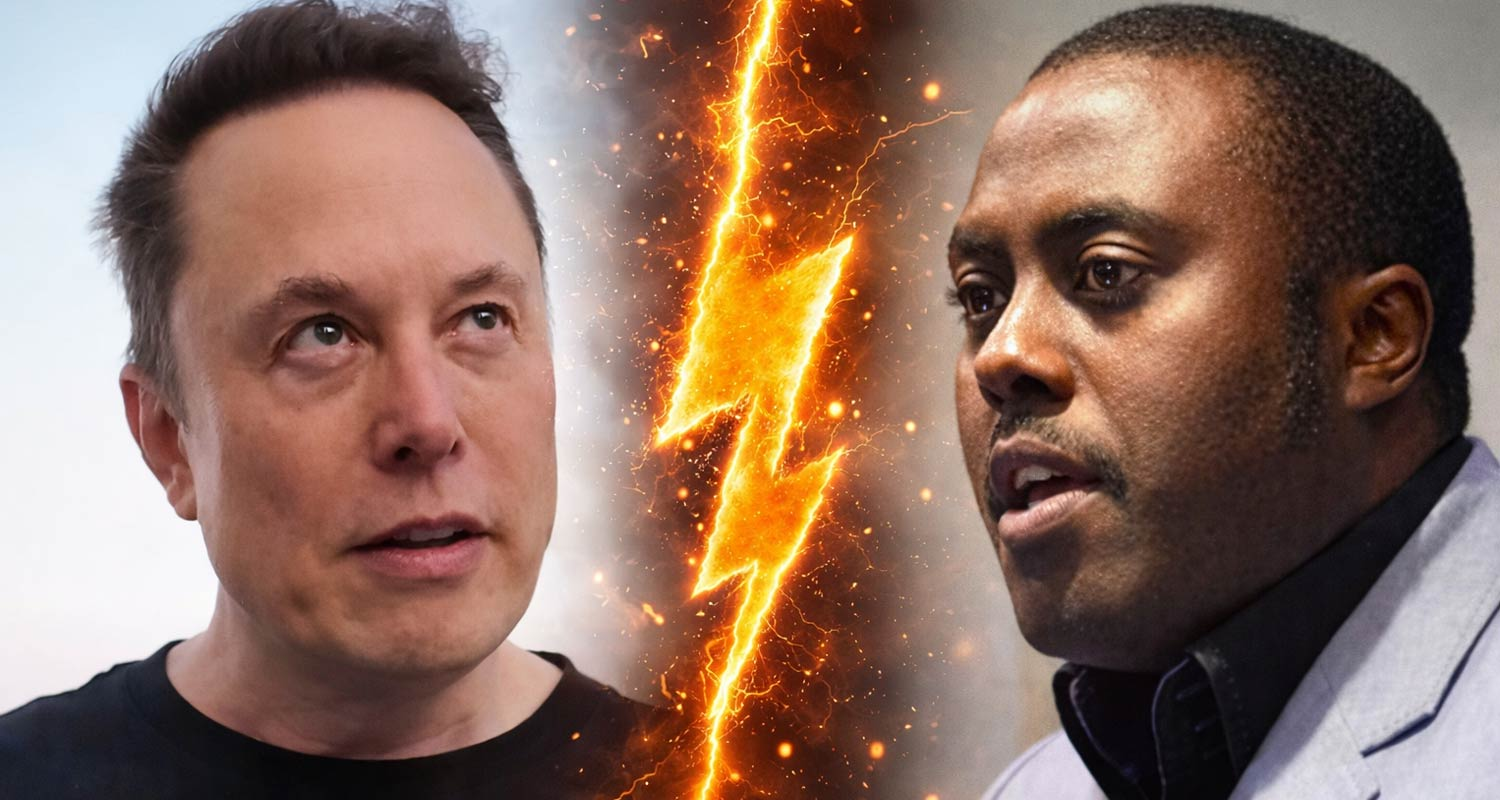
SpaceX CEO Elon Musk and South Africa’s head of public diplomacy, Clayson Monyela
South Africa's response has been consistent since March 2025. Monyela said it plainly:
"It's got nothing to do with your skin colour. Starlink is welcome to operate in South Africa provided there's compliance with local laws." He pointed to over 600 American companies like Microsoft, Amazon, JP Morgan among them that operate in South Africa under the same framework with zero drama.
ICASA confirmed to fact-checkers at Snopes that Starlink had simply "not applied for a license." The technology isn't banned. The application hasn't been filed.
Who's right?
Both sides have a genuine case and that is what makes this messy.
Musk is right that the ownership requirement creates a structural barrier. A company whose global policy prohibits equity transfer will always hit a wall under rules that require exactly that.
The effect of delayed connectivity for millions is real and costly regardless of intent.
But South Africa is also right that these laws exist for documented reasons.
Apartheid actively engineered Black economic exclusion over nearly five decades. B-BBEE is a legal correction, not a vendetta.
Hundreds of multinationals comply without drama. Musk's framing of it as personal racial discrimination sidesteps that entirely.
His credibility on the subject is also complicated by a history of inflammatory claims including alleging South Africa practices "white genocide", a claim with no factual basis, widely debunked.
The real losers
What gets buried in the noise is the human cost.
Over 20 percent of South Africans still lack active internet access.
Starlink kits have already been used illegally across the country by cancer screening services, rural schools, and anti-poaching operations because the need is that urgent.
It is estimated that the regulatory process could still take 18 to 24 months, putting a realistic Starlink launch no earlier than late 2027.
One man's pride. One country's history.
And millions of people are still waiting for the internet to arrive.