Standard Bank Poised for Fintech Domination: OPay Stake Ahead of Staggering $4B IPO
Standard Bank Group is reportedly considering a stake in Nigerian payments firm OPay, which is gearing up for a potential $4 billion US stock-market listing. This move highlights the evolving relationship between traditional banks and rapidly growing fintechs, with OPay demonstrating significant user and revenue growth predominantly from its Nigerian operations.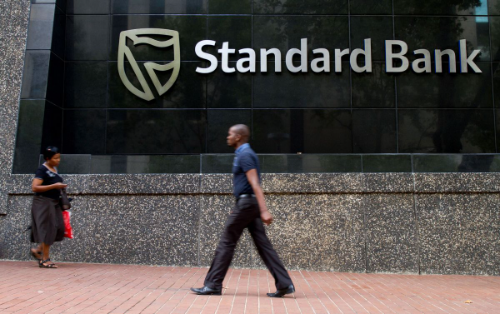
Standard Bank Group, a prominent Johannesburg-based financial institution, is reportedly in early-stage discussions to acquire a stake in Nigerian payments company OPay. This potential investment comes as OPay prepares for a significant US stock-market listing, which could potentially value the fintech firm at an estimated $4 billion. While discussions are ongoing and a deal is not yet certain, the move underscores a growing trend of traditional banks engaging with rapidly expanding fintech platforms.
OPay's proposed initial public offering (IPO), slated for later in 2026, is being facilitated by leading financial institutions including Citigroup, Deutsche Bank, and JPMorgan Chase. A valuation of $4 billion would mark a substantial increase from OPay's 2021 valuation of $2 billion, which it achieved after raising $400 million from investors, notably SoftBank Vision Fund 2. Nigeria remains the cornerstone of OPay's business operations, accounting for a significant 88.1% of its total revenue in 2025.
Figures circulated ahead of the IPO reveal OPay's impressive growth trajectory. Its gross transaction value (GTV) soared to $358 billion in 2025, up from $166.2 billion in 2024. Concurrently, the number of monthly active users expanded from 25.1 million to 39.3 million, and its revenue reached $536.3 million. It is important to note, however, that these financial figures have not yet been published in audited financial statements by OPay.
For Standard Bank, which held R3.6 trillion in assets at the end of 2025 and has a presence in Nigeria through Stanbic IBTC, an investment in OPay offers strategic advantages. It would provide direct exposure to a dynamic payments platform boasting millions of users and merchants, effectively giving the bank a route into the burgeoning payment volumes that have largely migrated from traditional bank branches to mobile applications, digital transfers, and extensive agency networks. Furthermore, a pre-IPO investment could position OPay with a strong institutional shareholder as it approaches US investors, potentially boosting confidence in its market debut.
This potential collaboration highlights a significant shift in the African financial landscape, blurring the lines between established banks and innovative fintech companies. OPay has successfully scaled its operations by leveraging transfers, mobile wallets, cards, and an agent network, rather than relying on a costly branch infrastructure. By contrast, Standard Bank brings a robust balance sheet, regulatory licenses, and extensive corporate relationships across the continent. A stake in OPay would enable Standard Bank to tap into these vast payment volumes without the arduous task of building a similar network from the ground up, while simultaneously providing OPay with a valuable banking partner and an important valuation reference point ahead of its IPO.
Despite the promising growth, potential investors will scrutinize certain aspects. The reliance on unaudited financial information necessitates careful evaluation of how OPay's reported growth can translate into sustainable profit and cash flow. Additionally, the high concentration of revenue from Nigeria, despite OPay's operations elsewhere, exposes the business to single-market risks. Should Standard Bank proceed with this acquisition, it would serve as another compelling illustration of how traditional banks are increasingly choosing ownership and strategic partnerships as a means to respond to the rapid expansion of fintech, rather than solely competing through their own digital product offerings.